Hibbertia, Genus, spp., Multiple species,
- Genus
- Multiple species
Guinea flowers
Australia, with species in Madagascar, New Guinea, and New Caledonia
Overview
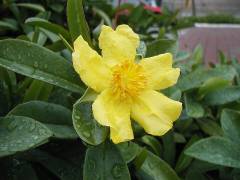
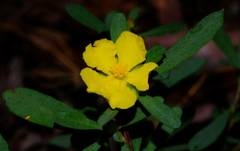
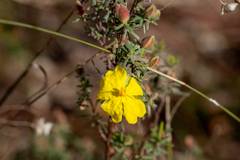
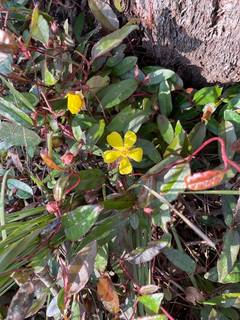
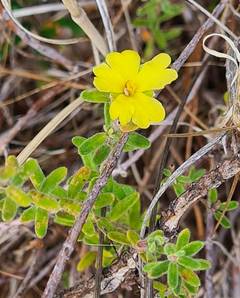
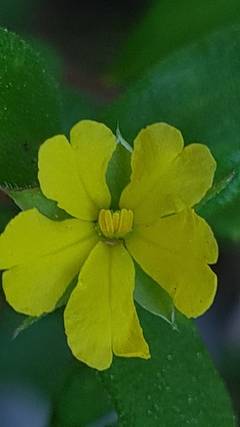
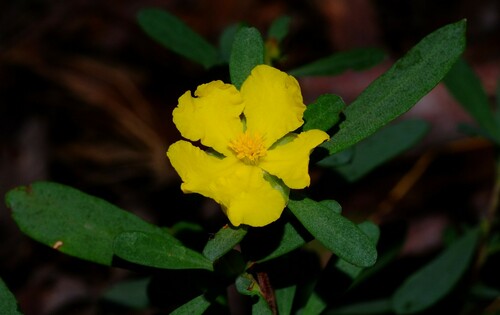
Hibbertia is a genus of about 150 to 400 species of evergreen shrubs and woody climbers in the family Dilleniaceae, known as guinea-flowers, with the great majority native to Australia and a few in Madagascar, New Guinea, and New Caledonia. Plants range from low, spreading or mat-forming shrubs to twining climbers and upright bushes 1 to 10 feet (0.3 to 3 m) tall or long. The leaves are usually small, narrow, and leathery, sometimes crowded along wiry stems. From late winter through summer the plants carry five-petalled yellow flowers, rarely orange, that open flat and resemble buttercups, with a central cluster of many stamens. Some species flower heavily over a long season, while others bloom briefly. Hibbertia grows in heath, sclerophyll woodland, coastal scrub, and sandy or rocky ground, mostly on lean, well-drained, acidic soils. The genus includes H. scandens, a vigorous climbing guinea flower grown over fences and banks, and many low shrubs used as groundcovers in Australian gardens. The flowers of some species carry an unpleasant scent that draws pollinating insects. Most species are frost-tender and grow outdoors in mild, nearly frost-free climates.
Native Range
Hibbertia is native mainly to Australia, where it grows across most regions in heath, woodland, and coastal scrub, with additional species in Madagascar, New Guinea, New Caledonia, and Fiji. Plants grow on lean, sandy or rocky, acidic soils. H. scandens ranges along the eastern Australian coast.Suggested Uses
Low and spreading species are grown as groundcovers, in rockeries, and over banks and walls, while H. scandens and other climbers are trained on fences and trellises. Compact kinds are used in containers and coastal gardens. The genus suits low-water, low-phosphorus Australian native plantings.How to Identify
Appearance
Size & Dimensions
Height1' - 10'
Width/Spread1' - 8'
Bloom Information
Hibbertia flowers from late winter through spring and summer, with the heaviest bloom in spring in most species. The flat yellow flowers open over many weeks, a few at a time. In mild climates some species flower on and off through much of the year.
Detailed Descriptions
Flower Description
yellow, rarely orangeFoliage Description
green to dark greenGrowing Conditions
Sun Requirements
Requires 4-10 hours of direct sunlight daily
• Full Sun: 6+ hours of direct sunlight
• Partial Shade: 3-6 hours of direct sunlight
• Full Shade: Less than 3 hours of direct sunlight
Care & Maintenance
Care Guide
Hibbertia species grow in full sun to light shade on lean, sharply drained, sandy or gravelly, acidic soils low in phosphorus. As plants of nutrient-poor ground, they are sensitive to phosphorus and grow poorly with standard high-phosphorus fertilizers. They tolerate drought once established but flower more freely with occasional summer water. Most are frost-tender and grow outdoors year-round only in mild, nearly frost-free climates, with container culture used in colder areas. Light, regular trimming keeps shrubby kinds dense and climbers in bounds. Root rot follows wet, heavy, or poorly drained soil.Pruning
Hibbertia is trimmed lightly after the main flush of flowering to keep shrubby species compact and to contain climbers. The plants tolerate regular clipping and resprout from the stems. Hard pruning into bare old wood is avoided, as some species are slow to reshoot from it.Pruning Schedule
Prune: June–July
summer
Container Growing
Suitable for container growing
Minimum container size: 3 gallons