Overview
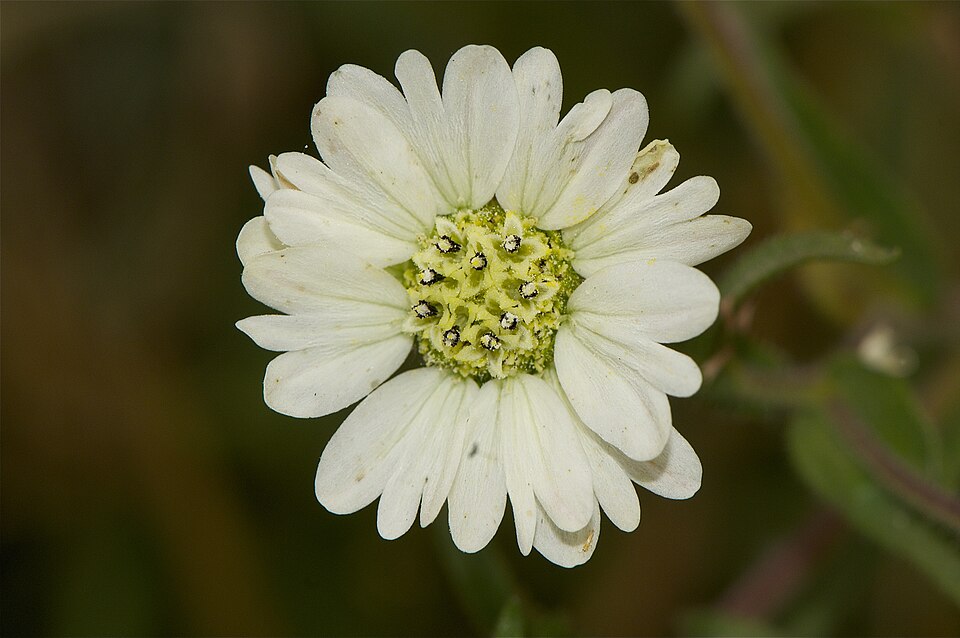
Hemizonia congesta is an annual wildflower of California and southern Oregon, growing 12-40 inches (30-100 cm) tall and 8-16 inches (20-40 cm) wide on branching, often bristly stems. The narrow, gray-green leaves are 1-4 inches (2.5-10 cm) long and, with the upper stems, carry sticky, resinous glands that give the plant its tarweed scent and feel. From summer into fall it produces small daisy-like flower heads about 0.5-1 inch (1.2-2.5 cm) across, with white to pale yellow ray florets, often with reddish bases, around a yellow disk; flowering continues through the dry season when most grassland plants have finished. H. congesta grows in open grassland, on dry slopes, in fields, and along roadsides, mostly below 3,000 feet (900 m). As a summer annual it tolerates heat and drought, completing its life cycle on stored winter and spring soil moisture, then dying after setting seed. The sticky foliage deters browsing and can collect dust and small insects. Bees and other insects work the late flowers, and finches and other birds eat the seeds. It self-sows freely and can form dense stands in disturbed ground, behaving as a weed in some hayfields and pastures.
Native Range
Hemizonia congesta is native to California and southern Oregon, occurring in the Coast Ranges, Central Valley, and Sierra Nevada foothills. It grows in open grassland, dry fields, hillsides, and roadside ground at low to middle elevations.Suggested Uses
Grown in California native wildflower meadows, dry sunny borders, and roadside or restoration seedings for late-season color. It is spaced about 8 inches (20 cm) apart or broadcast as seed in open ground. The late flowers support pollinators and the seeds feed seed-eating birds.How to Identify
Appearance
Size & Dimensions
Height1' - 3'4"
Width/Spread8" - 1'4"
Bloom Information
Flowering runs from summer into fall, continuing through the dry season after most grassland wildflowers have set seed. The small heads are 0.5-1 inch (1.2-2.5 cm) across, with white to pale yellow rays around a yellow disk, and open by day. Bees and other insects visit the flowers for pollen and nectar.
Detailed Descriptions
Flower Description
white to pale yellowFoliage Description
gray-greenGrowing Conditions
Sun Requirements
Requires 6-12 hours of direct sunlight daily
• Full Sun: 6+ hours of direct sunlight
• Partial Shade: 3-6 hours of direct sunlight
• Full Shade: Less than 3 hours of direct sunlight
Water & Climate
Water Needs
Drought Tolerance
Drought tolerant when established
Care & Maintenance
Care Guide
Hemizonia congesta grows in full sun with 6 or more hours of direct light and well-drained clay, loam, or sandy soil at pH 6.0 to 7.5. As a summer annual it draws on soil moisture stored from winter and spring rain and tolerates heat and drought as it flowers, needing little or no irrigation. It grows on poor and disturbed ground and self-sows freely once established. Plants finish and die after setting seed, so the display ends with the season. Overwatering and rich soil produce lank growth with fewer flowers.Pruning
No routine pruning is needed. Young plants can be sheared lightly to encourage branching and more flower heads. Spent plants are left to self-sow or removed after the seed has dropped.Toxicity: Not assessed
UnknownPlanting Guide
Planting Methods & Timing
Planting Method
direct sow
Direct Sow Timing
Sow in fall or late winter for bloom the following summer
Days to Maturity
70–120 days
Plant Spacing
8 inches
Companion Planting
Good Companions