Image 1 of 4
1 / 4
© ghislain118 http://www.fleurs-des-montagnes.net, some rights reserved (CC-BY-SA) · Wikimedia Commons
Helianthemum, Genus, nummularium, Species, 'Fire Dragon', Cultivar,
- Genus & species
- Cultivar
fire dragon sun rose
Species native to Europe and western Asia across British Isles, central Europe, Mediterranean basin, and Caucasus on calcareous grasslands, rocky hillsides, and chalk downs; 'Fire Dragon' cultivar is a garden selection for vivid orange-scarlet flower color
Overview
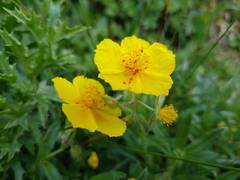
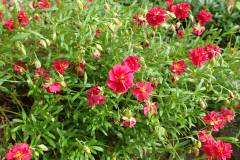
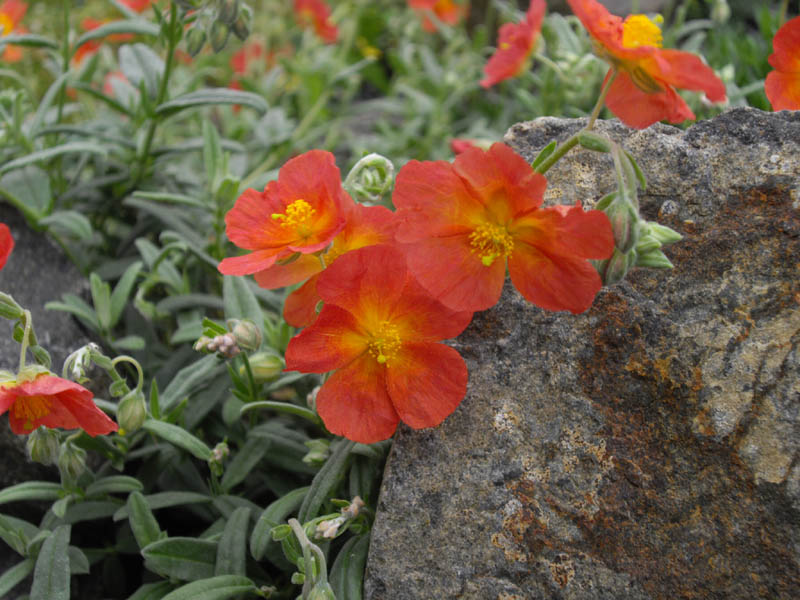
Helianthemum nummularium 'Fire Dragon' is a sun rose in the rockrose family (Cistaceae) reaching 6–10 inches (15–25 cm) tall and spreading 18–24 inches (45–60 cm) wide in a low evergreen mat. Vivid orange-scarlet to copper-orange crinkled-paper-textured flowers 1 inch (2.5 cm) across with a yellow center boss of stamens appear in profusion from May through July. The orange-scarlet color runs the warmest in the Helianthemum color range — hotter than the carmine-red of 'Ben Hope' and more orange than the cerise of 'Cerise Queen' — and the cultivar name 'Fire Dragon' references this intense flame-like orange. Each individual flower lasts one day, but rapid bud succession maintains a continuous display over weeks across the bloom window. Small gray-green narrow evergreen leaves form the dense low mat. Like all sun roses, the flowers open in sunshine and close on overcast days; a sustained cloudy period reduces the apparent floral display even when many buds are mature on the plant. Lean sharply drained alkaline soil in full sun is essential. In wet heavy or fertile conditions, the mat opens and the plant declines within 1–2 seasons. Shearing after the main bloom keeps the mat dense and may produce a lighter second flush in late August or early September. Deer avoid the foliage. Not known to be toxic to pets or humans.
Native Range
The species Helianthemum nummularium is native to Europe and western Asia, occurring across the British Isles, central Europe, the Mediterranean basin, and the Caucasus on calcareous grasslands, rocky hillsides, and chalk downs at low to moderate elevations. The 'Fire Dragon' cultivar is a garden selection for the vivid orange-scarlet flower color.Suggested Uses
Used in rock gardens, along walls, at the front of dry borders, and in containers of 3 gallons (11 liters) or more. The hot orange-scarlet color creates a warm color anchor among blue and silver companions such as Nepeta (catmint), Lavandula (lavender), and Stachys byzantina (lamb's ear). The evergreen mat adds year-round structure to dry-garden plantings between the spring bloom flushes of other rock-garden perennials. Cool-summer regions produce the most persistent populations; hot humid summer climates shorten the cultivar's lifespan to 2–3 years.How to Identify
Appearance
Size & Dimensions
Height6" - 10"
Width/Spread1'6" - 2'
Bloom Information
Flowering from May through July across approximately 6 weeks. Individual flowers last one day; continuous succession of new buds maintains the display across the bloom window. Shearing immediately after the main bloom may produce a lighter second flush in late August or early September. The flower-opening behavior is light-sensitive — flowers open in direct sunshine and close on overcast days, so the apparent display depends on weather conditions during the bloom window.
Detailed Descriptions
Flower Description
Vivid orange-scarlet to copper-orange with a yellow stamen center; single crinkled-paper-textured 1 inch acrossFoliage Description
Gray-green; small narrow evergreen leaves on woody stemsGrowing Conditions
Sun Requirements
Requires 6-12 hours of direct sunlight daily
• Full Sun: 6+ hours of direct sunlight
• Partial Shade: 3-6 hours of direct sunlight
• Full Shade: Less than 3 hours of direct sunlight
Care & Maintenance
Care Guide
Plant in full sun with at least 6 hours of direct light. Lean sharply drained neutral to alkaline soil at pH 6.5–8.0. No fertilization — rich conditions promote loose floppy growth and shorten plant lifespan. Water sparingly; drought-tolerant once established. Shear by one-third immediately after the main bloom in July or early August to keep the mat dense and to encourage rebloom; without this annual shearing, the center opens within 1–2 years and the plant declines. The species runs unsuited to wet heavy or acidic soil; in such positions, raised beds with grit-amended soil run the practical workaround.Pruning
Shear the entire plant by one-third immediately after the main bloom in July or early August. Without annual post-bloom shearing, the mat opens at the center and the plant declines within 1–2 years. No other seasonal pruning is needed.Pruning Schedule
Prune: July–August
summer
Container Growing
Suitable for container growing
Minimum container size: 3 gallons