Helianthemum, Genus, nummularium, Species, 'Cerise Queen', Cultivar,
- Genus & species
- Cultivar
cerise queen sun rose
Garden selection; species {Helianthemum nummularium} is native to Europe and western Asia
Overview
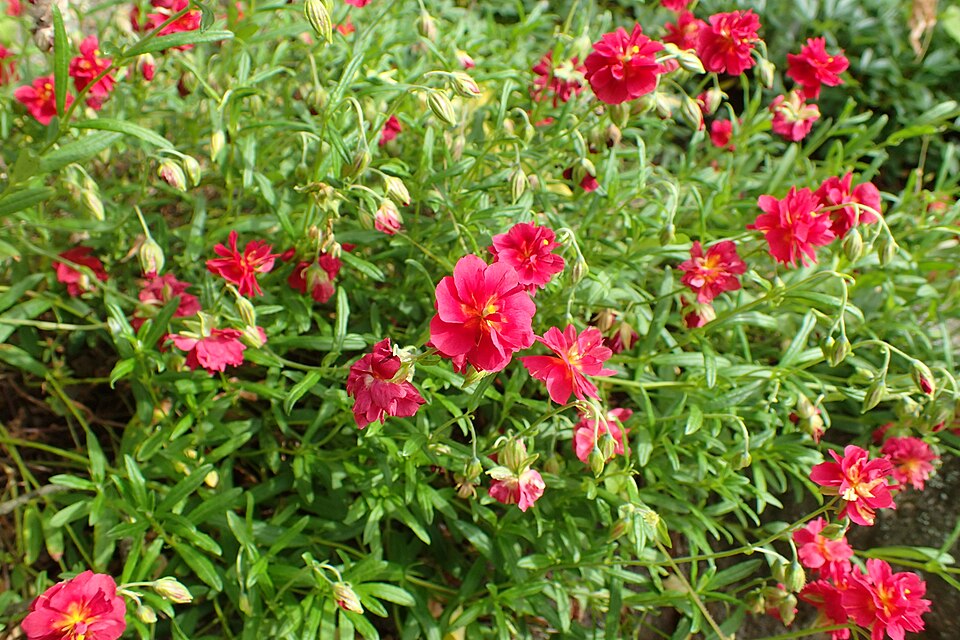
Helianthemum nummularium 'Cerise Queen' is a double-flowered sun rose that grows 6–10 inches (15–25 cm) tall and spreads 18–24 inches (45–60 cm) wide. Double cerise-red to deep pink crinkled-paper flowers 1 inch (2.5 cm) across with extra petals appear in profusion from May through July. The double flower form is fuller and more substantial than single-flowered cultivars like 'Ben Hope', with each bloom lasting slightly longer (1–2 days rather than one day) due to the extra petal layers. The cerise-red color is a cool, blue-toned red — different from the warmer carmine-red of 'Ben Hope'. The double form hides the central stamen boss, giving the flower a more rose-like appearance. Small gray-green narrow evergreen leaves form the dense, low spreading mat. The same cultural requirements as all sun roses apply: lean, sharply drained, alkaline soil in full sun. Shearing after the main bloom is essential to maintain a dense, tidy mat. In wet or rich conditions, the plant opens up and declines. Deer avoid the foliage.
Native Range
The species Helianthemum nummularium is native to Europe and western Asia. 'Cerise Queen' is a garden selection for double cerise-red flowers.Suggested Uses
Used in rock gardens, along walls, at the front of dry borders, and in containers of 3 gallons (11 liters) or more. The double cerise flowers add a more formal, rose-like quality than single-flowered sun roses. Pairs with silver, blue, and yellow companions.How to Identify
Appearance
Size & Dimensions
Height6" - 10"
Width/Spread1'6" - 2'
Colors
Bloom Information
Detailed Descriptions
Flower Description
Double cerise-red to deep pinkFoliage Description
Gray-green, small, narrow, evergreenGrowing Conditions
Sun Requirements
Requires 6-12 hours of direct sunlight daily
• Full Sun: 6+ hours of direct sunlight
• Partial Shade: 3-6 hours of direct sunlight
• Full Shade: Less than 3 hours of direct sunlight
Care & Maintenance
Care Guide
Plant in full sun with at least 6 hours of direct light. Lean, sharply drained, neutral to alkaline soil. Do not fertilize. Water sparingly. Shear by one-third after the main bloom. Not suited to wet, heavy, or acidic soil.Pruning
Shear the entire plant by one-third after the main bloom in July–August.Pruning Schedule
Prune: July–August
summer
Container Growing
Suitable for container growing
Minimum container size: 3 gallons