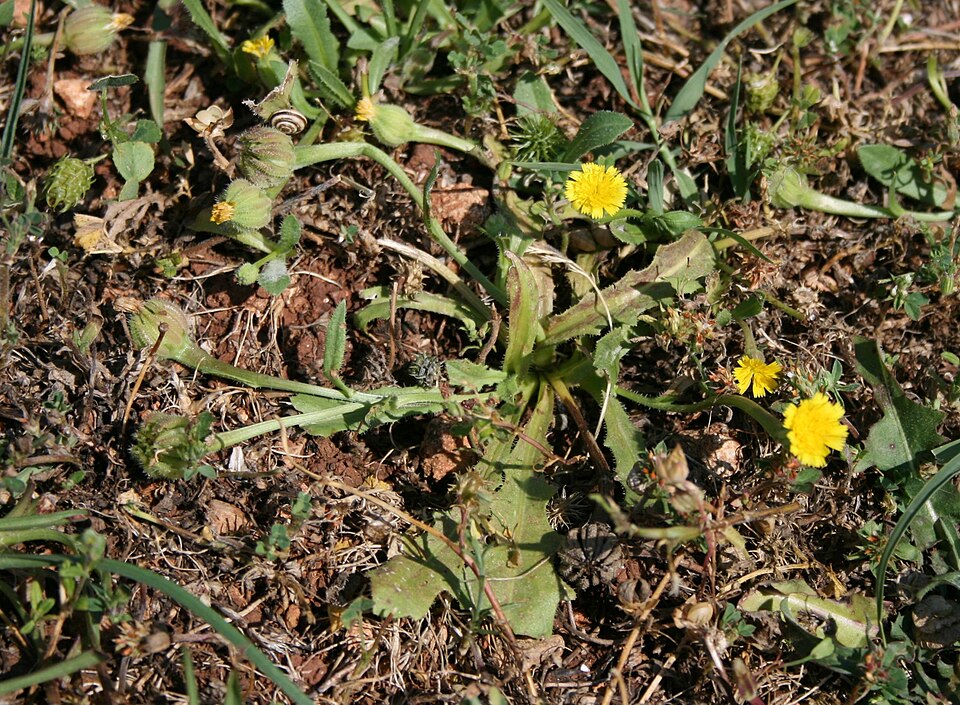
Overview
Hedypnois rhagadioloides, known as Cretanweed, is a small annual in the daisy family, growing 4-16 inches (10-40 cm) tall with one to several spreading to upright stems from a basal rosette. The stems and leaves are roughly hairy. Leaves are narrow, 1-4 inches (2.5-10 cm) long, with toothed or shallowly lobed edges, the lower ones in a rosette. Small yellow dandelion-like flower heads 0.3-0.6 inch (0.8-1.5 cm) across open at the branch tips, with strap-shaped rays only and no central disk. As the seed matures, the bracts curve inward and harden around the developing fruit, a feature that marks the genus. It grows in USDA zones 8-10 as a winter annual and dies after setting seed in late spring. Native to the Mediterranean, it has naturalized as a weed in California and other dry regions, spreading on disturbed ground, roadsides, and overgrazed range. It competes with native annuals on open soil.
Native Range
Hedypnois rhagadioloides is native to the Mediterranean Basin, from southern Europe and North Africa to western Asia. It has naturalized widely in regions with dry summers, including California, parts of Australia, and South America, where it grows on disturbed soils, grasslands, and roadsides.Suggested Uses
Hedypnois rhagadioloides is mainly recorded as a naturalized weed of rangeland, roadsides, and disturbed sites rather than a cultivated plant. Where it occurs it gives early forage of low value to livestock and minor nectar for small insects.How to Identify
Appearance
Size & Dimensions
Height4" - 1'4"
Width/Spread4" - 1'
Bloom Information
Flowering runs from March through June in its naturalized range. Small yellow heads open in succession on the branch tips. The heads close in dull weather and the seeds ripen within the hardening bracts as the plant dries.
Detailed Descriptions
Foliage Description
greenGrowing Conditions
Sun Requirements
Requires 6-10 hours of direct sunlight daily
• Full Sun: 6+ hours of direct sunlight
• Partial Shade: 3-6 hours of direct sunlight
• Full Shade: Less than 3 hours of direct sunlight
Water & Climate
Water Needs
Drought Tolerance
Drought tolerant when established
Care & Maintenance
Care Guide
Grows in full sun on dry, disturbed, well-drained soils and tolerates poor, rocky, and compacted ground as a short-lived annual. It germinates with fall and winter rains and completes growth before summer drought. A soil pH of 6.0-8.0 suits the species across a wide range of soils. It needs no irrigation in a climate with winter rain. The plant self-sows freely where soil stays open. In gardens it behaves as a weed and spreads if seed heads are left to ripen.Pruning
No pruning is needed for this annual. Removing flower heads before seed ripens limits self-sowing. Whole plants can be pulled once they dry at the end of the season.Toxicity
Non-toxicPlanting Guide
Planting Methods & Timing
Planting Method
direct sow