Gypsophila, Genus, 'Rosenschleier', Cultivar,
- Genus
- Cultivar
rosy veil Baby's breath
Overview
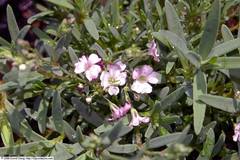
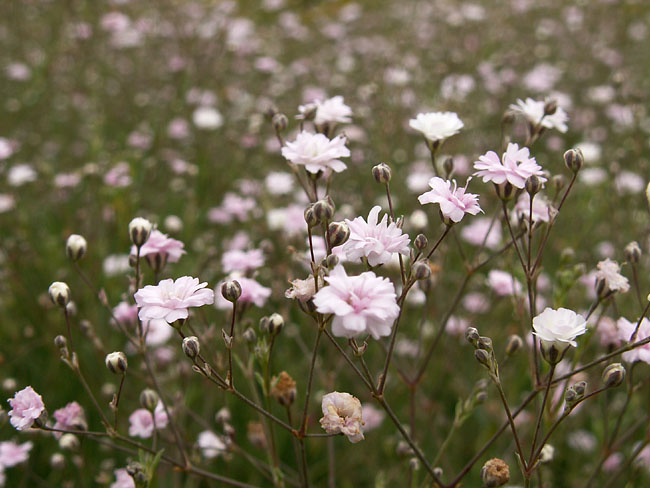
Gypsophila 'Rosenschleier', also sold as 'Rosy Veil', is a low, mounding herbaceous perennial in the Caryophyllaceae family, a hybrid reaching 15-18 inches (38-45 cm) tall and spreading 24-36 inches (60-90 cm) wide. It forms a billowing mound of slender, branching stems set with narrow blue-green leaves and clouds of tiny double flowers about 0.25 inch (6 mm) across. The flowers open white and age to pale pink, covering the plant from early to midsummer. The slender, airy stems weave through neighboring plants and fill gaps left by spring bloomers as they fade. The hybrid is sterile and sets little seed, so it does not self-sow. It grows from a deep taproot that does not transplant well, so established plants are difficult to move or divide. Gypsophila 'Rosenschleier' is hardy in USDA zones 4 through 9 and needs full sun and sharply drained, neutral to alkaline soil; it rots in wet, acidic, or heavy ground. The mound dies back to a low crown in winter. Stems can flop after rain or in rich soil and may take light support. Flowers draw bees and other small pollinators and are cut for fresh and dried arrangements. Grown in borders, gravel gardens, and as a filler among roses and bulbs.
Native Range
Gypsophila 'Rosenschleier' is a garden hybrid, derived from crosses involving Gypsophila paniculata and Gypsophila repens, both native to the mountains and steppes of Europe and Asia. The hybrid occurs only in cultivation.Suggested Uses
Grown in mixed borders, gravel gardens, and raised beds, spaced 24-30 inches (60-75 cm) apart, and used as a filler weaving among roses, bulbs, and early perennials. Stems are cut for fresh and dried arrangements. The airy habit softens gaps left by spring bloomers.How to Identify
Appearance
Size & Dimensions
Height1'3" - 1'6"
Width/Spread2' - 3'
Colors
Bloom Information
Flowers from early to midsummer, roughly June through July, covering the mound in tiny double blooms. Cutting back after the first flush can bring a lighter second flush in late summer. The flowers shift from white to pale pink as they age.
Detailed Descriptions
Flower Description
White aging to pale pinkFoliage Description
Blue-greenGrowing Conditions
Sun Requirements
Requires 6-12 hours of direct sunlight daily
• Full Sun: 6+ hours of direct sunlight
• Partial Shade: 3-6 hours of direct sunlight
• Full Shade: Less than 3 hours of direct sunlight
Care & Maintenance
Care Guide
Grows in full sun and sharply drained, neutral to alkaline soil of low fertility. Water needs are low once established, and wet, acidic, or heavy soil causes root and crown rot. The plant grows from a deep taproot and does not transplant or divide well once settled. In USDA zones 4 through 9 it is cold hardy and dies back to a low crown in winter. Stems can flop after rain or in rich soil and may take light support. Sharp drainage and lean soil hold the mound firm and free-flowering.Pruning
The plant is sheared back by about one third after the first flush to tidy the mound and encourage a second flush of bloom. Remaining stems are cut to the crown in late autumn or early spring as growth dies back. The taproot makes division impractical, so propagation is by cuttings.Pruning Schedule
Prune: March, July & November
summerfall
Container Growing
Suitable for container growing
Minimum container size: 3 gallons