Gomphrena, Genus, celosioides, Species,
- Genus & species
prostrate globe-amaranth
Tropical America (naturalized in Australia)
Overview
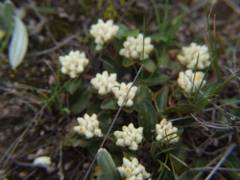
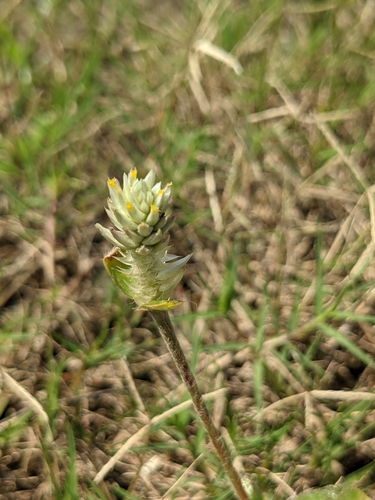
Gomphrena celosioides is a low, spreading annual to short-lived perennial herb with several hairy stems radiating from a stout taproot, forming a mat 4-12 inches (10-30 cm) high and 8-20 inches (20-50 cm) across. The opposite leaves are oblong to spoon-shaped, 0.8-2.5 inches (2-6 cm) long, grey-green, and softly hairy. Flowers are packed into dense, cylindrical, silvery-white papery spikes 0.4-1.5 inches (1-4 cm) long at the stem tips, which lengthen as they age. Flowering continues through the warm months wherever moisture allows. The species is native to tropical America but has naturalized across northern and eastern Australia and many other warm regions, where it grows as a weed of lawns, footpaths, pastures, and disturbed ground. It tolerates heat, drought, and compacted soil, and the taproot makes established plants hard to pull. The papery flower spikes persist and shed numerous seeds, so plants spread quickly in open ground. It is regarded as an environmental and agricultural weed in parts of its naturalized range.
Native Range
Gomphrena celosioides is native to tropical and subtropical America. It has naturalized widely across northern and eastern Australia and through the tropics and subtropics worldwide, growing on roadsides, lawns, pastures, and other disturbed open ground.Suggested Uses
Rarely cultivated, appearing mainly as a volunteer weed of lawns, paths, and disturbed sites. It gives quick low cover on bare disturbed ground but is generally managed as a weed rather than planted. Heavy seeding makes it unsuited to ornamental beds.How to Identify
Appearance
Size & Dimensions
Height4" - 1'
Width/Spread8" - 1'8"
Colors
Bloom Information
Silvery-white papery flower spikes appear through the warm months and after rain, spring to autumn in warm climates and much of the year in the tropics. The spikes lengthen as the lower flowers age and set seed. Old spikes persist on the plant in a faded straw color.
Detailed Descriptions
Foliage Description
Grey-greenGrowing Conditions
Sun Requirements
Requires 6-12 hours of direct sunlight daily
• Full Sun: 6+ hours of direct sunlight
• Partial Shade: 3-6 hours of direct sunlight
• Full Shade: Less than 3 hours of direct sunlight
Water & Climate
Water Needs
Drought Tolerance
Drought tolerant when established
Care & Maintenance
Care Guide
Gomphrena celosioides grows in full sun in almost any well-drained soil, including poor, sandy, and compacted ground. It is highly drought- and heat-tolerant once the taproot is established and needs no irrigation or feeding. The plant is frost-sensitive and behaves as a warm-season annual where winters are cold, roughly USDA zones 9-11. Because it self-seeds heavily and is treated as a weed, it is not generally planted in gardens and is instead managed or removed. Removing plants before the spikes set seed reduces spread.Pruning
No pruning is undertaken for this weedy species. Where control is wanted, plants are removed with the taproot before the flower spikes mature and shed seed. Mowing tends to produce a flatter, more spreading form.Toxicity: Not assessed
UnknownPlanting Guide
Planting Methods & Timing
Planting Method
direct sow
Direct Sow Timing
Spring
Plant Spacing
12 inches