Gompholobium, Genus, huegelii, Species,
- Genus & species
common wedge-pea
Overview
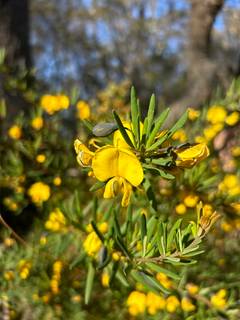
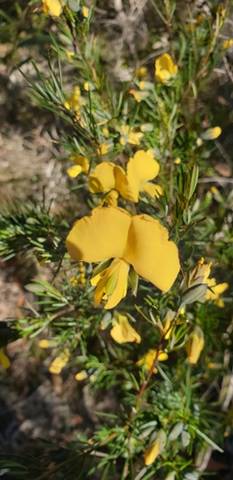
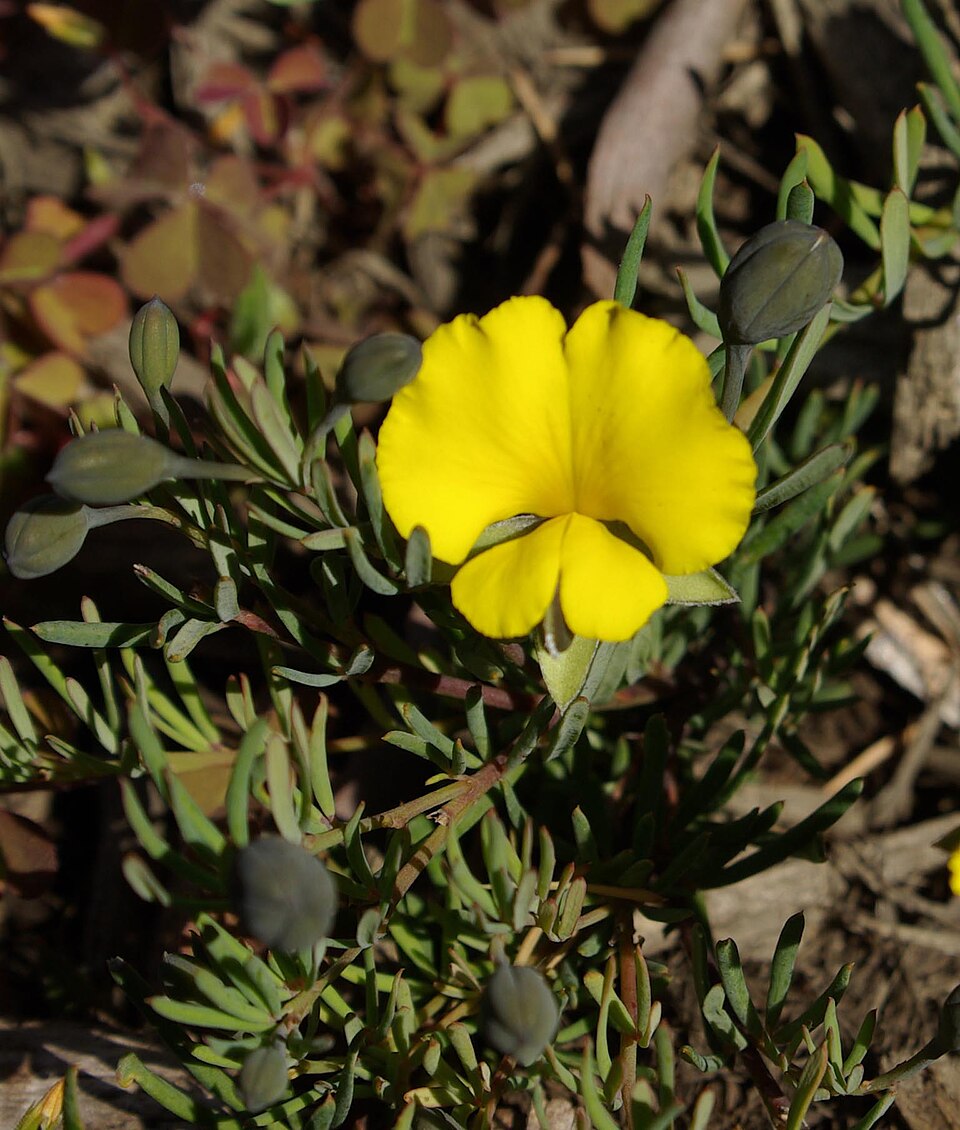
Gompholobium huegelii is an evergreen shrub in the family Fabaceae, growing 1-3 feet (30-90 cm) tall with an erect to spreading, open habit and slender, wiry stems. The leaves are divided into three narrow leaflets 0.4-1 inch (1-2.5 cm) long, dark green and held close to the stems. Yellow to greenish-yellow pea-shaped flowers about 0.6-0.8 inch (1.5-2 cm) across appear singly or in small groups at the branch tips in spring and early summer; some forms carry an orange or reddish flush. The flowers are followed by inflated, almost spherical pods 0.3-0.5 inch (8-12 mm) long containing several seeds. Growth is moderate, and plants form an open framework rather than dense cover. The species fixes nitrogen through root nodules and grows on poor, well-drained soils. It is short-lived, often persisting only a few years, and regenerates from seed after fire. Plants resent root disturbance and heavy, wet soils.
Native Range
Native to south-eastern Australia, including Victoria, New South Wales, Tasmania, and South Australia. Grows in heathland, dry sclerophyll forest, and open woodland on sandy and gravelly, low-nutrient soils.Suggested Uses
Planted in native heath and cottage gardens, rockeries, and low-water plantings at 18-24 inch (45-60 cm) spacing. Suited to sandy, free-draining sites and embankments. Grows in containers of at least 8 gallons (30 L) with a gritty, low-phosphorus mix; tends to be short-lived in pots.How to Identify
Appearance
Size & Dimensions
Height1' - 3'
Width/Spread1' - 3'
Bloom Information
Detailed Descriptions
Flower Description
Yellow to greenish-yellowFoliage Description
Dark greenGrowing Conditions
Sun Requirements
Requires 6-10 hours of direct sunlight daily
• Full Sun: 6+ hours of direct sunlight
• Partial Shade: 3-6 hours of direct sunlight
• Full Shade: Less than 3 hours of direct sunlight
Care & Maintenance
Care Guide
Water sparingly once established, as the species grows on dry, low-nutrient soils and is prone to root rot in wet ground. Plants grow in full sun to light shade and need sharp drainage on sandy or gravelly soils. The roots fix nitrogen and are sensitive to phosphorus, so high-phosphorus fertilisers are kept away from the root zone. Few pests trouble the species, though damp conditions encourage fungal root disease. Plants are short-lived, persisting a few years, and are often replaced from seed. Root disturbance during planting reduces establishment.Pruning
Tip-pruning of young plants after flowering encourages branching and a denser form. Cutting back into bare old wood often fails to reshoot. The species is short-lived and is not improved by hard pruning.Pruning Schedule
Prune: December–January
summer
Container Growing
Suitable for container growing
Minimum container size: 8 gallons