Gompholobium, Genus, spp., Multiple species,
- Genus
- Multiple species
wedge pea
Overview
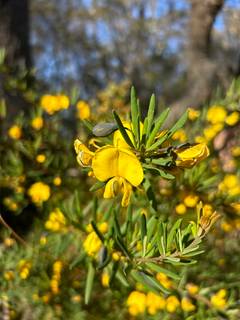
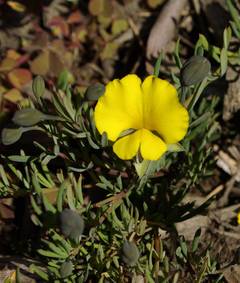
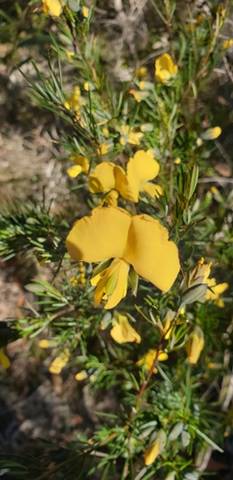
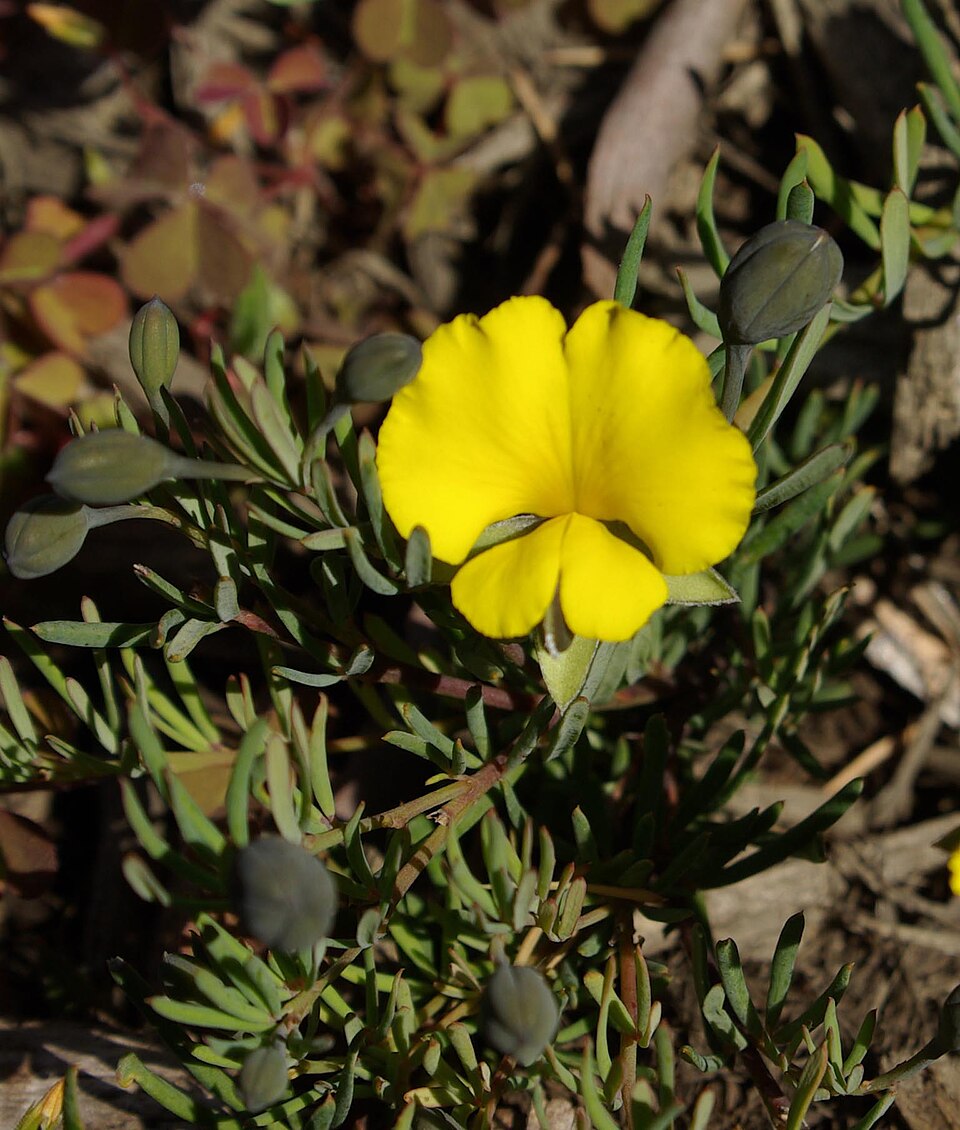
Gompholobium is a genus of around 44 species of small evergreen shrubs and subshrubs in the pea family (Fabaceae), endemic to Australia and reaching its greatest diversity in the south-west of Western Australia. Plants typically grow 1–5 ft (0.3–1.5 m) tall and 1–3 ft (0.3–0.9 m) wide, with wiry, erect to spreading stems. The leaves are usually divided into three narrow leaflets or pinnately divided into many linear segments 0.2–1 in (5–25 mm) long, and in some species are reduced and almost needle-like. Pea-shaped flowers 0.4–0.8 in (10–20 mm) across appear singly or in small clusters at the branch tips, most often in shades of yellow, though some species are red, orange, pink, or purple. The genus is set apart within the pea family by a calyx divided almost to the base and a large keel, which gives rise to the common name wedge pea. Flowering occurs mainly in spring, and the fruit is an inflated pod 0.3–0.6 in (8–15 mm) long holding several seeds. Like most legumes, the roots form associations with nitrogen-fixing bacteria, allowing growth on the nutrient-poor sandy soils of heathland and dry sclerophyll forest. Most species are short-lived and sensitive to root disturbance.
Native Range
Endemic to Australia, occurring in all states with the greatest concentration of species in the south-west of Western Australia. Plants grow in heathland, shrubland, and dry sclerophyll forest, usually on sandy or gravelly soils.Suggested Uses
Grown in native cottage gardens, heath gardens, and rockeries, and on embankments where sharp drainage suits them. Lower species work as informal groundcover, while taller ones fill the middle of native shrub borders.How to Identify
Appearance
Size & Dimensions
Height1' - 5'
Width/Spread1' - 3'
Bloom Information
Most species flower in spring, from roughly August to November in the native range, with some extending into early summer. Flowers are borne singly or in few-flowered clusters at the stem tips. In cultivation outside Australia, flowering shifts to late spring and early summer.
Detailed Descriptions
Flower Description
Yellow, with red, orange, pink, or purple in some speciesFoliage Description
GreenGrowing Conditions
Sun Requirements
Requires 6-10 hours of direct sunlight daily
• Full Sun: 6+ hours of direct sunlight
• Partial Shade: 3-6 hours of direct sunlight
• Full Shade: Less than 3 hours of direct sunlight
Water & Climate
Water Needs
Drought Tolerance
Drought tolerant when established
Care & Maintenance
Care Guide
Plants require full sun and sharply drained, sandy or gravelly soils low in phosphorus, reflecting their heathland origins. They tolerate drought once established and decline in rich, fertilised, or waterlogged ground, which is often fatal. Watering is kept light and infrequent after the first season. Most species are short-lived, persisting around 3–6 years, and are usually raised from seed, which germinates more readily after heat or smoke treatment. Root disturbance during transplanting is poorly tolerated. Frost hardiness varies, with montane species tolerating snow and lowland species being frost-sensitive.Pruning
A light trim after flowering keeps plants compact and can prolong their short life. Hard pruning into bare wood is rarely successful, as most species do not reshoot from old stems.Pruning Schedule
late springsummer
Container Growing
Suitable for container growing
Minimum container size: 3 gallons