Gnaphalium, Genus, uliginosum, Species,
- Genus & species
marsh cudweed
Europe, temperate Asia, and North America
Overview
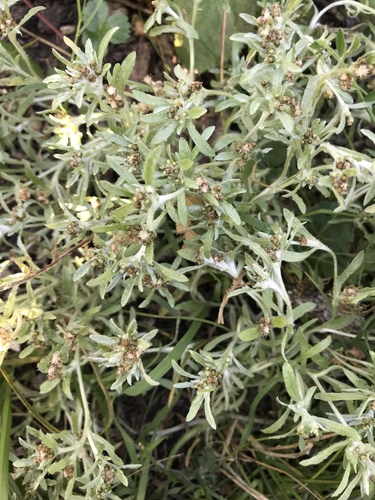
Gnaphalium uliginosum is a small, grey-woolly annual in the daisy family, growing on damp, bare ground. It forms low, much-branched plants 1-8 inches (2-20 cm) tall, the whole plant covered in dense whitish-grey felt. The narrow leaves are 0.4-2 inches (10-50 mm) long and clothed, like the stems, in matted woolly hairs. From July to October it produces tight clusters of small brownish-yellow flowerheads at the branch tips, each head only 0.1-0.2 inches (3-4 mm) long and surrounded by spreading leaves that overtop the flowers. The flowers are inconspicuous, lacking showy ray florets, and ripen into tiny seeds carried by a short pappus. The plant grows on muddy paths, pond and ditch margins, damp field hollows, and other compacted, seasonally wet ground in full sun. As an annual it relies on bare, open mud and germinates after water levels drop. It is easily crowded out by taller vegetation and is short-lived, completing its cycle in a single season.
Native Range
Native across Europe, temperate Asia, and North America. Common throughout Britain and Ireland on damp, disturbed ground.Suggested Uses
Found on damp path edges, pond margins, and bare seasonally wet ground rather than in cultivated beds. It colonises trodden, muddy openings where few plants grow. The plant features in wetland and disturbed-ground habitat restoration.How to Identify
Appearance
Size & Dimensions
Height1" - 8"
Width/Spread2" - 6"
Bloom Information
Detailed Descriptions
Foliage Description
grey-greenGrowing Conditions
Sun Requirements
Requires 6-10 hours of direct sunlight daily
• Full Sun: 6+ hours of direct sunlight
• Partial Shade: 3-6 hours of direct sunlight
• Full Shade: Less than 3 hours of direct sunlight
Water & Climate
Water Needs
Care & Maintenance
Care Guide
Gnaphalium uliginosum grows in full sun on damp to wet, compacted, low-nutrient ground such as bare mud and trodden paths. It needs open, moist conditions and germinates on bare ground as water recedes. As an annual it is raised only from seed, sown or self-sown onto damp soil in spring. The plant tolerates trampling and seasonal flooding that smother larger species. It completes its life cycle quickly and sets abundant seed. Dense vegetation, dry soil, and shade all exclude it.Pruning
No pruning applies to this small annual. Plants die after seeding and are cleared or left to break down on the soil. Self-sown seedlings reappear on bare damp ground the next year.Toxicity
Non-toxicPlanting Guide
Planting Methods & Timing
Planting Method
direct sow
Direct Sow Timing
Spring, onto bare damp ground
Plant Spacing
4 inches