Glebionis, Genus, segetum, Species,
- Genus & species
corn marigold
Eastern Mediterranean and western Asia
SunFull Sun
Overview
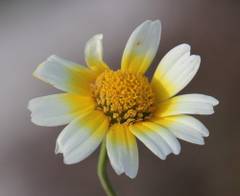
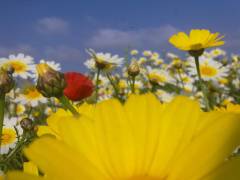
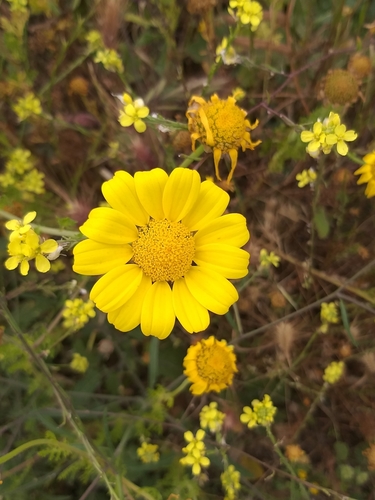
Glebionis segetum is an erect annual in the daisy family, growing 20-60 cm (8-24 in) tall on smooth, branching stems with a greyish cast. The fleshy, somewhat clasping leaves are 3-8 cm (1.2-3.1 in) long, the lower ones coarsely toothed or pinnately lobed and the upper ones simpler and stem-clasping. From early summer it bears solitary flower heads 3.5-5.5 cm (1.4-2.2 in) across, with golden-yellow ray florets surrounding a deeper yellow disc. The heads close at night and in dull weather and are followed by ribbed, one-seeded fruits. It germinates in spring on cultivated and disturbed ground, completing its cycle in a single season and seeding before autumn. Once a widespread weed of cereal fields on acidic, sandy soils, it has declined with modern farming but persists on field margins and waste ground. The plant tolerates poor, light soils but needs open, sunny ground and dies with the first hard frost.
Native Range
Glebionis segetum is native to the eastern Mediterranean and western Asia and has been carried across Europe with cereal cultivation since prehistoric times. It is now naturalised through much of Europe, North America, and other temperate regions. It grows on arable land, field edges, and disturbed sandy soils.Suggested Uses
Glebionis segetum is grown in annual wildflower meadows, cornfield-annual seed mixes, and informal borders on light soil, where it flowers over a long summer for bees and hoverflies. It suits naturalistic and pollinator plantings. Cut stems last several days in water.How to Identify
Appearance
Size & Dimensions
Height8" - 2'
Width/Spread8" - 1'
Bloom Information
Flowering runs from June to October, often continuing until the first frosts on late-germinating plants. The single yellow heads open by day and close at dusk. Seed ripens within a few weeks of each flush, allowing several overlapping generations in a long, warm season.
Detailed Descriptions
Foliage Description
blue-greenGrowing Conditions
Sun Requirements
Requires 6-12 hours of direct sunlight daily
• Full Sun: 6+ hours of direct sunlight
• Partial Shade: 3-6 hours of direct sunlight
• Full Shade: Less than 3 hours of direct sunlight
Water & Climate
Water Needs
Drought Tolerance
Drought tolerant when established
Care & Maintenance
Care Guide
Sow in full sun on light, free-draining, slightly acidic to neutral soil; it grows poorly on heavy or limey ground. Once up, it tolerates drought and low fertility and needs little watering on open sites. As a frost-tender annual it is killed by hard freezes and returns only from seed. Rich soils produce taller, leafier plants with fewer flowers. It self-seeds freely on bare ground, so a sown patch often returns the following year. Competition from grasses and dense planting reduces flowering.Pruning
Deadheading spent flower heads extends bloom and limits self-seeding where it is not wanted. Plants are pulled or cut down once they finish in autumn. No other cutting is needed on this annual.Container Growing
Suitable for container growing
Minimum container size: 2 gallons
Toxicity
Non-toxicPlanting Guide
Planting Methods & Timing
Planting Method
direct sow
Direct Sow Timing
Early spring after frost, or early autumn
Days to Maturity
60–90 days
Plant Spacing
9 inches
Companion Planting
Good Companions