Glaucium, Genus, spp., Multiple species,
- Genus
- Multiple species
horned poppy
Europe, the Mediterranean, North Africa, and western and central Asia
Overview
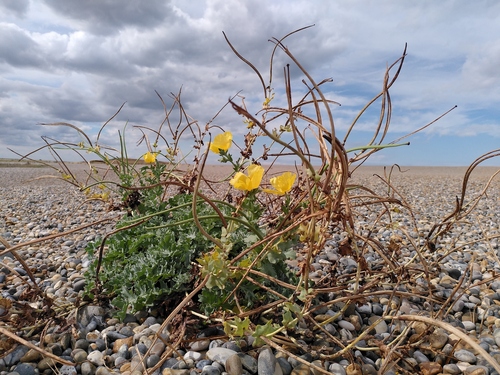
Glaucium is a genus of about 25 annual, biennial, and short-lived perennial plants in the poppy family, Papaveraceae, native to Europe, the Mediterranean, North Africa, and western and central Asia. The plants are recognized by their glaucous, blue-grey foliage: deeply lobed, wavy-edged leaves that form a basal rosette in the first year and clothe branching flower stems 1-3 feet (30-90 cm) tall in the second. From late spring through summer they bear solitary cup-shaped poppy flowers 2-3 inches (5-8 cm) across in yellow, orange, or red, each lasting a day or two and followed in succession. The defining feature is the seed pod, a slender curved capsule 6-12 inches (15-30 cm) long that gives the group the name horned poppy. G. flavum, the yellow horned poppy, grows on coastal shingle and is biennial, while G. corniculatum bears red or orange flowers and is annual. All parts contain toxic isoquinoline alkaloids and are poisonous if eaten. Plants self-seed freely and can naturalize on open ground. The blue-grey foliage and long horned pods persist after the brief flowers fade.
Native Range
Glaucium is native to Europe, the Mediterranean region, North Africa, and western and central Asia. G. flavum grows on coastal shingle and sand around the Atlantic and Mediterranean coasts, while other species occupy dry, open, disturbed ground inland. Several species have naturalized beyond their native range.Suggested Uses
Grown in coastal, gravel, and dry gardens and in sunny borders for the blue-grey foliage and poppy flowers. The plants self-sow into paving cracks, shingle, and open ground where conditions are lean. The long horned pods are cut for dried arrangements.How to Identify
Appearance
Size & Dimensions
Height1' - 3'
Width/Spread1' - 2'
Colors
Foliage Colors
Bloom Information
Flowering runs from late spring through summer, generally June to September depending on species and climate. Each cup-shaped flower lasts only a day or two, but plants open a steady succession over many weeks. The long horned seed pods develop quickly after each bloom.
Detailed Descriptions
Flower Description
yellow, orange, redFoliage Description
blue-greyGrowing Conditions
Sun Requirements
Requires 6-12 hours of direct sunlight daily
• Full Sun: 6+ hours of direct sunlight
• Partial Shade: 3-6 hours of direct sunlight
• Full Shade: Less than 3 hours of direct sunlight