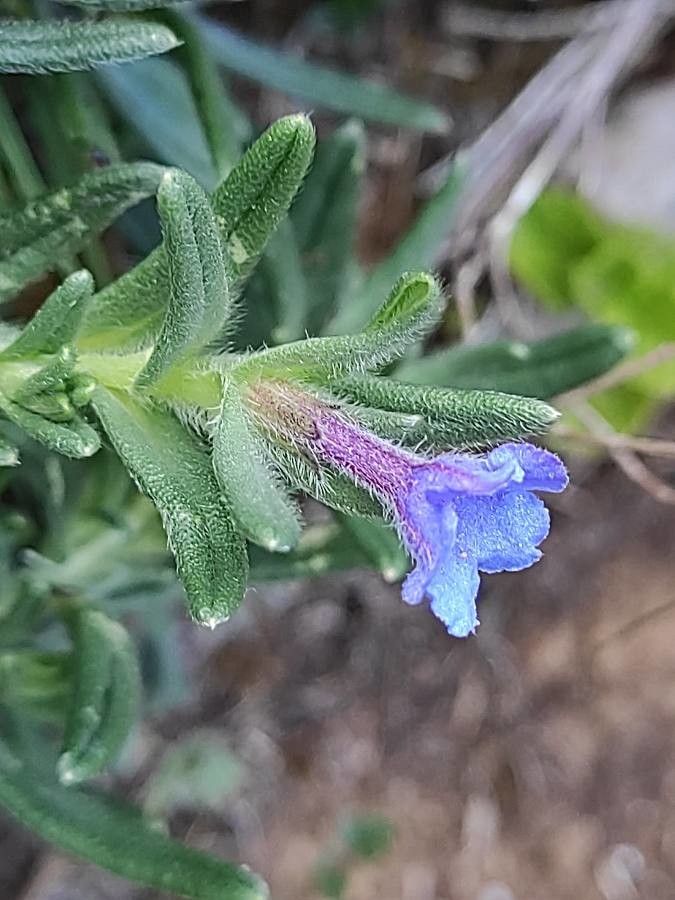
Glandora, Genus, spp., Multiple species,
- Genus
- Multiple species
glandora
Western and southern Europe, North Africa, and the eastern Mediterranean
Overview
Glandora is a genus of about five low evergreen shrubs and subshrubs in the borage family, Boraginaceae, segregated from Lithodora and native to western and southern Europe, North Africa, and the eastern Mediterranean. Plants form prostrate mats or low mounds 4-12 inches (10-30 cm) tall and spread 1-3 feet (30-90 cm) wide, with wiry stems clothed in small, narrow, rough-haired leaves. From late spring into summer they carry funnel-shaped flowers about 0.5-0.75 inch (12-18 mm) across, most in deep blue, with some species or forms in violet, purple, or white. G. prostrata, long known as Lithodora diffusa, is the form most often grown, with cultivars such as 'Heavenly Blue' and 'Grace Ward'. Most species need acidic, free-draining soil and decline on chalk or in heavy wet ground, which limits where they can be grown. G. rosmarinifolia tolerates more lime than the others. The mat-forming habit makes the genus suited to rock gardens, walls, and slopes. Plants are evergreen in mild climates but can be cut by hard frost.
Native Range
Glandora is native to western and southern Europe, North Africa, and the eastern Mediterranean, growing in scrub, heath, rocky slopes, and open woodland, mostly on acidic soils. The genus was previously included in Lithodora.Suggested Uses
Grown in rock gardens, raised beds, dry stone walls, gravel gardens, and at the front of borders as a low groundcover for acidic soils. The trailing stems spill over edges and slopes. Cultivars of G. prostrata are grown for their deep blue spring flowers.How to Identify
Appearance
Size & Dimensions
Height4" - 1'
Width/Spread1' - 3'
Bloom Information
Flowering runs from late spring into summer, generally May to July, with scattered later flowers in mild conditions. The funnel-shaped flowers open deep blue in most species and are carried over the spreading stems for several weeks. Bloom is heaviest in full sun.
Detailed Descriptions
Flower Description
deep blue, violet, whiteFoliage Description
dark greenGrowing Conditions
Sun Requirements
Requires 5-10 hours of direct sunlight daily
• Full Sun: 6+ hours of direct sunlight
• Partial Shade: 3-6 hours of direct sunlight
• Full Shade: Less than 3 hours of direct sunlight
Care & Maintenance
Care Guide
Most species grow in full sun to light shade in acidic, gritty, free-draining soil and resent lime, heavy clay, and winter wet, which cause yellowing and root rot. G. rosmarinifolia tolerates more alkaline ground than the others. Steady but moderate moisture suits the plants during the growing season, with sharp drainage at all times. Hardiness covers roughly USDA zones 6 to 9, and foliage can be damaged by hard frost in colder areas. A gritty mulch keeps the mat dry at the crown. Plants are short-lived and are often renewed from cuttings.Pruning
A light trim after the main flush keeps the mat dense and removes spent flowering stems. Plants are not cut back into old bare wood, which is slow to reshoot. Softwood cuttings taken in summer renew aging plants.Container Growing
Suitable for container growing
Minimum container size: 2 gallons
