Image 1 of 16
1 / 16
Plant Reference
Glandora, Genus, diffusa, Species,
- Genus & species
lithodora
Southwestern Europe — Spain, Portugal, and southwestern France; rocky acidic slopes and open scrub at low to middle elevations
Overview
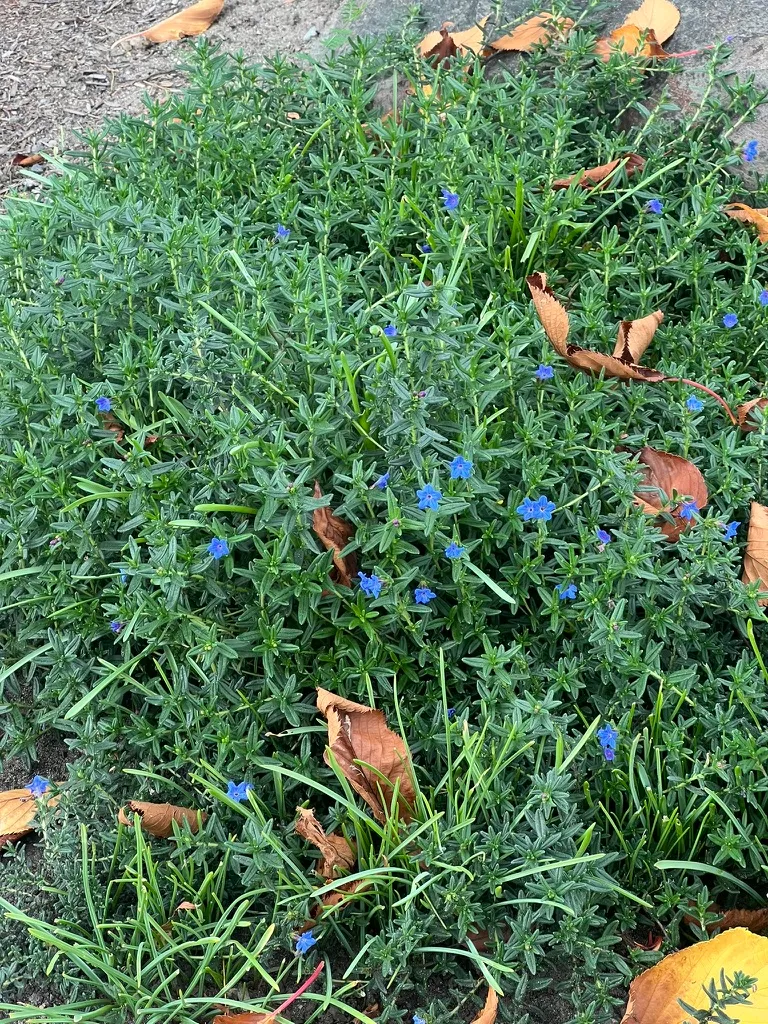
Glandora diffusa is a prostrate evergreen sub-shrub in the borage family Boraginaceae growing 6–12 inches (15–30 cm) tall and spreading 12–24 inches (30–60 cm) wide from a woody base that produces trailing stems carrying narrow hair-covered dark green leaves. The species was formerly classified as Lithodora diffusa, and the 2006 taxonomic revision by M. Thomas and colleagues moved the species along with several related taxa from Lithodora to the segregate genus Glandora on the basis of flower structure and molecular evidence — the older name Lithodora diffusa remains common in the horticultural trade and in older reference materials, and gardeners will encounter both names for the same plant. Leaves are dark green, narrow, hair-covered, 0.5–1 inch (12–25 mm) long, and carried densely along the prostrate stems; the hairy leaf surface is a genus character of the family Boraginaceae and gives the foliage a rough texture when rubbed. Vivid gentian-blue funnel-shaped flowers 0.5–0.75 inch (12–18 mm) across open singly or in small clusters along the stem tips from May through July across a 6–8 week main bloom period, and the gentian-blue flower color is pure and does not shift toward purple or violet — this pure blue color is matched by few other commonly cultivated garden plants and is the primary reason for growing the species. The cultivar 'Heavenly Blue' (synonym 'Grace Ward') is the widely planted selection in the nursery trade and carries slightly larger flowers and a more uniform growth habit than the species type, and 'White Star' carries white flowers with blue markings for a less-common color variant. Limitation: the species calls for strictly acidic soil with a pH of 5.0–6.5 and develops iron chlorosis and decline in alkaline or neutral soils above pH 6.5 — this strict acid-soil requirement is the primary cultural limitation and restricts garden use to sites with naturally acidic soil or to peat-amended beds. Sharp drainage is non-negotiable because root rot develops in heavy wet soil and in waterlogged winter conditions, and this combination of acid soil and sharp drainage requirements limits the species' performance in clay gardens without drainage amendment. The stems become woody and bare at the base of the plant over time, and shearing after the main flowering flush promotes denser branching from the cut points — but shearing cuts must stay in the live-wood zone above any bare lower stems because the species does not regenerate from cuts into old bare wood. Native to southwestern Europe — Spain, Portugal, and southwestern France — growing on rocky acidic slopes and in open scrub. Non-toxic. Deer-resistant. Drought-tolerant once established.
Native Range
Native to southwestern Europe — Spain, Portugal, and southwestern France — growing on rocky acidic slopes and in open scrub at low to middle elevations on acidic substrates. The species was originally described in the genus Lithospermum and has subsequently been moved through Lithodora to its current placement in Glandora following the 2006 taxonomic revision based on flower structure and molecular phylogenetic evidence, and the older name Lithodora diffusa remains common in the horticultural trade.Suggested Uses
Used in rock gardens, alpine troughs, raised beds, over retaining walls, and cascading over raised bed edges in USDA zones 6 through 8 at 18–24 inch (45–60 cm) spacing between plants. The pure gentian-blue flower color during the May through July bloom, the prostrate cascading habit that drapes over hard edges, and the year-round narrow hair-covered evergreen foliage combine to fill a specific garden niche for blue-flowered spring-to-summer ground cover in acid-soil rock garden positions. Alkaline soil positions, heavy clay gardens without drainage amendment, and waterlogged winter positions are unsuitable because of the strict acid-soil requirement and the sharp drainage requirement. Containers of at least 3 gallons (11 L) with acidic potting mix support the species in gardens where the surrounding native soil is alkaline or poorly drained.How to Identify
Appearance
Size & Dimensions
Height6" - 1'
Width/Spread1' - 2'
Bloom Information
Vivid gentian-blue funnel-shaped flowers 0.5–0.75 inch (12–18 mm) across open singly or in small clusters along the stem tips from May through July across a 6–8 week main bloom period. The gentian-blue flower color is pure and does not shift toward purple or violet. Sporadic rebloom follows light shearing after the main flush, and honeybees and bumblebees work the flowers for nectar across the bloom window.
Detailed Descriptions
Flower Description
vivid gentian-blue funnel-shaped flowers 0.5-0.75 inch (12-18 mm) across carried singly or in small clusters along the stem tips; the gentian-blue color is pure and does not shift toward purple or violet — the color is matched by few other commonly cultivated garden plants and is the primary reason for growing the speciesFoliage Description
dark green narrow hair-covered leaves 0.5-1 inch (12-25 mm) long carried densely along the prostrate stems; the hairy leaf surface is a genus character of the family Boraginaceae and gives the foliage a rough texture when rubbed; evergreen year-roundGrowing Conditions
Sun Requirements
Requires 6-10 hours of direct sunlight daily
• Full Sun: 6+ hours of direct sunlight
• Partial Shade: 3-6 hours of direct sunlight
• Full Shade: Less than 3 hours of direct sunlight
Care & Maintenance
Care Guide
Site in full sun with 6 or more hours of direct sun per day in strictly acidic well-drained sandy or loam soil with a pH of 5.0–6.5 — the species develops iron chlorosis and decline in alkaline or neutral soils above pH 6.5, and gardens with naturally high-pH soil call for peat-amended beds or container culture with acidic potting mix to maintain the acid pH at the root zone. Sharp drainage is non-negotiable because root rot develops in heavy wet soil and in waterlogged winter conditions, and the combination of acid soil and sharp drainage requirements limits the species' performance in heavy clay gardens without substantial drainage amendment. Drought tolerance develops once the root system is established. Light shearing after the main flowering flush (July or August) promotes denser branching and sporadic rebloom, and shearing cuts stay in the live-wood zone above any bare lower stems because the species does not regenerate from cuts into old bare wood. Non-toxic and deer-resistant. Hardy in USDA zones 6–8.Pruning
Light shearing after the main flowering flush (July or August) promotes denser branching from the cut points and supports a sporadic secondary flush of bloom through late summer. Shearing cuts stay in the live-wood zone above any bare lower stems because the species does not regenerate from cuts into old bare wood, and cutting into bare woody stems produces permanent bare gaps in the plant.Pruning Schedule
Prune: August
summer
Container Growing
Suitable for container growing
Minimum container size: 3 gallons