Gerbera, Genus, jamesonii, Species,
- Genus & species
Barberton daisy
Overview
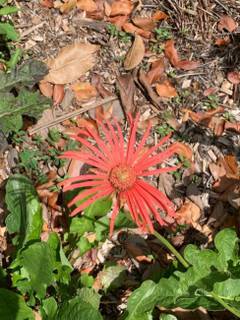
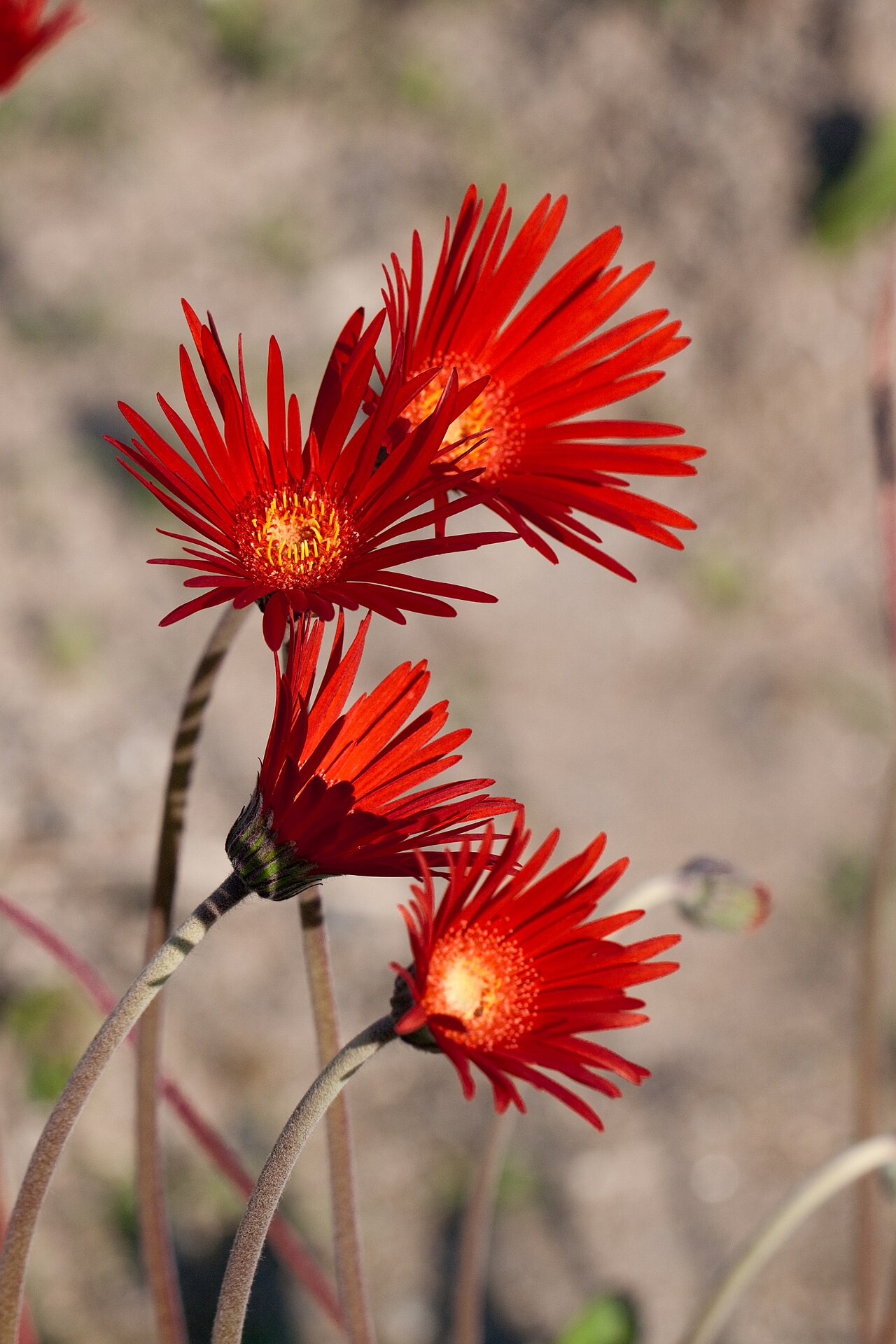
Gerbera jamesonii is a tender, clump-forming perennial in the daisy family (Asteraceae), producing a basal rosette of leaves 12–18 inches (30–45 cm) tall and 12–18 inches (30–45 cm) wide, with leafless flower stalks 12–24 inches (30–60 cm) tall. Leaves are oblong to lanceolate, 6–10 inches (15–25 cm) long, deeply and irregularly lobed, dark green above, and covered with soft white hairs beneath. Each stalk carries a single daisy-like flower head 2–5 inches (5–13 cm) across, with a ring of narrow ray florets surrounding a dense center of tubular florets. In the wild species, ray florets are orange to scarlet-red, and cultivated hybrids range from white, yellow, and pink to red and orange. Flowering occurs from spring through fall, and continues year-round in frost-free climates. Plants form a thick, fleshy rootstock and live 3–5 years in gardens. Crowns rot when planted deeper than soil level or kept wet, and damage occurs at 28°F (−2°C). Whiteflies, leaf miners, and powdery mildew affect foliage in warm, humid conditions.
Native Range
Gerbera jamesonii is native to South Africa and Eswatini, where it grows in grassland and rocky slopes in the eastern Mpumalanga and KwaZulu-Natal provinces. It occurs at elevations of 3,000–5,000 feet (900–1,500 m) in sites with summer rainfall.Suggested Uses
Used in borders, containers, and as cut flowers in warm climates, with plants spaced 12–18 inches (30–45 cm) apart. Container plants of 3–5 gallons (11–19 L) are moved indoors in climates with winter frost. Heads attract bees and butterflies.How to Identify
Appearance
Size & Dimensions
Height1' - 2'
Width/Spread1' - 1'6"
Bloom Information
Flowers open from spring to fall in temperate climates, with peak bloom in May–June and a lighter flush in September. In frost-free zones 10–11, plants flower year-round with brief pauses in midwinter. Each head lasts 7–14 days on the plant and 7–10 days as a cut flower.
Detailed Descriptions
Flower Description
Orange to scarlet-red (wild); many colors in hybridsFoliage Description
Dark green above, white-hairy beneathGrowing Conditions
Sun Requirements
Requires 5-10 hours of direct sunlight daily
• Full Sun: 6+ hours of direct sunlight
• Partial Shade: 3-6 hours of direct sunlight
• Full Shade: Less than 3 hours of direct sunlight
Care & Maintenance
Care Guide
Grows in full sun in cool climates and part shade in hot ones, in rich, well-drained, slightly acidic soil with a pH of 5.5–6.5. Hardy in USDA zones 8–11, with crown damage at 28°F (−2°C) and below. Plants receive 1 inch (2.5 cm) of water per week at the soil surface, and wet crowns develop rot. Crowns are set level with the soil surface, not below. Whiteflies, leaf miners, spider mites, and powdery mildew occur in warm, humid conditions with poor air movement. Plants are divided every 2–3 years in spring, and they are grown as annuals or container plants brought indoors where winter temperatures fall below 28°F (−2°C).Pruning
Spent flower stalks are cut at the base of the rosette after the head fades. Yellowed or damaged leaves are removed at the crown in spring and fall. Clumps are divided every 2–3 years in spring, with each division carrying 3–4 leaf rosettes.Pruning Schedule
Prune: April & October
late springfall
Container Growing
Suitable for container growing
Minimum container size: 3 gallons