Gaylussacia, Genus, baccata, Species,
- Genus & species
black huckleberry
Overview
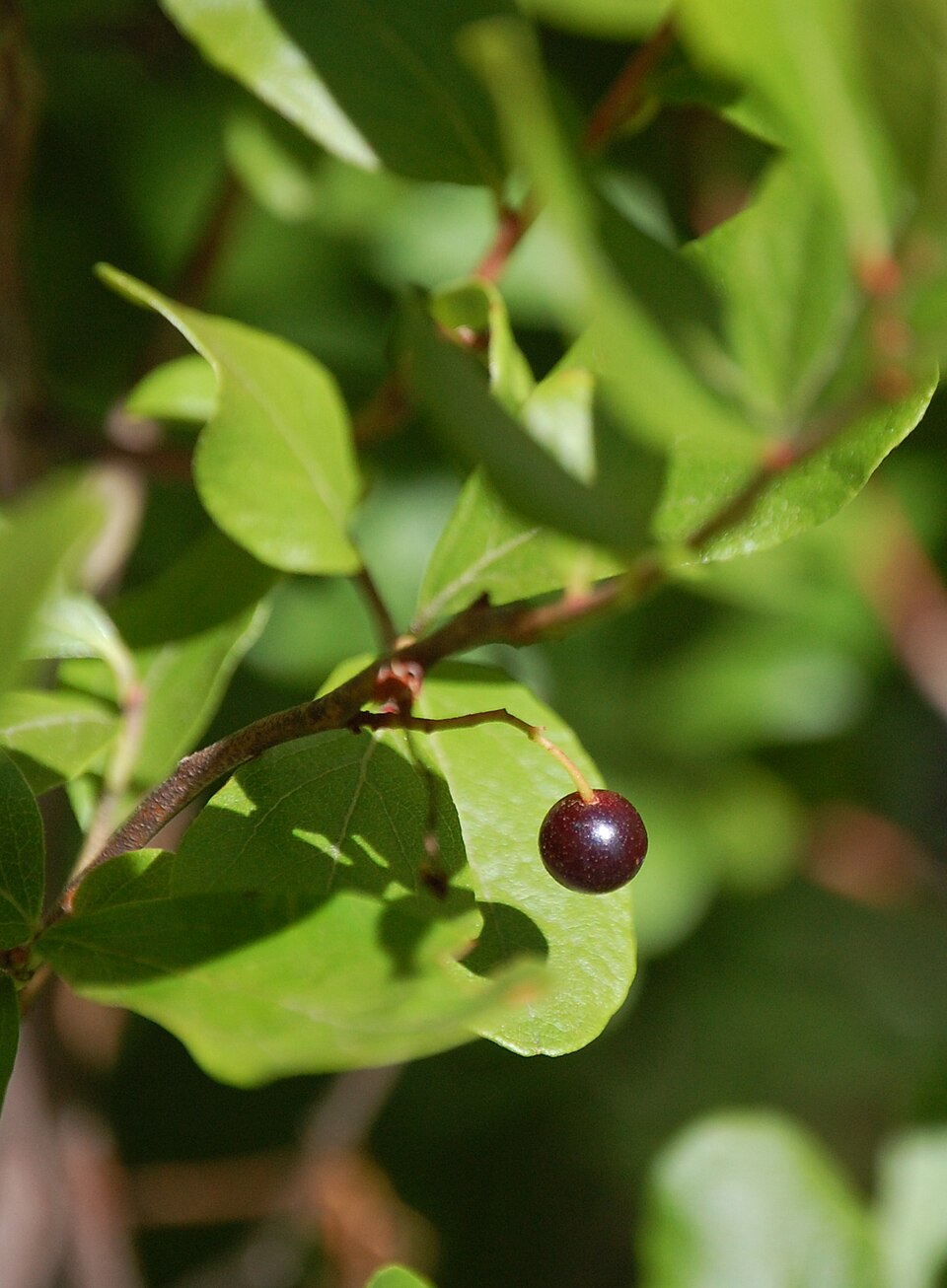
Gaylussacia baccata is a deciduous shrub of eastern North America, typically reaching 1-3 feet (30-90 cm) tall and spreading by rhizomes into colonies 2-4 feet (60-120 cm) wide. The oval leaves are 1-2 inches (2.5-5 cm) long, green through summer and turning red to bronze in autumn, with undersides coated in sticky golden resin glands that mark the genus. Urn-shaped flowers 0.25 inch (6 mm) long open in late spring, dull red to greenish-pink, hanging in short clusters along the previous year growth. The fruit is a black drupe 0.3 inch (8 mm) across containing ten hard seedlike nutlets, ripening from July to September, edible with a sweet flavor and slightly granular texture. Plants grow in dry to moist acidic soils in oak and pine woodlands. The species spreads steadily once established, which limits its use in small or formal plantings. Foliage and stems contain no significant toxins.
Native Range
Native to eastern North America, from Newfoundland and Quebec west to Manitoba and south to Georgia, Alabama, and Louisiana.Suggested Uses
Used in native plant gardens, woodland edges, and naturalized borders on acidic soil. The colonizing habit suits erosion control on slopes and informal massed plantings. Fruit draws birds and small mammals.How to Identify
Appearance
Size & Dimensions
Height1' - 3'
Width/Spread2' - 4'
Bloom Information
Flowers appear from May to June, with urn-shaped blooms 0.25 inch (6 mm) long in dull red, pink, and greenish tones. The flowers hang in small clusters of 3-7 along the prior season twigs. Bloom lasts roughly 2-3 weeks.
Detailed Descriptions
Flower Description
dull red to greenish-pinkFoliage Description
green turning red to bronze in fallGrowing Conditions
Sun Requirements
Requires 4-8 hours of direct sunlight daily
• Full Sun: 6+ hours of direct sunlight
• Partial Shade: 3-6 hours of direct sunlight
• Full Shade: Less than 3 hours of direct sunlight
Care & Maintenance
Care Guide
Grows in acidic soils with a pH of 4.0-5.5, in conditions ranging from dry sand to moist peat. Tolerates full sun to part shade, fruiting more heavily with at least 4 hours of direct sun. Established plants withstand drought and need little supplemental water across most of their native range. Rhizomes spread to form colonies up to several feet across, which can crowd adjacent plantings in confined beds. The species is cold hardy in USDA zones 3-7. Leaf spot may appear in humid summers but rarely causes lasting damage.Pruning
Pruning is done in late winter while dormant, removing dead or crowded stems at the base. Cutting older colonies to near ground level every few years renews stem vigor. Routine shaping is otherwise unnecessary.Pruning Schedule
Prune: February–March
winter