Garrya, Genus, spp., Multiple species,
- Genus
- Multiple species
silktassels
Western North America, Mexico, and Central America
Overview
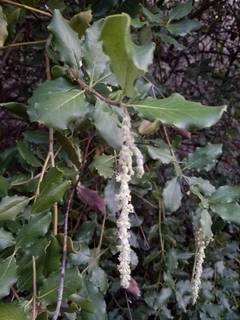
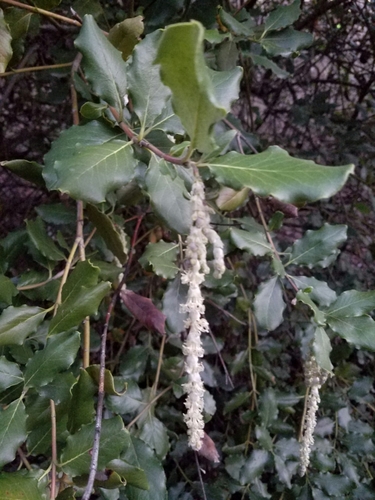
Garrya is a genus of about 14 species of evergreen, dioecious shrubs and small trees in the family Garryaceae, native to the western United States, Mexico, and Central America. Plants are densely branched and grow 1.5-5 m (5-16 ft) tall, with opposite, leathery, wavy-margined leaves that are dark green above and paler or grey-felted beneath. Male and female flowers are borne on separate plants in long, pendulous catkins; the male catkins are longer and more showy, hanging 8-30 cm (3-12 in) and lengthening through winter into early spring. The flowers are grey-green to silvery and wind-pollinated, and female plants carry strings of small purplish berries that dry darker. G. elliptica, the coast silktassel, is the species most grown in gardens. Plants tolerate wind, coastal salt, drought, and poor soils once established. They establish slowly after transplanting and recover slowly from hard pruning, and only male plants give the long winter tassels.
Native Range
Garrya is native to the western and southwestern United States, Mexico, and Central America, growing on dry slopes, chaparral, coastal scrub, and open woodland.Suggested Uses
Grown as an evergreen screen, informal hedge, or wall shrub, and trained against shaded north- and east-facing walls where many shrubs grow poorly. Male forms such as G. elliptica James Roof are planted for the long winter catkins. Plants are spaced 1.5-2.5 m (5-8 ft) apart in screens.How to Identify
Appearance
Size & Dimensions
Height5' - 16'
Width/Spread5' - 13'
Bloom Information
The pendulous catkins develop in autumn and reach full length from midwinter to early spring, lasting many weeks. Male catkins are longer and silvery, while female catkins are shorter and give way to berries. The display is at its peak in the coldest, quietest part of the year.
Detailed Descriptions
Flower Description
grey-green to silveryFoliage Description
dark green above, grey-green beneathGrowing Conditions
Sun Requirements
Requires 4-8 hours of direct sunlight daily
• Full Sun: 6+ hours of direct sunlight
• Partial Shade: 3-6 hours of direct sunlight
• Full Shade: Less than 3 hours of direct sunlight
Care & Maintenance
Care Guide
Most species grow in full sun to part shade on free-draining soil and tolerate wind, coastal salt, heat, and drought once established. They accept poor, sandy, or rocky ground at a pH from slightly acidic to alkaline and need little water after the first year or two. Hardiness runs to about USDA zone 7, with foliage scorched by cold, drying winds in exposed inland sites. Plants are slow to settle after planting and recover slowly from hard cutting, so light shaping is the steadier approach. Pests and diseases are few, though leaf spot can mark the foliage in damp shade.Pruning
Light trimming to shape is done after the catkins fade in spring, removing any frost-burned or wayward shoots. Plants break unevenly from old wood, so hard renewal cuts are avoided. Wall-trained specimens are tied in and shortened lightly each year.Pruning Schedule
Prune: April
late spring
Container Growing
Suitable for container growing
Minimum container size: 7 gallons