Image 1 of 14
1 / 14
Plant Reference
Garrya, Genus, elliptica, Species,
- Genus & species
coast silktassel
Coastal Oregon and California — from southwestern Oregon to central California; coastal bluffs, chaparral, and mixed-evergreen forests
Overview
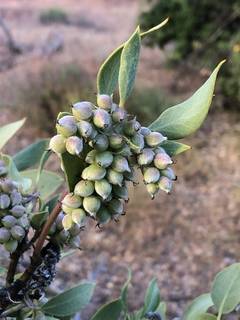
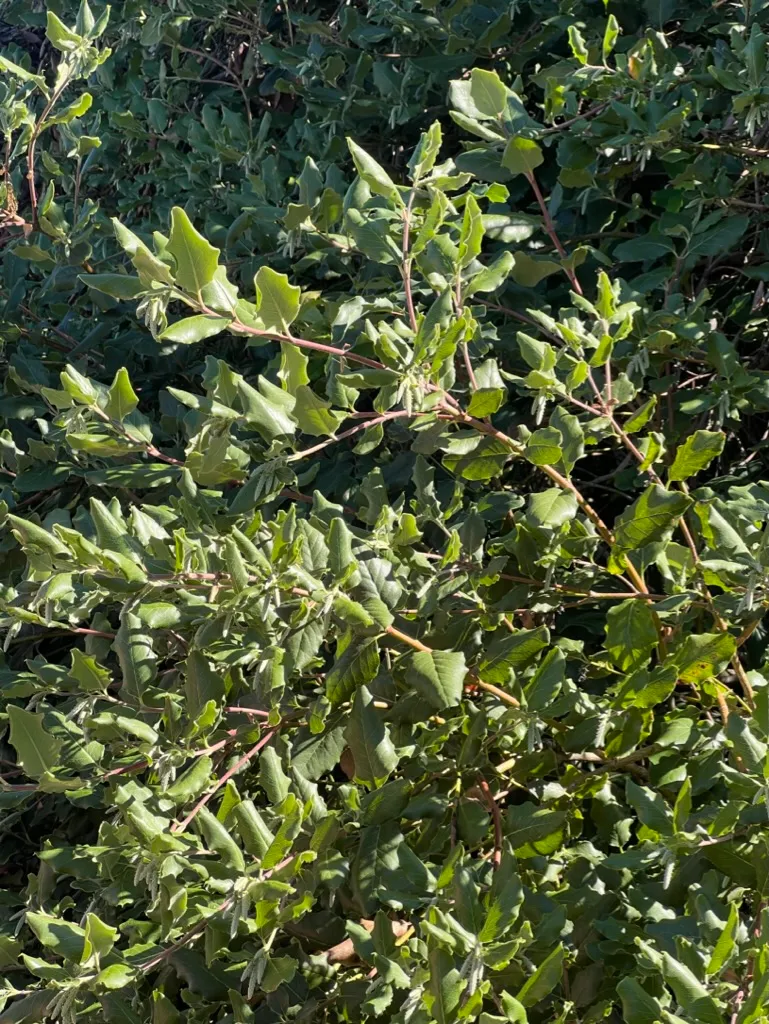
Garrya elliptica is coast silktassel (wavyleaf silktassel), an upright evergreen shrub growing 8-15 feet (2.4-4.5 m) tall and 8-12 feet (2.4-3.6 m) wide. Gray-green pendulous male catkins 6-12 inches (15-30 cm) in December-February (8 weeks). Female catkins shorter, 3-4 inches (7-10 cm), followed by purple-black berries. Dioecious (separate male and female plants). Dark gray-green elliptic leathery leaves 2-3 inches (5-7 cm) with wavy margins; woolly white beneath. In Garryaceae. Named for Nicholas Garry. Native to coastal Oregon and California. The long pendulous winter catkins on male plants are the primary ornamental feature — select named male cultivars such as 'James Roof' (catkins to 14 inches / 35 cm). Dioecious plants require both sexes for berry production on females. Resents transplanting — plant from containers and do not move. Tolerates salt spray, wind, drought, and poor soil. Deer-resistant. Non-toxic. Zones 7-10. Full sun to partial shade. Growth rate is moderate.
Native Range
Native to coastal Oregon and California — from southwestern Oregon to central California. Found on coastal bluffs, chaparral, and mixed-evergreen forests.Suggested Uses
Grown as an evergreen screen, windbreak, or specimen, spaced 8-12 feet (2.4-3.6 m). Winter catkins. Salt- and wind-tolerant. Select male cultivars for catkin display. Native to Pacific Coast. Non-toxic. Zones 7-10.How to Identify
Appearance
Size & Dimensions
Height8' - 15'
Width/Spread8' - 12'
Bloom Information
Winter (December-February). Gray-green pendulous catkins — male 6-12 inches (15-30 cm), female 3-4 inches (7-10 cm). Dioecious. Wind-pollinated. 8 weeks. Female berries follow in spring.
Detailed Descriptions
Flower Description
Gray-green pendulous catkins — male catkins 6-12 inches (15-30 cm) long, silky-textured, in dense pendulous clusters; female catkins shorter, 3-4 inches (7-10 cm); dioecious (separate male and female plants — male catkins are the primary ornamental feature); December-FebruaryFoliage Description
Dark gray-green above, woolly white beneath, elliptic, 2-3 inches (5-7 cm), leathery, with wavy margins (elliptica = elliptic — the leaf shape); the white woolly undersides flash in wind; evergreen year-roundGrowing Conditions
Sun Requirements
Requires 4-8 hours of direct sunlight daily
• Full Sun: 6+ hours of direct sunlight
• Partial Shade: 3-6 hours of direct sunlight
• Full Shade: Less than 3 hours of direct sunlight
Care & Maintenance
Care Guide
Full sun to partial shade (4-8 hours). Well-drained soil pH 5.5-7.0. Drought-tolerant once established. Tolerates salt spray and wind. Resents transplanting — plant from containers, do not move. Dioecious — select male for catkins. Prune after catkins fade (February-March). Non-toxic. Deer-resistant. Zones 7-10.Pruning
Prune immediately after catkins fade (February-March). Remove crossing or dead branches. Shape as desired. Tolerates hard renovation pruning if overgrown.Pruning Schedule
Prune: February–March
early spring