Franklinia, Genus, alatamaha, Species,
- Genus & species
franklin tree
Southeastern United States (Altamaha River, Georgia); extinct in the wild
Overview
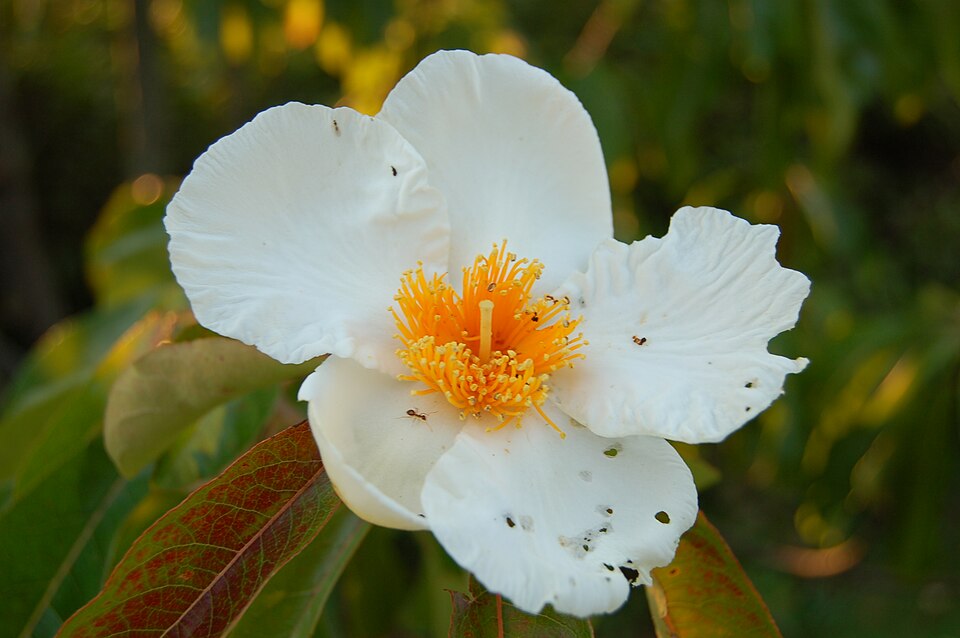
Franklinia is a genus in the tea family (Theaceae) containing the single species Franklinia alatamaha, the Franklin tree, a deciduous large shrub or small tree once native to a small area along the Altamaha River in Georgia, in the southeastern United States. It has not been seen in the wild since the early 1800s and survives only in cultivation, all plants descending from seed collected before the wild population disappeared. Plants grow 10-25 feet (3-7.6 m) tall, upright and often multi-stemmed, with glossy dark green leaves 5-6 inches (13-15 cm) long. From late summer into autumn the branch tips carry fragrant, cup-shaped white flowers 3 inches (7.5 cm) across, each with five rounded petals around a central boss of yellow stamens. The flowers open as the foliage begins turning, so blooms and red-to-orange fall color often appear together. Franklinia needs acidic, humus-rich, moist but free-draining soil and is highly sensitive to root rot, drought stress, and disturbance, which makes it short-lived and difficult to establish in many gardens.
Native Range
Franklinia is native to the southeastern United States, historically known only from a few acres along the Altamaha River in southeastern Georgia. The species is now extinct in the wild, and every cultivated plant traces back to seed gathered by 18th-century collectors.Suggested Uses
Franklinia is grown as a specimen large shrub or small tree in acidic woodland gardens and shrub borders, valued for late flowers and autumn color on the same plant. It is planted near patios and paths where the fragrance and bloom can be seen at close range in late season. Because it needs particular soil and is prone to root rot, it is used mainly by collectors and in gardens with suitable conditions.How to Identify
Appearance
Size & Dimensions
Height10' - 25'
Width/Spread6' - 15'
Bloom Information
Flowering runs from late summer into autumn, generally August to October, later than most flowering trees and shrubs. The fragrant white flowers open a few at a time over several weeks and draw bees. Because bloom overlaps with the turning foliage, flowers and red fall color are often seen together.
Detailed Descriptions
Foliage Description
dark greenGrowing Conditions
Sun Requirements
Requires 4-8 hours of direct sunlight daily
• Full Sun: 6+ hours of direct sunlight
• Partial Shade: 3-6 hours of direct sunlight
• Full Shade: Less than 3 hours of direct sunlight