Image 1 of 11
1 / 11
Plant Reference
Franklinia, Genus, alatamaha, Species,
- Genus & species
franklinia
Formerly the Altamaha River valley in Georgia, USA; extinct in the wild since the early 1800s and all cultivated plants descend from seeds collected by John and William Bartram in the 1770s
Overview
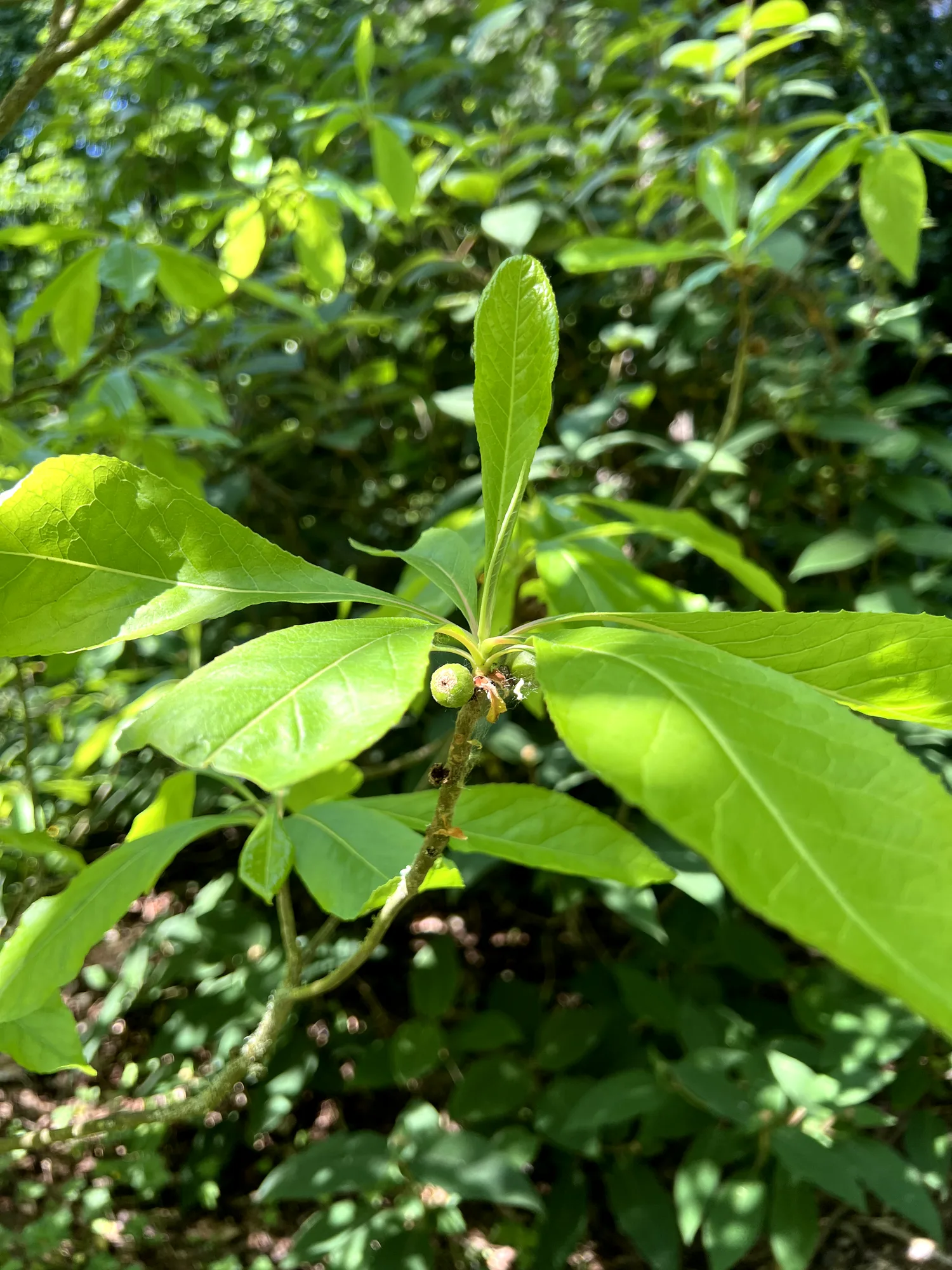
Franklinia alatamaha is an upright deciduous tree in the family Theaceae (the tea family), reaching 10-20 feet (3-6 m) tall and 6-15 feet (1.8-4.5 m) wide with a narrow upright habit and smooth striped gray bark. Leaves are dark green, glossy, oblong, 5-6 inches (13-15 cm) long with serrated margins, and turn red-orange in fall. White cup-shaped 5-petaled flowers 3 inches (7 cm) across with a central boss of golden-yellow stamens open from August through October and the flower form resembles a single white camellia — an appearance shared with its close relative Gordonia lasianthus. The fall color frequently develops while the last flowers are still open, giving the tree the simultaneous display of white blooms and red foliage that is the primary ornamental reason for cultivating the species. The genus Franklinia is monotypic — the species is the only member of its genus — and was originally collected by the botanist-explorers John and William Bartram in 1765 along the Altamaha River in Georgia. The Bartrams returned in 1773, collected seeds, and brought them into cultivation at their Philadelphia garden. The species has not been observed in the wild since approximately 1803 and is now considered extinct in its native habitat; every Franklinia in cultivation today traces back to those original Bartram seed collections, which makes the species a literal surviving lineage from the 18th century. The primary horticultural limitation is extreme susceptibility to the soil-borne root pathogen Phytophthora cinnamomi, which causes fatal root rot; because P. cinnamomi also affects rhododendrons, camellias, and oaks, sites where those plants have previously died from root rot are poor candidates for Franklinia. The species requires acidic well-drained soil at a pH of 5.0 to 6.0, cool root conditions maintained by mulching, and consistent summer moisture without waterlogging. Growth is slow.
Native Range
Franklinia alatamaha was historically native to a small area along the Altamaha River valley in Georgia, USA. John and William Bartram first encountered the species in 1765 and returned in 1773 to collect seeds, and the species has not been observed in the wild since approximately 1803. All Franklinia currently in cultivation worldwide descends from seed collected by the Bartrams and propagated at their garden in Philadelphia in the 1770s and 1780s, making the species extinct in the wild but preserved entirely through one 18th-century ex-situ collection.Suggested Uses
Planted as a specimen tree in acid-soil gardens, woodland-edge positions, and heritage-plant collections at 6-15 foot (1.8-4.5 m) spacing, or in containers of 10 gallons (38 L) or larger with a well-drained acid potting mix. The late summer to fall bloom overlapping with red-orange fall foliage is uncommon in temperate woody plants and makes the species a late-season feature in mixed borders and specimen plantings where most other flowering trees have already finished. The conservation status of the species as extinct in the wild gives Franklinia particular interest for botanical garden and heritage plantings. Combined with other Theaceae such as Stewartia pseudocamellia (earlier bloom) and acid-loving companions such as Rhododendron, Kalmia latifolia, and Leucothoe fontanesiana in zones 5-8. Not suited to sites where Phytophthora cinnamomi is known to be present in the soil, alkaline soils above pH 6.5, heavy clay or poorly drained positions, exposed sites where drought stress is a regular occurrence, or compacted urban soils where root conditions cannot be controlled.How to Identify
Appearance
Size & Dimensions
Height10' - 20'
Width/Spread6' - 15'
Bloom Information
White cup-shaped 5-petaled flowers 3 inches (7 cm) across with a central boss of golden-yellow stamens open successively from August through October in zones 5-8, averaging 6 weeks of bloom. Flowers are lightly fragrant and bee-pollinated. The red-orange fall foliage typically develops while the last flowers remain open in September and October, giving the tree a simultaneous display of white blooms and red leaves.
Detailed Descriptions
Flower Description
white, 5-petaled, cup-shaped, 3 inches (7 cm) across with a central boss of golden-yellow stamens — the flower form resembles a single white camelliaFoliage Description
dark green, glossy, oblong, 5-6 inches (13-15 cm) long with serrated margins; turns red-orange in fall and the fall color often develops while the last flowers are still openGrowing Conditions
Sun Requirements
Requires 4-8 hours of direct sunlight daily
• Full Sun: 6+ hours of direct sunlight
• Partial Shade: 3-6 hours of direct sunlight
• Full Shade: Less than 3 hours of direct sunlight
Care & Maintenance
Care Guide
Plant in well-drained acidic loam with a pH of 5.0-6.0 in full sun to part shade. The species is extremely susceptible to root rot caused by the soil-borne oomycete Phytophthora cinnamomi and sites where rhododendrons, camellias, oaks, or other Phytophthora-susceptible plants have previously died from root rot are poor candidates for Franklinia because the pathogen persists in the soil for years after a host dies. Wet sites, heavy clay, and poorly drained positions are similarly unsuited because saturated soil favors Phytophthora infection even in otherwise-resistant hosts. The species is not drought-tolerant and requires consistent summer moisture; mulching with pine bark or pine needles maintains cool moist root conditions without the waterlogging that triggers root rot, and overhead irrigation during dry spells extends the summer bloom. Acidic-appropriate fertilizer formulations (the same products used for Rhododendron and Camellia) suit the species. Pruning is done in early spring (March) before bud break.Pruning
Pruning is done in early spring (March) before bud break. The upright habit develops naturally and minimal corrective pruning is required on healthy trees. Dead, damaged, and crossing branches are removed at the branch collar. The species is grown as either a single-trunk small tree or a multi-stemmed large shrub depending on how the leader is trained in the first 5-7 years after planting, and the multi-stemmed form is the more common choice in residential gardens because the multiple stems display the striped gray bark more prominently in winter.Pruning Schedule
Prune: March
early spring
Container Growing
Suitable for container growing
Minimum container size: 10 gallons