Flagellaria, Genus, indica, Species,
- Genus & species
Indian Bushcane
tropical Australia, Asia, Pacific, and Africa
Overview
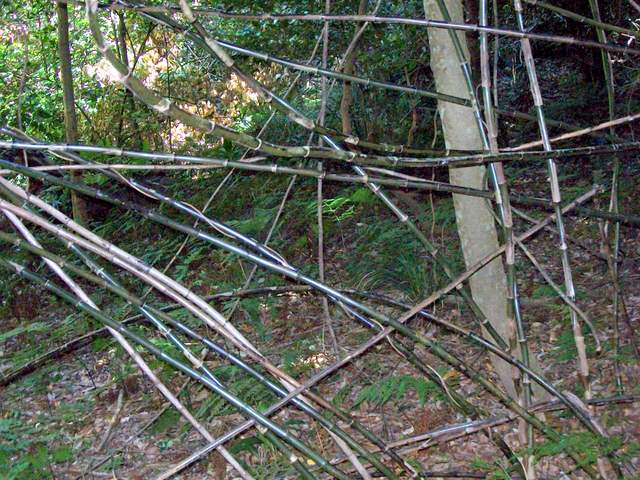
Flagellaria indica is an evergreen climbing plant with slender, cane-like stems that scramble and climb to 30-50 feet (9-15 m) into surrounding trees. The stems are jointed and bamboo-like, branching near the top. The leaves are narrow and strap-like, 4-12 inches (10-30 cm) long, each ending in a coiled tendril that wraps around supports to pull the plant upward. Loose clusters of small white to cream flowers form at the stem tips, followed by rounded fleshy fruit 0.2-0.3 inch (4-7 mm) wide that ripen from pink to red. It grows in rainforest margins, swamp forest, and coastal thickets. Without support the stems trail along the ground, and the plant can form dense tangled masses over shrubs and small trees.
Native Range
Native to tropical regions of Australia, Asia, the Pacific, and Africa. In Australia it grows in northern and eastern coastal areas, in rainforest margins, swamp forest, monsoon thickets, and along streams on moist soils.Suggested Uses
Grown on trellises, pergolas, and fences in tropical and subtropical gardens, and used in rainforest restoration. The flexible canes are used in basketry and weaving. The vigorous, tangling habit makes it unsuited to small gardens without regular cutting.How to Identify
Appearance
Size & Dimensions
Height30' - 50'
Width/Spread6' - 13'
Bloom Information
Detailed Descriptions
Flower Description
white to creamFoliage Description
greenGrowing Conditions
Sun Requirements
Requires 4-10 hours of direct sunlight daily
• Full Sun: 6+ hours of direct sunlight
• Partial Shade: 3-6 hours of direct sunlight
• Full Shade: Less than 3 hours of direct sunlight
Care & Maintenance
Care Guide
It grows in full sun to part shade in moist, well-drained soils rich in organic matter with a pH of 5.5-7.0. Water regularly to keep the soil moist; the plant tolerates wet ground and short flooding. It grows in frost-free tropical and subtropical climates and is damaged by frost. It needs a trellis, fence, or trees to climb. Few pests or diseases affect it.Pruning
Cut back stems at any time to control size and reduce tangling. The plant reshoots from the base and lower nodes after cutting. Removing stems that root or layer along the ground limits its spread.Pruning Schedule
Prune: March–April
fall