Flagellaria, Genus, spp., Multiple species,
- Genus
- Multiple species
whip vine
Old World tropics: Africa, Asia, Australia, and the Pacific
Overview
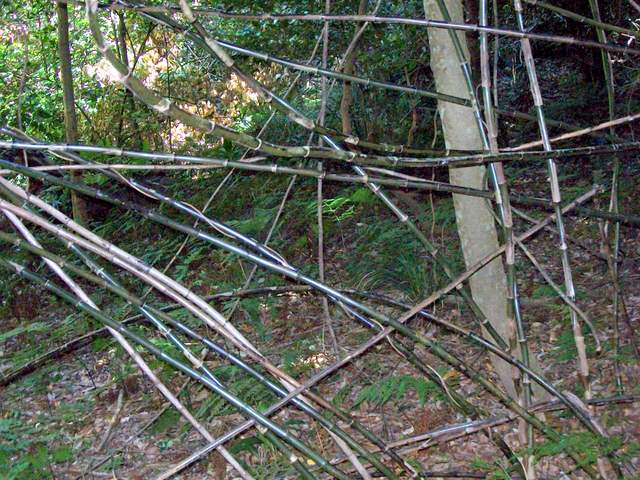
Flagellaria is a small genus of about four species of climbing, cane-like perennials in its own family (Flagellariaceae), native to the tropics and subtropics of the Old World from Africa through tropical Asia to northern Australia and the Pacific islands. Plants produce slender, woody, bamboo-like stems that scramble and climb to 15-50 feet (4.5-15 m) through surrounding vegetation. The long, strap-shaped leaves end in a slender coiled tendril formed from the leaf tip, which wraps around branches and stems to support the climb. Small white to cream flowers are borne in branched terminal panicles, followed by small fleshy fruit 0.2-0.3 inch (5-8 mm) across that ripen red to pink and hold one to three seeds. As monocots, Flagellaria species have parallel-veined leaves and lack the secondary thickening of woody dicot vines. They grow in rainforest margins, swamp forests, mangroves, and coastal thickets, rooting in wet to seasonally flooded ground. The pliable stems have been used in basketry and weaving across the genus range. Without strong support the stems sprawl across the ground rather than climbing, and the genus is frost-tender and limited to warm, frost-free climates.
Native Range
Flagellaria is native to the Old World tropics and subtropics, ranging from sub-Saharan Africa through South and Southeast Asia to northern Australia, New Guinea, and the western Pacific islands. It is absent from the Americas.Suggested Uses
Flagellaria is grown on trellises, fences, and into trees in tropical gardens, and in wetland and pondside plantings on ground that stays wet. The cane-like stems are harvested locally for basketry, cordage, and weaving. In containers under glass it is kept as a foliage climber in warm conservatories.How to Identify
Appearance
Size & Dimensions
Height15' - 50'
Width/Spread3' - 10'
Bloom Information
Flowering occurs mainly in the warm wet season, with timing varying by latitude across the tropical range. The small white to cream flowers are clustered in terminal panicles and are insect-pollinated. Red to pink fleshy fruit follows and is dispersed by birds.
Detailed Descriptions
Flower Description
white to creamFoliage Description
greenGrowing Conditions
Sun Requirements
Requires 4-10 hours of direct sunlight daily
• Full Sun: 6+ hours of direct sunlight
• Partial Shade: 3-6 hours of direct sunlight
• Full Shade: Less than 3 hours of direct sunlight
Care & Maintenance
Care Guide
Flagellaria grows in full sun to part shade in consistently moist to wet, fertile soil, and tolerates seasonal flooding and brackish coastal conditions. It climbs only where branches or a trellis are within reach of the tendrils, and otherwise forms low sprawling thickets. Plants are raised from seed or from stem and rhizome divisions and establish quickly in warm, humid conditions. Growth is vigorous in tropical climates, and stems may need thinning to keep a clump in bounds. The genus is frost-tender and is grown outdoors only in tropical and frost-free subtropical regions, or under glass elsewhere.Pruning
Stems are thinned and shortened after flowering to control spread and remove old or damaged canes. Cut stems resprout from the base and from rhizomes, so plants recover quickly from hard cutting. Tangled growth is cleared from supports as needed to keep the climb open.Container Growing
Suitable for container growing
Minimum container size: 5 gallons