Filipendula, Genus, vulgaris, Species,
- Genus & species
dropwort
Overview
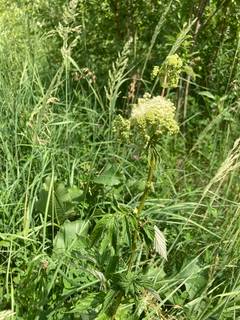
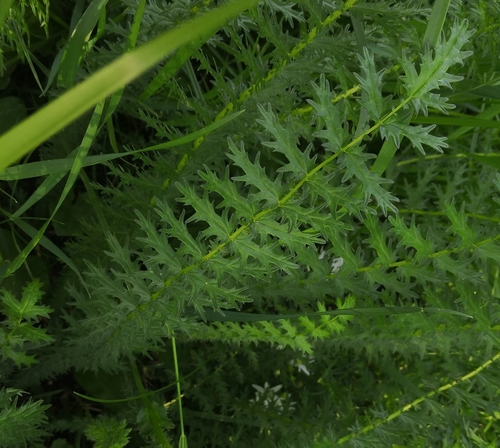
Filipendula vulgaris is a clump-forming perennial of dry grassland in the rose family, related to meadowsweet but suited to much drier ground. It grows from a rootstock bearing small swollen tubers and forms a basal rosette of fern-like leaves up to 10 inches (25 cm) long, each made of many small, deeply toothed leaflets pressed close along the stalk. From late May to August it sends up wiry stems 8-32 inches (20-80 cm) tall, topped by a branched, flat to domed cluster of creamy-white flowers. Each flower is 0.3-0.6 inches (8-15 mm) across, with usually six petals, and is tinged red or purplish in bud before opening pale. Unlike meadowsweet, the flowers carry little scent. The plant grows on dry, well-drained calcareous and neutral grassland, chalk downland, and limestone banks in full sun to light shade. It tolerates drought and thin, stony soils but is crowded out on rich, damp ground where coarser plants take over. After flowering it sets dry fruits and dies back, the rosette persisting low through winter.
Native Range
Native across much of Europe and into western and central Asia, from Britain east to Siberia. In Britain it grows locally on lime-rich grassland, mainly in England.Suggested Uses
Grown in chalk-grassland and wildflower meadows, dry sunny borders, and rock gardens on light soils. The fern-like rosettes and creamy summer flowers suit naturalistic and gravel plantings. It supports bees and other insects in early to mid summer.How to Identify
Appearance
Size & Dimensions
Height8" - 2'8"
Width/Spread10" - 1'6"
Bloom Information
Detailed Descriptions
Foliage Description
greenGrowing Conditions
Sun Requirements
Requires 5-10 hours of direct sunlight daily
• Full Sun: 6+ hours of direct sunlight
• Partial Shade: 3-6 hours of direct sunlight
• Full Shade: Less than 3 hours of direct sunlight
Care & Maintenance
Care Guide
Filipendula vulgaris grows in full sun to light shade on free-draining, neutral to alkaline soils, including thin chalk and limestone ground. It tolerates drought and low fertility once established and needs no feeding, unlike its moisture-loving relative meadowsweet. Plants are raised from seed sown in autumn or by dividing the tuberous rootstock in spring or autumn. The basal rosette stays low and green into winter, with flowering stems rising in early summer. It suits dry borders, rock gardens, and meadow turf on light soils. Rich, wet, or heavily shaded ground causes soft growth and reduced flowering.Pruning
Spent flowering stems are cut back after blooming or left to set seed for naturalising. The low rosette is left in place over winter and tidied in spring. No other pruning is required.Container Growing
Suitable for container growing
Minimum container size: 2 gallons