Ferula, Genus, spp., Multiple species,
- Genus
- Multiple species
giant fennel
Mediterranean Basin, North Africa, Middle East, and central Asia
Overview
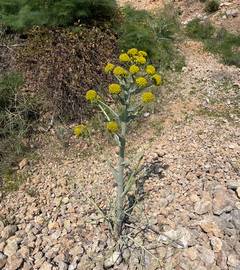
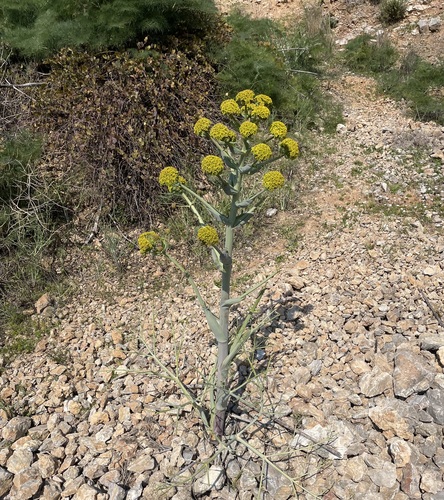
Ferula is a genus of about 170 species of large herbaceous perennials in the carrot family (Apiaceae), distributed from the Mediterranean Basin eastward across North Africa, the Middle East, and central Asia into western China. Plants develop a thick, fleshy taproot and a basal rosette of finely divided, feathery leaves that can reach 12-24 inches (30-60 cm) long, with segments cut into narrow thread-like divisions. Most species are monocarpic: they grow vegetatively for several years, then send up a single stout flowering stem and die after setting seed. Flowering stems range from 3 to 10 feet (0.9-3 m) tall, hollow, and topped with broad compound umbels of small yellow flowers in domed clusters 4-8 inches (10-20 cm) across. The seeds are flattened, winged schizocarps that ripen in late summer. The genus includes F. communis, the giant fennel of Mediterranean hillsides, and F. assa-foetida, whose dried root latex is the source of the culinary spice asafoetida. Sap of several species contains furanocoumarins that can cause skin photosensitization on contact in sunlight. The long juvenile period and single flowering event mean a plant may occupy space for years before blooming, then leave a gap when it dies.
Native Range
Ferula ranges from the Mediterranean Basin and North Africa through the Middle East and Caucasus into central Asia and western China, centered on dry, open hillsides and steppe. No species is native to North America.Suggested Uses
Ferula is grown as an architectural specimen in dry borders, gravel gardens, and Mediterranean-style plantings, where the tall flowering stems rise above lower plantings. The finely cut foliage fills space in spring before the bloom stem appears. F. assa-foetida is cultivated in parts of Iran, Afghanistan, and India for its resin.How to Identify
Appearance
Size & Dimensions
Height3' - 10'
Width/Spread2' - 4'
Colors
Bloom Information
Flowering occurs in late spring and early summer, typically May to July depending on elevation and latitude. Each plant blooms only once, after several years of leaf growth, then sets seed and dies. The yellow umbels are visited by short-tongued bees, flies, and beetles.
Detailed Descriptions
Foliage Description
green to blue-greenGrowing Conditions
Sun Requirements
Requires 6-12 hours of direct sunlight daily
• Full Sun: 6+ hours of direct sunlight
• Partial Shade: 3-6 hours of direct sunlight
• Full Shade: Less than 3 hours of direct sunlight