Fatsia, Genus, spp., Multiple species,
- Genus
- Multiple species
Japanese aralia
Overview
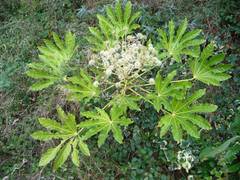
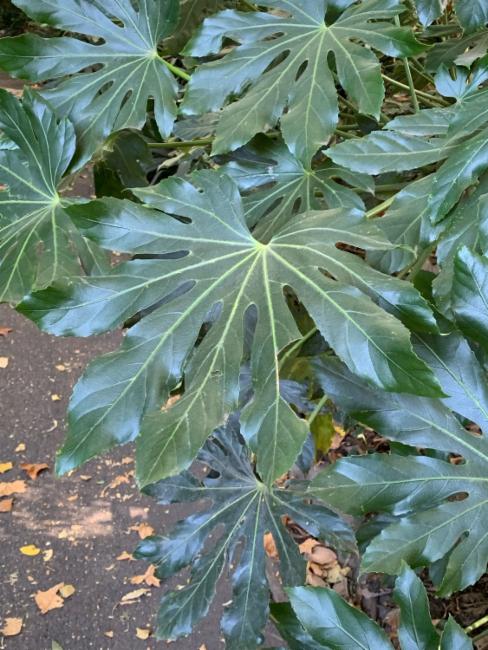
Fatsia is a small genus of three evergreen shrubs in the family Araliaceae, native to eastern Asia. F. japonica, the species most often cultivated, forms a rounded, multi-stemmed shrub 5-15 feet (1.5-4.5 m) tall and nearly as wide, with stout, sparsely branched stems. Its glossy, deep green leaves are palmately lobed with seven to nine pointed segments and span 6-16 inches (15-40 cm) across, carried on long stalks that give the plant a bold, tropical outline. In autumn, branched clusters of small creamy-white flowers open in rounded umbels above the foliage, followed by spherical black fruits in winter. The Taiwanese F. polycarpa has more deeply cut leaves and larger fruit clusters. Plants grow naturally in moist coastal woodland and ravines, where they tolerate deep shade and salt-laden wind. In cultivation they need shelter from cold, drying wind and hard frost, as foliage is damaged below about 10°F (-12°C). The genus needs moist, humus-rich soil and can scorch in full sun or on dry ground.
Native Range
Fatsia is native to eastern Asia, with F. japonica occurring in coastal woodlands of southern Japan, South Korea, and Taiwan, F. polycarpa endemic to Taiwan, and F. oligocarpella to the Bonin (Ogasawara) Islands. They grow in moist, shaded ravines and on forest margins near the coast.Suggested Uses
Fatsia is grown as an evergreen foliage shrub in shaded borders, courtyards, and woodland gardens, and as a houseplant or container specimen in cool rooms. Its tolerance of shade, pollution, and coastal wind suits urban and seaside plantings.How to Identify
Appearance
Size & Dimensions
Height5' - 15'
Width/Spread5' - 12'
Bloom Information
Fatsia flowers in mid- to late autumn, generally October through November, when most shrubs have finished. The tiny creamy-white flowers are grouped in spherical umbels on branched stalks held above the leaves and draw late-season insects. Round black fruits ripen through winter.
Detailed Descriptions
Foliage Description
glossy deep greenGrowing Conditions
Sun Requirements
Tolerates up to 4 hours of direct sunlight daily
• Full Sun: 6+ hours of direct sunlight
• Partial Shade: 3-6 hours of direct sunlight
• Full Shade: Less than 3 hours of direct sunlight
Care & Maintenance
Care Guide
Grow Fatsia in partial to deep shade on moist, fertile, humus-rich soil that drains freely. Shelter it from cold, drying winds and strong sun, both of which scorch and yellow the leaves. Water during dry spells to keep the soil evenly moist, and mulch annually with leaf mold or compost. Feed once in spring with a balanced fertilizer. In regions colder than USDA zone 8 it is grown in containers moved under cover for winter, as foliage is damaged by hard frost.Pruning
Fatsia needs little pruning; cut back overlong or frost-damaged stems in mid-spring to shape the plant and encourage bushy regrowth. Old, leggy specimens can be cut hard to within 1-2 feet (30-60 cm) of the base, from which they resprout readily. Remove suckers to limit spread.Container Growing
Suitable for container growing
Minimum container size: 7 gallons