Farfugium, Genus, japonicum, Species, var., Variety, giganteum, Variety,
- Genus & species
- Variety
giant leopard plant
Overview
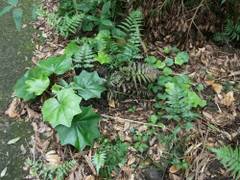
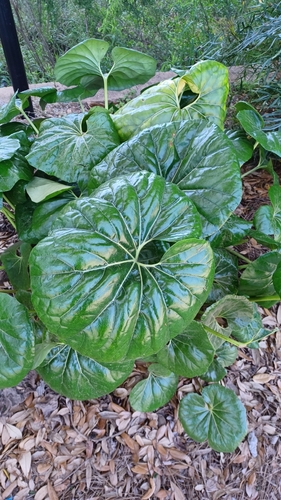
Farfugium japonicum var. giganteum is an evergreen, clump-forming perennial grown for its large rounded leaves. This variety reaches 24-36 inches (60-90 cm) tall and wide, larger than the typical 12-24 inch (30-60 cm) species. Leaves are kidney- to round-shaped, 8-16 inches (20-40 cm) across, thick, leathery, and glossy dark green, held on stalks 12-24 inches (30-60 cm) long. Branched flower stems rise above the foliage in autumn, carrying yellow daisy-like flower heads 1.5-2.5 inches (4-6 cm) across from October into November. Foliage is evergreen in zones 8-10 and may die back in zone 7. New leaves unfurl in spring. Slugs and snails feed heavily on the leaves, leaving holes. Leaves wilt in midday sun and recover in shade; full sun and dry soil cause leaf scorch and browning of the margins.
Native Range
The species Farfugium japonicum is native to coastal areas, streambanks, and rocky slopes of Japan, Korea, and eastern China. This large-leaved variety occurs in coastal populations and is widely grown in cultivation.Suggested Uses
Grown in shaded borders, woodland gardens, and at pond and stream margins, spaced 24-36 inches (60-90 cm) apart. Combines with ferns, hostas, and other moisture-loving shade plants. Grown in containers of at least 5 gallons (19 L) kept consistently moist.How to Identify
Appearance
Size & Dimensions
Height2' - 3'
Width/Spread2' - 3'
Bloom Information
Blooms in autumn, October to November, after most perennials have finished. Yellow flower heads last 3-5 weeks. Bloom may be sparse in deep shade and where early hard frosts cut the flowering short.
Detailed Descriptions
Foliage Description
Glossy dark greenGrowing Conditions
Sun Requirements
Tolerates up to 4 hours of direct sunlight daily
• Full Sun: 6+ hours of direct sunlight
• Partial Shade: 3-6 hours of direct sunlight
• Full Shade: Less than 3 hours of direct sunlight
Care & Maintenance
Care Guide
Grows in partial to full shade in consistently moist, humus-rich soil, and also at pond margins in shallow standing water. Watering during dry spells prevents the large leaves from wilting and scorching. An autumn mulch maintains soil moisture. Slugs and snails are the main pests and can shred foliage in wet conditions. In zones 7 and colder, foliage dies back over winter and re-emerges in spring, and a winter mulch protects the crown. Division in spring every 3-4 years maintains vigor.Pruning
Remove tattered or slug-damaged leaves through the growing season to keep the clump tidy. Cut spent flower stems after bloom. In cold zones, collapsed foliage can be removed after frost or left as crown protection until spring.Pruning Schedule
Prune: November
fall
Container Growing
Suitable for container growing
Minimum container size: 5 gallons