Farfugium, Genus, japonicum, Species,
- Genus & species
leopard plant
Overview
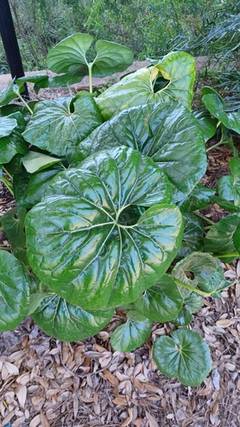
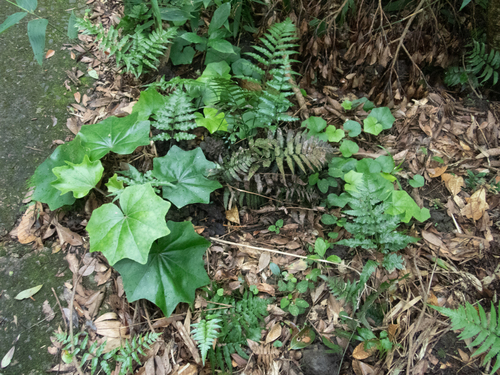
Farfugium japonicum is an evergreen, clump-forming perennial in the daisy family, growing 18–24 inches (45–60 cm) tall and 24–36 inches (60–90 cm) wide. The leathery, glossy leaves are kidney- to heart-shaped, 4–12 inches (10–30 cm) across, on long stalks rising from a basal clump. From autumn into early winter, branched stalks 24–30 inches (60–75 cm) tall carry loose clusters of yellow daisy-like flower heads 1.5–2 inches (4–5 cm) wide. The plant grows from a short rhizome and holds its foliage year-round in mild climates. It grows in partial to full shade and moist, humus-rich soil, and the leaves scorch in direct sun or dry ground. Slugs and snails feed on the foliage in damp settings, leaving holes. Where winters drop below its hardiness range the leaves are damaged, though established clumps often resprout from the base. The late bloom appears when few other perennials flower.
Native Range
Farfugium japonicum is native to coastal areas and stream banks of Japan, the Korean Peninsula, and Taiwan. It grows in moist, shaded ground in temperate and subtropical zones.Suggested Uses
Farfugium japonicum is used in shade and woodland gardens, beside ponds and streams, and in containers for bold evergreen foliage, spaced 18–24 inches (45–60 cm) apart. It combines with ferns, hostas, and other shade plants. The need for steady moisture makes it less suited to dry, exposed sites.How to Identify
Appearance
Size & Dimensions
Height1'6" - 2'
Width/Spread2' - 3'
Bloom Information
Flowering runs from autumn into early winter, roughly October to December depending on climate. Loose clusters of yellow daisy-like heads stand on branched stalks above the foliage. The flowers draw late-season bees and are followed by tufted seed heads.
Detailed Descriptions
Foliage Description
Glossy dark greenGrowing Conditions
Sun Requirements
Tolerates up to 4 hours of direct sunlight daily
• Full Sun: 6+ hours of direct sunlight
• Partial Shade: 3-6 hours of direct sunlight
• Full Shade: Less than 3 hours of direct sunlight
Care & Maintenance
Care Guide
Farfugium japonicum grows in partial to full shade and moist, humus-rich soil with a pH between 5.5 and 7.0. The leaves scorch in direct sun and wilt in dry ground, so steady moisture matters. A mulch layer conserves moisture and protects the crown in colder zones. Slugs and snails feed on the foliage where conditions stay damp, leaving holes in the leaves. The plant stays evergreen in mild climates and resprouts from the base after cold damage. Dividing the clump in spring every few years keeps it vigorous.Pruning
Tattered or cold-damaged leaves can be removed at the base in spring as new growth begins. Spent flower stalks can be cut back after bloom. No other routine pruning is needed.Pruning Schedule
Prune: March–April
early spring
Container Growing
Suitable for container growing
Minimum container size: 3 gallons