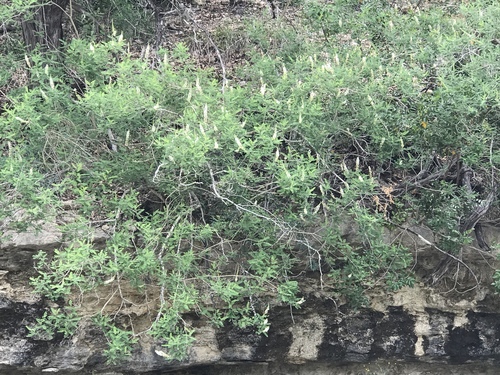
Eysenhardtia, Genus, texana, Species,
- Genus & species
Texas kidneywood
South-central United States and northern Mexico
Overview
Eysenhardtia texana is a deciduous shrub or small tree in the legume family, growing 3-10 feet (0.9-3 m) tall with an open, multi-stemmed, airy form. The leaves are pinnately compound with 15-47 small leaflets, each about 0.25-0.5 inch (6-13 mm) long, dotted with glands that release a citrus-like scent when crushed. From late spring through fall it bears slender spikes of small, fragrant, creamy-white flowers 2-3 inches (5-7.5 cm) long, often flowering repeatedly after rain. The flowers draw large numbers of bees and butterflies, and the plant serves as a larval host for the southern dogface butterfly. It grows on the limestone hills and brushlands of central and southern Texas and northern Mexico, tolerating heat, drought, and poor alkaline soils. The thin, open canopy casts light shade, and the wood is hard and yellow. It is browsed by deer and livestock, which can limit its size in open range. Growth is slow to moderate, and in the colder part of its range it may die back in hard winters. Hardy in USDA zones 7 to 10.
Native Range
Native to central and southern Texas and northern Mexico, growing on limestone hills, rocky slopes, canyons, and brushlands of the Edwards Plateau and Rio Grande Plains.Suggested Uses
Used in native, wildlife, and pollinator gardens, xeriscapes, and informal screens, spaced 4-6 feet (1.2-1.8 m) apart. Its nectar value and larval-host role suit butterfly and bee plantings. Works as a light-shade specimen or background shrub in dry borders.How to Identify
Appearance
Size & Dimensions
Height3' - 10'
Width/Spread4' - 6'
Bloom Information
Flowers from late spring through fall, roughly May to October, with repeated flushes triggered by rainfall. The fragrant white flower spikes appear within days of summer rains. Bloom is sporadic in dry spells and resumes when moisture returns.
Detailed Descriptions
Foliage Description
greenGrowing Conditions
Sun Requirements
Requires 6-10 hours of direct sunlight daily
• Full Sun: 6+ hours of direct sunlight
• Partial Shade: 3-6 hours of direct sunlight
• Full Shade: Less than 3 hours of direct sunlight
Care & Maintenance
Care Guide
Grow in full sun to light shade in well-drained soil, including poor, rocky, and alkaline ground. Established plants are drought tolerant and need little supplemental water, though occasional deep watering extends the bloom season. It grows slowly to moderately and tolerates heat and reflected sun. In zones 7 to 10 it is root-hardy, dying back in hard freezes and resprouting in spring. Browsing by deer can keep plants compact. No serious pests or diseases affect it.Pruning
Prune in late winter to shape the open form or remove frost-damaged wood. It can be cut back hard to renew leggy growth and resprouts readily from the base. Thinning crowded stems opens up the airy structure.Pruning Schedule
Prune: February–March
early spring
Container Growing
Suitable for container growing
Minimum container size: 5 gallons