Eutaxia, Genus, microphylla, Species,
- Genus & species
common eutaxia
Overview
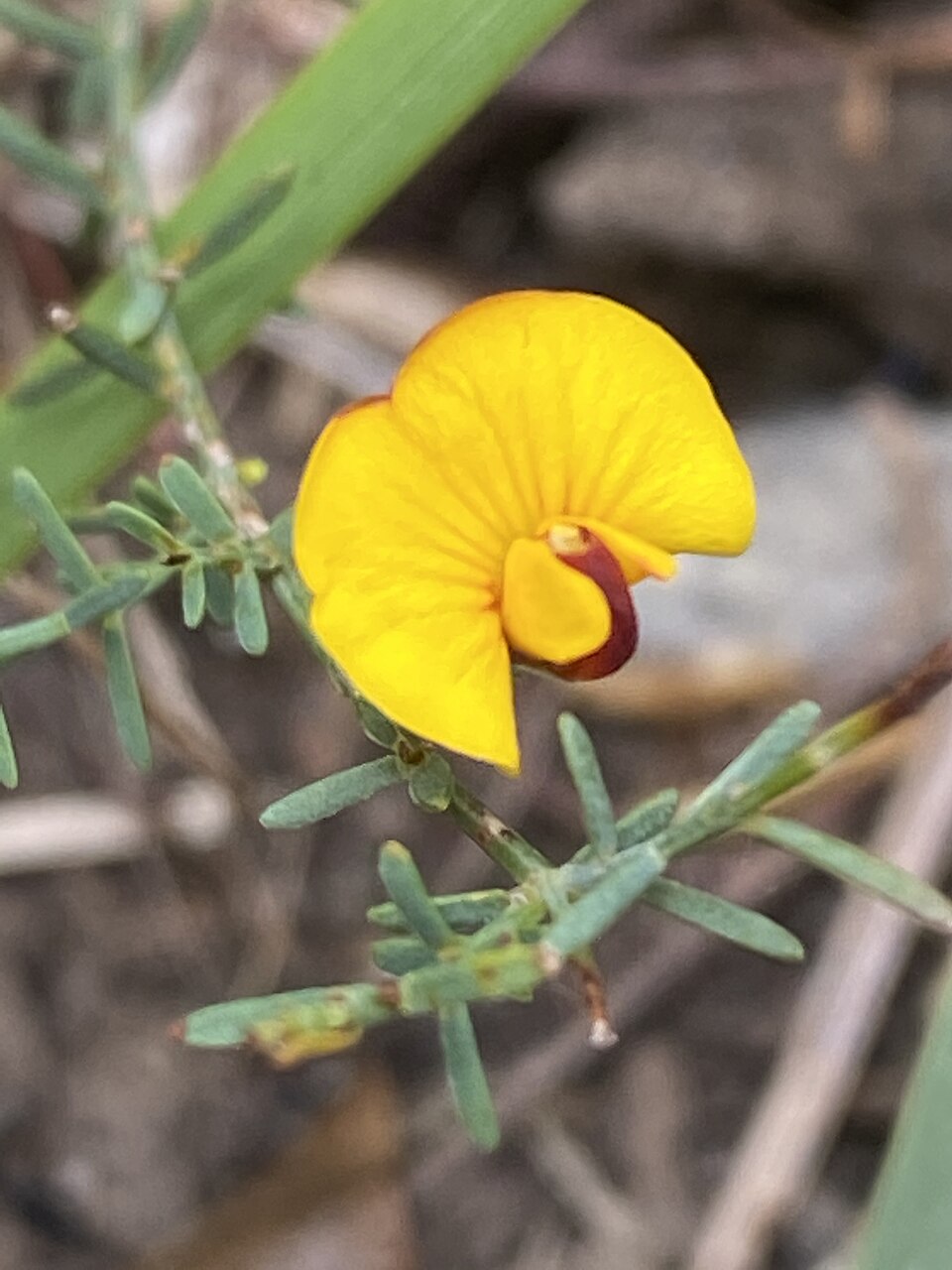
Eutaxia microphylla is a small, wiry shrub growing 4-24 inches (10-60 cm) tall and 12-40 inches (30-100 cm) wide, with a low, spreading to mounding habit and sometimes prostrate branches. The stems are slender and crowded with very small leaves 0.1-0.3 inch (2-8 mm) long, opposite, narrow, and often folded or recurved. Pea-shaped flowers about 0.2-0.4 inch (6-10 mm) long appear along the stems in spring, with yellow to orange standard petals marked red and a red or brown keel. Flowers are carried singly or in pairs in the leaf axils and can cover much of the plant during peak bloom. The fruit is a small flattened pod containing one or two seeds. Forms range from low and prostrate to a more rounded bush depending on soil and exposure. The species fixes nitrogen through root-nodule bacteria, allowing it to grow in low-fertility soils.
Native Range
Native to southern Australia across South Australia, Victoria, New South Wales, Western Australia, and Tasmania. Grows in mallee, woodland, shrubland, and coastal heath on sandy, loamy, and calcareous soils, tolerating dry and exposed sites.Suggested Uses
Grown in native plant gardens, low borders, and on dry banks at 24-36 inch (60-90 cm) spacing. Low and prostrate forms are used as groundcover over sandy or rocky ground. Suited to coastal and low-water plantings rather than rich, irrigated beds.How to Identify
Appearance
Size & Dimensions
Height4" - 2'
Width/Spread1' - 3'4"
Bloom Information
Flowers from August to November, with peak bloom in September and October. Bloom lasts about 4-6 weeks. Flowering is heavier in open, sunny positions and after wetter winters.
Detailed Descriptions
Foliage Description
green to grey-greenGrowing Conditions
Sun Requirements
Requires 6-10 hours of direct sunlight daily
• Full Sun: 6+ hours of direct sunlight
• Partial Shade: 3-6 hours of direct sunlight
• Full Shade: Less than 3 hours of direct sunlight
Care & Maintenance
Care Guide
Grows in well-drained sandy, loamy, or limestone soils in full sun. Established plants tolerate extended dry periods and exposed, coastal conditions. Occasional watering through the first dry season supports root establishment. The species needs little added fertilizer because root nodules fix nitrogen, and phosphorus-rich fertilizers can damage the roots, as with many Australian legumes. Root rot occurs in poorly drained soils. Plants are generally short-lived, persisting around 6-10 years before replacement.Pruning
Light tip pruning after flowering keeps the shrub dense and compact. Cutting back into old bare wood produces slow and patchy regrowth. Removing spent flower stems is optional and does not affect plant health.Container Growing
Suitable for container growing
Minimum container size: 3 gallons