Eulobus, Genus, californicus, Species,
- Genus & species
California primrose
Overview
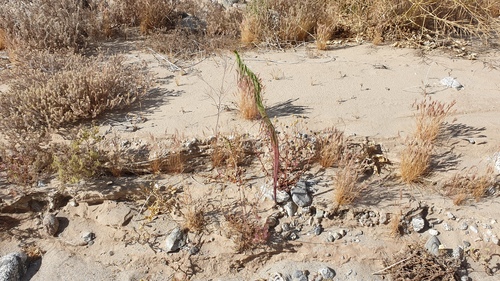
Eulobus californicus, also known as Camissonia californica, is an erect annual in the evening primrose family growing 1-4 feet (30-120 cm) tall on a single slender stem. A basal rosette of lobed, dandelion-like leaves forms first, then the stem elongates and carries small four-petaled yellow flowers along its upper length. The flowers are about 0.5-0.75 inch (12-18 mm) across and age to orange or red after pollination. Bloom occurs in spring, following winter rains, and the whole plant dries by early summer. Narrow seed capsules 1-3 inches (2.5-7.5 cm) long develop along the stem and curl as they dry, releasing many small seeds. The species grows on dry slopes, sandy flats, and disturbed desert ground, often appearing in numbers after wet winters and nearly absent in drought years. It depends on seasonal rainfall and does not persist through summer heat. The reddening flowers and bare, wand-like stems are characteristic late in the season. Foliage is sparse on the upper stem, so the plant stays thin and open rather than bushy.
Native Range
Eulobus californicus is native to the southwestern United States and northwestern Mexico, including California, Arizona, Nevada, and Baja California. It grows in deserts, dry slopes, and sandy washes below about 5,000 feet (1,500 m).Suggested Uses
Eulobus californicus is used in desert and native plant gardens, wildflower seed mixes, and revegetation of dry, disturbed sites. It suits low-water plantings and naturalized desert beds where it can self-sow. The species combines with desert annuals such as desert dandelion and California poppy.How to Identify
Appearance
Size & Dimensions
Height1' - 4'
Width/Spread6" - 1'
Bloom Information
Flowering runs from March to May, following winter and early spring rains. Individual flowers open in the daytime and last about a day, with new buds opening in sequence up the stem over several weeks. In dry years bloom is brief or absent, while wet winters bring heavier, longer flowering. Native bees visit the flowers for pollen.
Detailed Descriptions
Flower Description
yellow aging to orange-redFoliage Description
green to gray-greenGrowing Conditions
Sun Requirements
Requires 6-10 hours of direct sunlight daily
• Full Sun: 6+ hours of direct sunlight
• Partial Shade: 3-6 hours of direct sunlight
• Full Shade: Less than 3 hours of direct sunlight
Water & Climate
Water Needs
Drought Tolerance
Drought tolerant when established
Care & Maintenance
Care Guide
Eulobus californicus grows in full sun and fast-draining sandy or rocky soil. As a desert annual it relies on winter and spring rainfall and needs no summer water, completing its cycle before the dry season. Seeds are sown in autumn so that cool-season moisture triggers germination. The plant tolerates poor, low-nutrient soils and declines in rich or constantly moist ground. It does not transplant readily because of its early taproot, so direct sowing suits it. After seed set the plant dries and dies, leaving seed for the next wet season.Pruning
No pruning is required for this annual. Dried stems can be cleared once seed has dropped. Stems left in place allow self-seeding for the following season.Toxicity
Non-toxicPlanting Guide
Planting Methods & Timing
Planting Method
direct sow
Direct Sow Timing
Autumn, before winter rains
Days to Maturity
70–120 days
Plant Spacing
12 inches
Companion Planting
Good Companions