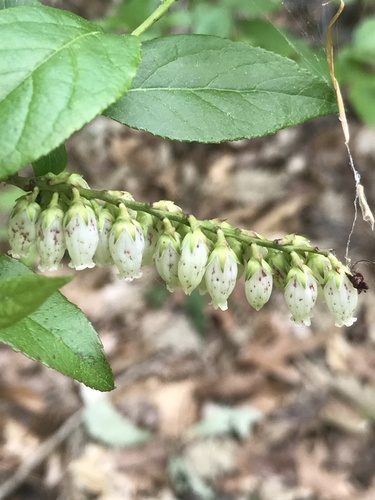
Eubotrys, Genus, racemosus, Species,
- Genus & species
fetterbush
Eastern and southeastern United States coastal plain
Overview
Eubotrys racemosus, formerly Leucothoe racemosa, is a deciduous shrub in the heath family, growing 3–12 feet (0.9–3.7 m) tall with arching, slender branches that spread by suckers into loose colonies. The alternate leaves are oblong to elliptic, 1–3 inches (2.5–7.5 cm) long, finely toothed, turning shades of red and bronze before dropping in autumn. In spring it bears one-sided arching racemes 1.5–4 inches (4–10 cm) long of small white urn-shaped flowers, each about 0.25 inch (6 mm) long. The flowers are followed by small dry, rounded seed capsules. It grows in acidic, moist to wet soils along pond margins, swamp edges, bogs, and low pine woods of the southeastern United States. The foliage and other parts contain grayanotoxins that are toxic to people and animals if eaten. It tolerates wet ground and shade but does not persist in dry, alkaline, or compacted soils.
Native Range
Eubotrys racemosus is native to the eastern and southeastern United States coastal plain, from Massachusetts south to Florida and west to Louisiana.Suggested Uses
It is used in rain gardens, pond and stream margins, woodland edges, and naturalized wet shrub borders. It grows in shaded, moist sites where many shrubs fail.How to Identify
Appearance
Size & Dimensions
Height3' - 12'
Width/Spread3' - 6'
Bloom Information
White urn-shaped flowers open in spring, from March to May depending on latitude, arranged in arching one-sided racemes. Bloom lasts two to three weeks. Dry seed capsules form afterward and persist into winter.
Detailed Descriptions
Foliage Description
green, red to bronze in autumnGrowing Conditions
Sun Requirements
Requires 2-6 hours of direct sunlight daily
• Full Sun: 6+ hours of direct sunlight
• Partial Shade: 3-6 hours of direct sunlight
• Full Shade: Less than 3 hours of direct sunlight
Care & Maintenance
Care Guide
Eubotrys racemosus grows in part shade to shade on acidic, consistently moist to wet soils rich in organic matter. It tolerates standing water and seasonal flooding and grows along pond and stream margins. It spreads by suckers to form colonies and is propagated by division or seed. It does not tolerate dry, alkaline, or compacted soils. The foliage contains grayanotoxins that are toxic to people, pets, and livestock if eaten.Pruning
Pruning after flowering in late spring shapes the shrub or limits spread, removing older or crowded stems at the base. Suckers can be dug out to control colony width. The shrub renews readily from the base.Pruning Schedule
Prune: May–June
late spring