Eubotrys, Genus, spp., Multiple species,
- Genus
- Multiple species
fetterbush
Overview
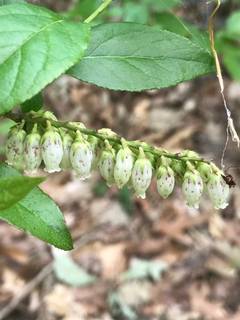
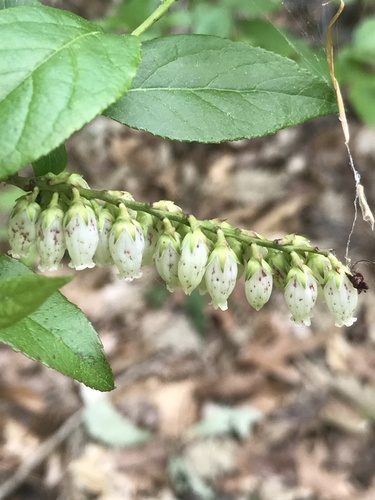
Eubotrys is a genus of two deciduous shrubs in the heath family, Ericaceae, native to the eastern United States and segregated from the largely evergreen genus Leucothoe. Plants reach 3-12 feet (0.9-3.7 m) tall with arching to upright stems and form colonies by suckering. The alternate leaves are elliptic to lance-shaped, 1.5-4 inches (4-10 cm) long, with finely toothed margins, turning red, bronze, and purple before dropping in autumn. White urn-shaped flowers, about 0.25 inch (6 mm) long, hang in one-sided racemes 2-4 inches (5-10 cm) long along the previous year growth in mid to late spring. The fruit is a dry, five-lobed capsule that persists into winter. E. racemosa occupies swamps, bogs, and moist pine barrens of the coastal plain, while E. recurva grows on drier wooded mountain slopes of the southern Appalachians. Both species need acidic soil and decline in alkaline conditions, where leaf chlorosis develops. Foliage and flowers contain grayanotoxins, which are poisonous if eaten. Growth is slower in dense shade, where flowering is reduced compared with plants in partial light.
Native Range
Eubotrys is native to the eastern United States, where E. racemosa ranges along the Atlantic and Gulf coastal plains and E. recurva occurs in the southern Appalachian Mountains.Suggested Uses
Grown in woodland gardens, shaded shrub borders, and the moist margins of ponds and rain gardens. The suckering habit suits naturalistic massing and bank stabilisation in acidic soils. The arching form is used along woodland paths and beneath high tree canopies.How to Identify
Appearance
Size & Dimensions
Height3' - 12'
Width/Spread3' - 8'
Bloom Information
Flowering occurs in mid to late spring, generally April to May, as or just before the new leaves expand. The white urn-shaped flowers open along one side of arching racemes and last about two to three weeks. Bees are the main pollinators.
Detailed Descriptions
Foliage Description
dark green, turning red to bronze-purple in autumnGrowing Conditions
Sun Requirements
Requires 2-6 hours of direct sunlight daily
• Full Sun: 6+ hours of direct sunlight
• Partial Shade: 3-6 hours of direct sunlight
• Full Shade: Less than 3 hours of direct sunlight
Care & Maintenance
Care Guide
Grow in partial shade in consistently moist, acidic soil rich in organic matter, conditions matching the woodland and swamp margins of the native range. Hold soil pH between about 4.5 and 6.0; alkaline soils cause iron chlorosis and decline. E. racemosa tolerates wet, poorly drained ground, whereas E. recurva needs sharper drainage on slopes. A mulch of leaf litter or pine bark conserves moisture and keeps roots cool. Established plants tolerate brief dry spells but drop leaves in prolonged drought. Cold hardiness extends through USDA zones 5 to 9.Pruning
Prune just after flowering, since flower buds form during the current season for the following year. Older arching stems can be cut to the base to renew colonies and limit spread. Suckers are removed at the soil line where lateral expansion is unwanted.Pruning Schedule
Prune: May–June
late spring