Eriophorum, Genus, virginicum, Species,
- Genus & species
tawny cottongrass
Overview
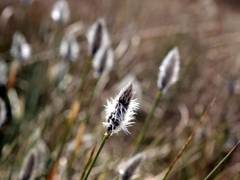
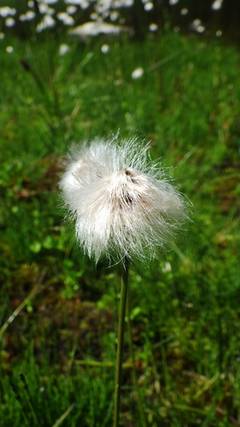
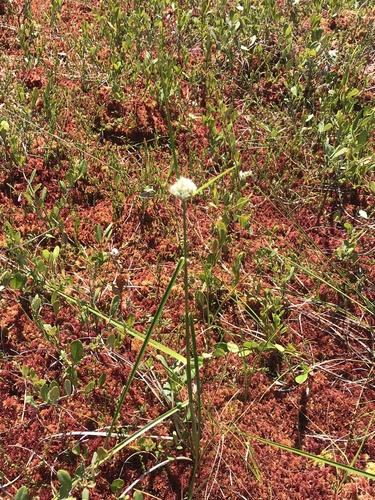
Eriophorum virginicum is a grass-like perennial sedge of wetlands in eastern North America, forming loose clumps from creeping rhizomes with slender stems 1-3 feet (30-90 cm) tall. The narrow leaves are flat to channeled, gray-green, and roughened at the margins, mostly clustered toward the stem base. In late summer the stems are topped by one to several dense, nodding tufts of bristles that lengthen as the seed ripens into cottony heads about 1-1.5 inches (2.5-4 cm) long. Unlike the white-tufted cottongrasses, the bristles of this species are tawny to cinnamon-brown, giving the seed heads a rust-colored cast. E. virginicum grows in acidic bogs, fens, wet meadows, and seepage slopes, usually in saturated peaty or sandy soil in full sun. Its spreading rhizomes form open colonies over time. The plant depends on constant moisture and acidic ground, so it declines in ordinary garden soil or where water levels drop. The slender seed bristles release the seed to wind and leave the stems bare by autumn, ending the season of interest.
Native Range
Eriophorum virginicum is native to eastern North America, from eastern Canada and the Great Lakes south through the Appalachians to the Gulf and Atlantic coastal plains. It grows in acidic bogs, fens, wet meadows, and peaty seepage slopes.Suggested Uses
E. virginicum is used in bog gardens, pond and stream margins, and constructed wetlands and rain gardens, where its tawny cottony seed heads stand above wet ground in late summer. It stabilizes saturated peaty soil along water edges. Its strict need for wet acidic conditions limits it to specialized water-side plantings.How to Identify
Appearance
Size & Dimensions
Height1' - 3'
Width/Spread1' - 2'
Bloom Information
E. virginicum flowers in midsummer, with inconspicuous wind-pollinated spikelets that draw little notice. The display comes later, from late summer into autumn, as the bristles lengthen into tawny cottony seed heads. The seed disperses on the wind, after which the bare stems persist into winter.
Detailed Descriptions
Flower Description
Tawny to cinnamon-brownFoliage Description
Gray-greenGrowing Conditions
Sun Requirements
Requires 6-10 hours of direct sunlight daily
• Full Sun: 6+ hours of direct sunlight
• Partial Shade: 3-6 hours of direct sunlight
• Full Shade: Less than 3 hours of direct sunlight
Care & Maintenance
Care Guide
E. virginicum grows in full sun in constantly wet, acidic, peaty or sandy soil with a pH of 4.0-6.0. It suits bog gardens, pond margins, and rain gardens that stay saturated, and it fails in ordinary, well-drained beds. Standing water or steady seepage during the growing season keeps it vigorous. Its rhizomes spread to form open colonies, which can be divided in spring to propagate it. It needs no fertilizer in its naturally lean peat soils. Pests and diseases are rare in suitable wet sites.Pruning
E. virginicum needs no pruning. The spent stems can be cut to the base in late winter before new growth, which clears the previous season foliage and seed heads. Dividing crowded rhizomes in spring renews aging clumps.Container Growing
Suitable for container growing
Minimum container size: 2 gallons