Eriobotrya, Genus, spp., Multiple species,
- Genus
- Multiple species
loquats
Overview
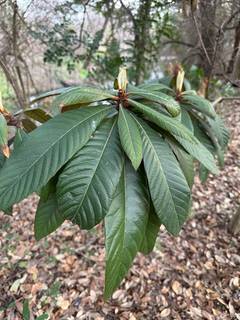
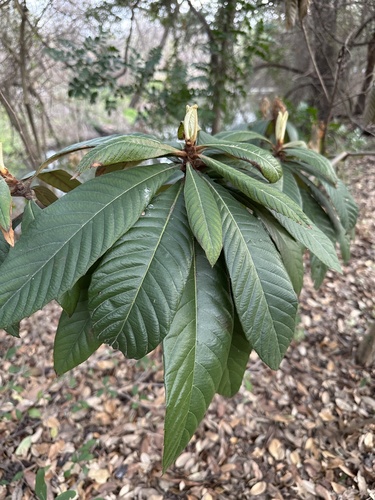
Eriobotrya is a genus of about 20 to 30 species of evergreen trees and shrubs in the rose family, native to subtropical and warm-temperate eastern Asia, from the Himalayas through China to Japan and Southeast Asia. Plants grow 10-30 ft (3-9 m) tall with a rounded, densely leafy crown. The leaves are large, 5-12 in (13-30 cm) long, leathery, dark green and deeply corrugated above, with a rusty, woolly coating beneath. Clusters of small, fragrant, white to cream flowers open in autumn and winter, carried in woolly, branched heads at the branch tips. The widely grown loquat E. japonica follows its flowers with rounded yellow to orange fruits 1-2 in (2.5-5 cm) across, ripening in late winter and spring, with sweet, slightly tart flesh and a few large seeds. The seeds and leaves contain cyanogenic compounds and are toxic if eaten in quantity. The genus grows in full sun, tolerates a range of soils, and withstands heat and brief drought once established, but flowers and young fruit are damaged by hard frost. It is grown for fruit, shade, and its bold evergreen foliage.
Native Range
Native to subtropical and warm-temperate eastern Asia, ranging from the Himalayas and central China through to Japan and into Southeast Asia, where species grow in mountain forests and on wooded slopes. The loquat has been cultivated in China and Japan for centuries.Suggested Uses
Grown as a fruiting and shade tree, an evergreen specimen for its bold foliage, and a wall-trained or espaliered tree in cooler areas. The dense canopy also serves as a screen or windbreak in mild climates.How to Identify
Appearance
Size & Dimensions
Height10' - 30'
Width/Spread10' - 25'
Bloom Information
Flowering occurs in autumn and winter, generally October to January, when few other trees bloom. The fragrant white flowers open over several weeks in woolly clusters. In the loquat, fruit develops over winter and ripens in late winter to spring.
Detailed Descriptions
Flower Description
White to creamFoliage Description
Dark green, rusty woolly beneathGrowing Conditions
Sun Requirements
Requires 6-12 hours of direct sunlight daily
• Full Sun: 6+ hours of direct sunlight
• Partial Shade: 3-6 hours of direct sunlight
• Full Shade: Less than 3 hours of direct sunlight
Care & Maintenance
Care Guide
Grow in full sun in deep, well-drained soil; the genus tolerates a range of soils and pH but fruits most reliably with steady moisture and shelter from cold wind. Water young trees regularly until established, after which they withstand heat and short drought. Flowers and young fruit are killed by hard frost, so reliable cropping is limited to USDA zones 8-10. Feed in spring to support fruiting, and thin heavy fruit clusters to improve fruit size. The seeds and leaves contain cyanogenic compounds and are toxic if eaten in quantity. Trees grown from seed take several years longer to fruit than grafted plants.Pruning
Prune after fruiting in spring to shape the crown, remove crossing branches, and limit height for easy harvest. Thinning fruit clusters increases the size of the remaining fruit. The genus tolerates moderate pruning and can be trained against a wall.Pruning Schedule
Prune: April–May
spring
Container Growing
Suitable for container growing
Minimum container size: 10 gallons