Eriobotrya, Genus, japonica, Species,
- Genus & species
loquat
China — cultivated for 1,000+ years; introduced to Japan, then to Europe; the 'japonica' name reflects the European discovery path (from Japan), not the true origin (China)
Overview
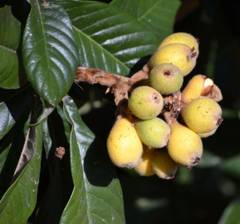
Eriobotrya japonica is the loquat, an evergreen fruiting tree growing 120–300 inches (300–750 cm). Flowers in fall and winter (October–December) and fruit ripens in late winter to spring (February–April) — a reversed calendar compared to nearly all other temperate fruit trees. Fragrant white flower clusters 3–6 inches (7–15 cm) appear when few other trees are blooming. Orange to yellow fruit 1–2 inches (2.5–5 cm) with sweet apricot-plum flavor, eaten fresh or used in preserves. The reversed timing means frost during flowering or fruit development (below 25°F / −4°C) destroys the crop, though the tree itself survives. Reliable fruit production in zones 8–10; in zone 7, grown as an ornamental evergreen with occasional fruit in mild winters. Large dark green leathery leaves 8–12 inches (20–30 cm) long. Self-fertile in most cultivars. Native to central China — the species name 'japonica' reflects the route of introduction to the West via Japan, not the origin. Deer-resistant. Drought-tolerant once established. Non-toxic — fruit is edible. Fire blight susceptibility (same family as apples and pears, Rosaceae). Seeds contain cyanogenic glycosides — toxic if crushed and ingested.
Native Range
Eriobotrya japonica is native to China — cultivated for 1,000+ years. The 'japonica' name reflects the European discovery path.Suggested Uses
Grown as a fruiting tree in zones 8–10, or as an ornamental evergreen in zone 7. Space 120–180 inches (300–450 cm) apart. Full sun for fruit production. Self-fertile. The winter-flowering and early-spring-fruiting calendar fills a gap when no other fruit trees are producing. Non-toxic fruit. Seeds toxic.How to Identify
Appearance
Size & Dimensions
Height10' - 25'
Width/Spread10' - 20'
Colors
Bloom Information
Detailed Descriptions
Flower Description
White, small, in woolly terminal panicles, FRAGRANT — blooming in FALL/WINTER (not spring)Foliage Description
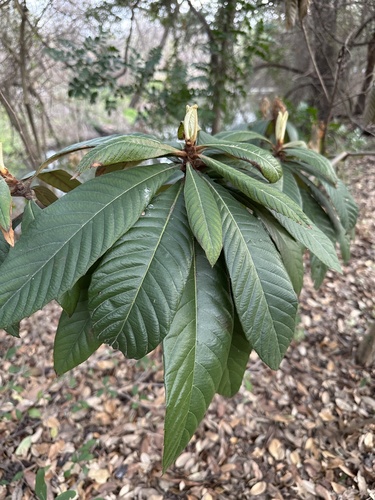
Dark green, LARGE (8-12 inches long), leathery, prominently veined, fuzzy undersides — bold tropical-looking foliageGrowing Conditions
Sun Requirements
Requires 4-10 hours of direct sunlight daily
• Full Sun: 6+ hours of direct sunlight
• Partial Shade: 3-6 hours of direct sunlight
• Full Shade: Less than 3 hours of direct sunlight
Care & Maintenance
Care Guide
Full sun for fruit production. Drought-tolerant once established. Self-fertile. Frost below 25°F (−4°C) destroys the crop but not the tree. Fire blight susceptible (Rosaceae). Deer-resistant. Non-toxic fruit; seeds toxic (cyanogenic glycosides). Zones 7–10.Pruning
Prune for shape after spring fruit harvest. Remove fire-blight-infected branches by cutting 12 inches (30 cm) below visible damage with sterilized tools. Thin interior for air circulation.Pruning Schedule
Prune: May–June
summer
Container Growing
Suitable for container growing
Minimum container size: 20 gallons