Shrubs
Eremophila, Genus, maculata, Species,
- Genus & species
Spotted emu bush
Overview
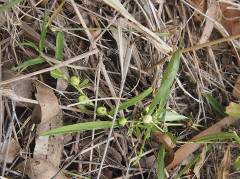
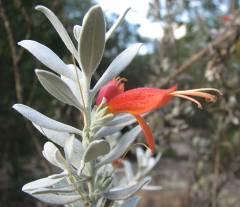
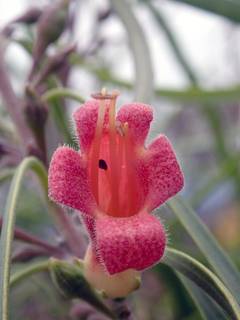
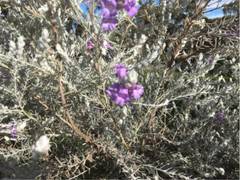
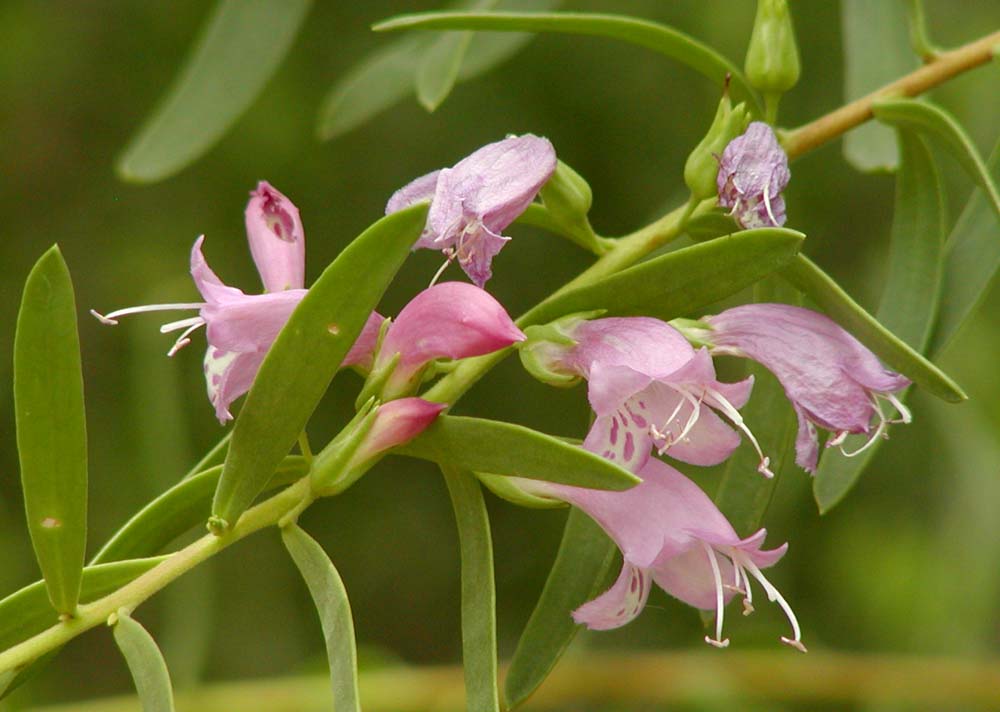
Eremophila maculata is an evergreen shrub, 3–6 feet (0.9–1.8 m) tall and 3–6 feet (0.9–1.8 m) wide, with an open to rounded habit and sticky new growth. Leaves are alternate, narrow-elliptic to linear, 0.8–2 inches (2–5 cm) long, grey-green to green, and often slightly resinous. Flowers are tubular, 1–1.5 inches (2.5–4 cm) long, with four lobes and a throat spotted with darker markings inside; colors range from red and orange to pink, yellow, and cream depending on the form. Flowers are followed by small, rounded to conical, dry fruits 0.3 inch (8 mm) long. Growth is moderate at 8–16 inches (20–40 cm) per year. Plants tolerate heat, drought, light frost, and alkaline soil but decline in humid summers and heavy wet soil, and leaves and shoots have been reported to poison livestock.
Native Range
Native to the arid and semi-arid interior of Australia, from Western Australia to Queensland and New South Wales, growing on sandy and clay soils in open shrubland and along drainage lines.Suggested Uses
Used in dry-climate gardens, borders, and low hedges, spaced 3–5 feet (0.9–1.5 m) apart. Grown in containers and used to attract honeyeaters.How to Identify
Appearance
Size & Dimensions
Height3' - 6'
Width/Spread3' - 6'
Bloom Information
Detailed Descriptions
Flower Description
Red, orange, pink, or yellow with spotted throatFoliage Description
Grey-green to greenGrowing Conditions
Sun Requirements
Requires 6-10 hours of direct sunlight daily
• Full Sun: 6+ hours of direct sunlight
• Partial Shade: 3-6 hours of direct sunlight
• Full Shade: Less than 3 hours of direct sunlight
Care & Maintenance
Care Guide
Grows in full sun (6–10 hours) and well-drained soil of any texture with a pH of 6.0–8.5. Hardy to about 23°F (-5°C), equivalent to USDA zones 9–11; some forms tolerate 14°F (-10°C) in dry soil. Established plants tolerate long dry periods and are watered every 2–3 weeks in summer. Humidity and summer rain increase leaf spot and root rot. Fertilizer is not needed, and rich soil produces soft growth. Container plants need free-draining mix.Pruning
Tip pruning after flowering in late spring or early summer maintains a compact shape, with cuts made to remove one-third of the season's growth. Old wood shoots reluctantly, so pruning is kept to leafy stems. Plants can be cut hard to renew in mild climates.Pruning Schedule
Prune: November–December
late springsummer
Container Growing
Suitable for container growing
Minimum container size: 5 gallons