Epigaea, Genus, spp., Multiple species,
- Genus
- Multiple species
Eastern North America, Japan, Caucasus
Overview
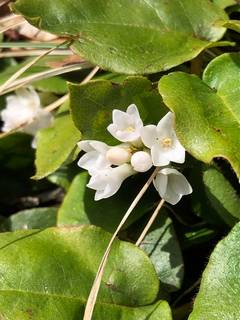
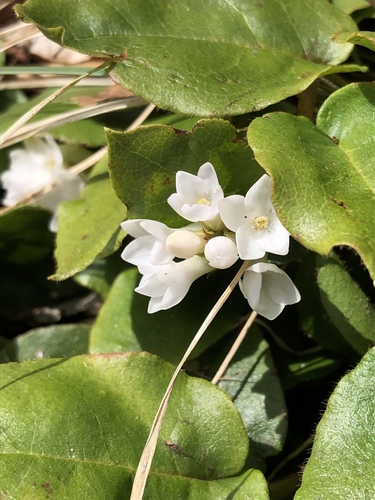
Epigaea is a small genus of about three low, creeping, evergreen subshrubs in the family Ericaceae, found in eastern North America, Japan, and the Caucasus. Plants spread as prostrate mats only 2 to 6 in (5 to 15 cm) high, with hairy, trailing stems and leathery, oval leaves that stay green through winter. In early spring they bear clusters of small, tubular five-lobed flowers in white to pink that are strongly and sweetly fragrant. E. repens, trailing arbutus or mayflower, is a well-known woodland wildflower of eastern North America and the state flower of Massachusetts. The plants grow on acid, humus-rich, sandy or peaty soils in the dappled shade of woodland, in close association with soil fungi. That dependence on specific mycorrhizae makes them notoriously difficult to transplant or raise, and wild collection has reduced some populations. They are slow-growing and intolerant of disturbance, lime, and drought.
Native Range
Native to eastern North America from Canada to the Gulf states, with one species in Japan and one in the Caucasus and northeastern Turkey, growing in acid woodland, on sandy banks, and among rocks in light shade.Suggested Uses
Grown by specialist growers as a fragrant evergreen ground cover in acid woodland and rock gardens, where conditions can be matched closely. E. repens is valued as a native wildflower and is protected in parts of its range. It is suited to cool, shaded, acid sites rather than general garden use.How to Identify
Appearance
Size & Dimensions
Height2" - 6"
Width/Spread1' - 2'
Bloom Information
Flowering comes very early in spring, from about March to May depending on latitude, giving the plant its mayflower name. The white to pink flowers are sweetly scented and are some of the first woodland blooms. Fruit is a small, fleshy, berry-like capsule.
Detailed Descriptions
Flower Description
White to pinkFoliage Description
Dark greenGrowing Conditions
Sun Requirements
Requires 2-5 hours of direct sunlight daily
• Full Sun: 6+ hours of direct sunlight
• Partial Shade: 3-6 hours of direct sunlight
• Full Shade: Less than 3 hours of direct sunlight
Care & Maintenance
Care Guide
Trailing arbutus needs cool, acid, humus-rich, sharply drained soil at a low pH from about 4.5 to 5.5, in the light to part shade of a woodland edge. Consistent moisture and a mulch of pine needles or leaf mould keep the shallow roots cool and damp. The plants depend on soil fungi and respond poorly to root disturbance, so container-grown stock is established young and mature plants are left undisturbed. They are hardy to about USDA zone 3 but adapt poorly to garden conditions and are slow to spread. Wild plants transplant badly, and digging them harms both the plant and its population. Propagation is usually by careful layering or by seed grown with the right fungal partners.Pruning
No pruning is needed. The creeping stems are left to root as they spread and form a mat. Any dead or damaged growth can be removed by hand after flowering.Container Growing
Suitable for container growing
Minimum container size: 1 gallons