Ephedra, Genus, viridis, Species,
- Genus & species
green ephedra
Great Basin and Colorado Plateau, western United States
Overview
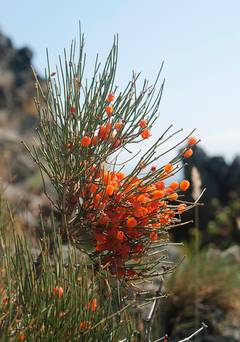
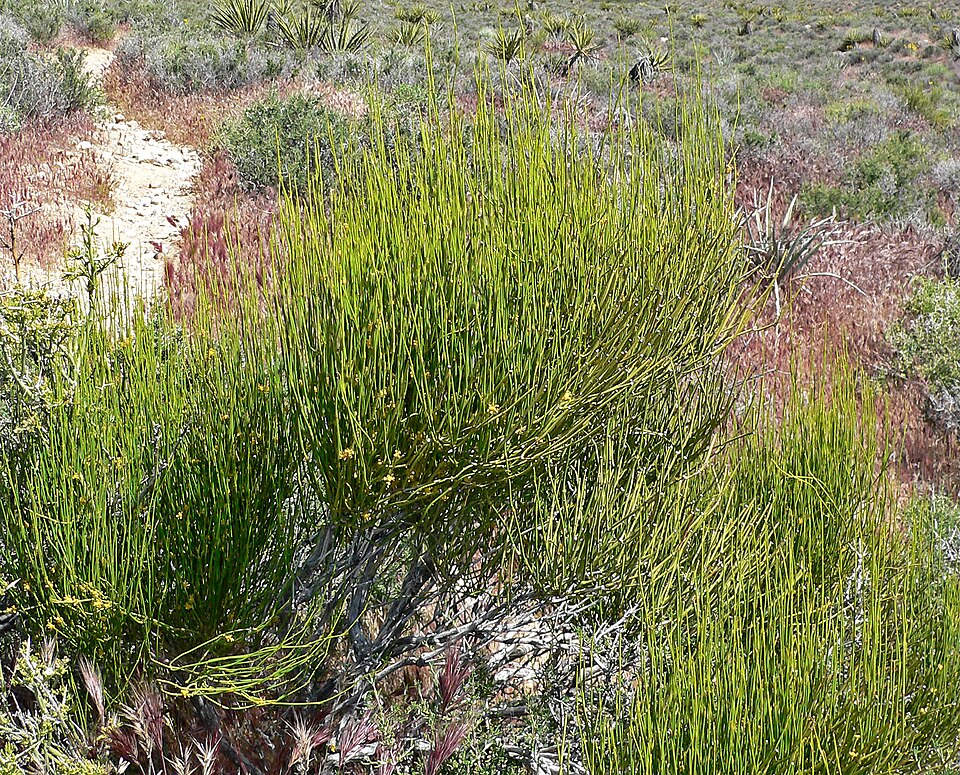
Ephedra viridis is an evergreen, broom-like shrub of arid western North America, reaching 1.5-4 feet (0.45-1.2 m) tall and about as wide, built from clusters of slender, jointed, bright yellow-green stems that rise stiffly upright. Photosynthesis occurs in the green stems rather than in leaves, which are reduced to tiny scales 1-3 mm long at the swollen nodes and soon turn brown. As a gymnosperm, the species bears cones rather than flowers: small yellow pollen cones and separate seed cones form on different plants in spring. The seed cones ripen to hold one or two narrow brown seeds. The dense network of green twigs gives a finely branched, leafless look year-round. A deep, wide root system lets the shrub draw scarce moisture from rocky desert soils. It is hardy in USDA zones 5-9 and withstands intense sun, heat, and cold. Slow growth and a stiff, twiggy habit are limitations in formal plantings, and the species declines in wet, heavy soils.
Native Range
Ephedra viridis is native to the dry interior of the western United States, from eastern California and Oregon through the Great Basin and Colorado Plateau to Wyoming, Colorado, New Mexico, and Arizona. It grows on rocky slopes, mesas, desert scrub, and pinyon-juniper woodland from 3,000 to 7,500 feet (900 to 2,300 m).Suggested Uses
Used in dry, low-water, and native plant gardens, on rocky banks, and in desert and rangeland restoration. The stems were brewed into a traditional beverage by Indigenous peoples and settlers, the source of the name Mormon tea, and the plant gives cover and seed to desert wildlife.How to Identify
Appearance
Size & Dimensions
Height1'6" - 4'
Width/Spread2' - 4'
Bloom Information
Ephedra viridis produces cones rather than flowers, mostly in April and May. Yellow pollen cones cluster at the nodes on male plants, while seed cones form on separate female plants. Wind carries the pollen, and ripe seeds follow in summer.
Detailed Descriptions
Foliage Description
bright yellow-green stemsGrowing Conditions
Sun Requirements
Requires 8-12 hours of direct sunlight daily
• Full Sun: 6+ hours of direct sunlight
• Partial Shade: 3-6 hours of direct sunlight
• Full Shade: Less than 3 hours of direct sunlight
Care & Maintenance
Care Guide
Grows in full sun on sharply drained sandy, gravelly, or rocky soils and tolerates drought, heat, cold, and alkaline ground. A soil pH of 6.5-8.5 suits the species. Established plants need no irrigation and decline with regular water or in heavy clay. Growth is slow, and plants take several years to reach full size. Propagation is from seed, which germinates after a period of cold, moist stratification. Wet winter soils are the main cause of failure.Pruning
Little pruning is needed. Dead or broken stems can be removed at any time of year. Hard cutting into old bare wood regrows slowly, so light shaping of the green stems is the usual approach.Pruning Schedule
Prune: March
early spring