Emilia, Genus, sonchifolia, Species,
- Genus & species
lilac tasselflower
SunFull Sun – Part Shade
WaterMedium
Overview
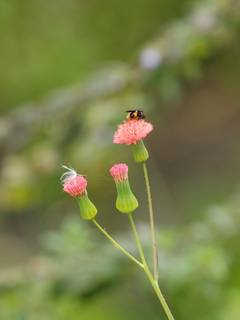
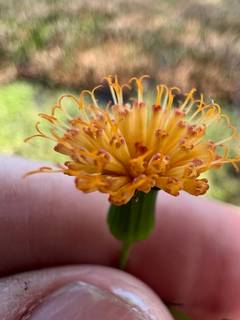
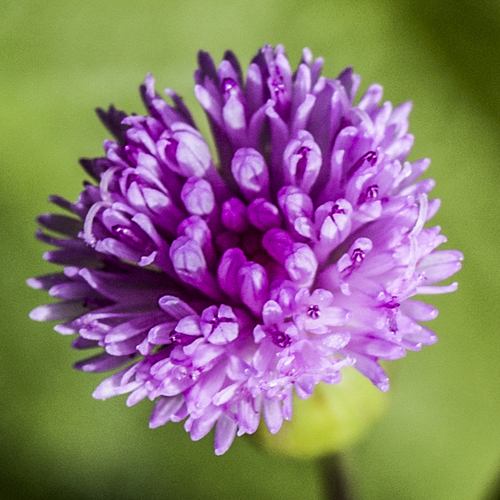
Emilia sonchifolia is an erect annual herb in the aster family (Asteraceae), reaching 8-28 inches (20-70 cm) tall on slender, sparingly branched stems that are often tinged purple and lightly covered with a waxy bloom. The leaves vary along the stem: lower ones are lyre-shaped with a large terminal lobe and clasp the stem with ear-like bases, while upper leaves are smaller, narrow, and stalkless. Both surfaces are smooth to thinly hairy and somewhat grayish. The flower heads contain only disk florets, with no spreading rays, and are gathered in loose terminal clusters held well above the foliage on long, naked stalks. Each head is urn-shaped, 0.3-0.5 inch (8-13 mm) long, the protruding florets ranging from pinkish-lilac to magenta or reddish. Flowering is followed by small dark achenes topped with soft white bristles that carry the seed on the wind. The plant completes its cycle in one season and self-sows readily. Leaves and stems contain pyrrolizidine alkaloids, which can cause cumulative liver damage if eaten in quantity over time, though young shoots are cooked and eaten as a leaf vegetable in parts of Asia and Africa.
Native Range
Emilia sonchifolia is native to tropical Asia. It has spread as a naturalized weed throughout the tropics and subtropics worldwide, including the southeastern United States, the Pacific islands, Africa, and tropical America.Suggested Uses
This species is rarely planted and is encountered mainly as a warm-climate weed of fields, gardens, roadsides, and waste ground. The young leaves are gathered as a cooked potherb in parts of Asia and Africa, and the plant appears in several regional traditional medicine systems. In a reference context it represents the tassel-flowered Emilia group of the Asteraceae.How to Identify
Appearance
Size & Dimensions
Height8" - 2'4"
Width/Spread4" - 1'
Bloom Information
In frost-free regions Emilia sonchifolia flowers almost year-round, while in seasonal climates bloom concentrates from late spring through fall. The lilac to magenta heads open over a long succession on each branched cluster. Wind-dispersed seed ripens continuously alongside the flowers.
Detailed Descriptions
Flower Description
pinkish-lilac to magentaFoliage Description
grayish-green, often purple-tingedGrowing Conditions
Sun Requirements
Requires 6-12 hours of direct sunlight daily
• Full Sun: 6+ hours of direct sunlight
• Partial Shade: 3-6 hours of direct sunlight
• Full Shade: Less than 3 hours of direct sunlight
Water & Climate
Water Needs
Care & Maintenance
Care Guide
Emilia sonchifolia grows in full sun to light shade and adapts to most soils, from sand to clay loam, with steady moisture supporting the fastest growth. It germinates with warmth and damp soil, establishes quickly in disturbed or cultivated ground, and tolerates poor fertility. In the tropics it persists wherever bare soil opens up, behaving as a ruderal colonizer. It needs no irrigation or feeding where it grows naturally and is more often pulled as a weed than planted. Removing plants before the bristly seed forms is the main way to limit its rapid spread.Pruning
Pruning is not applicable to this annual. Cutting plants back before the bristly seed heads form reduces self-sowing. Removed plants do not regrow.Container Growing
Suitable for container growing