Emilia, Genus, spp., Multiple species,
- Genus
- Multiple species
tasselflowers
Old World tropics (Africa and Asia), widely naturalized
Overview
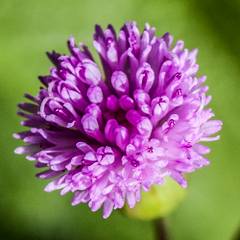
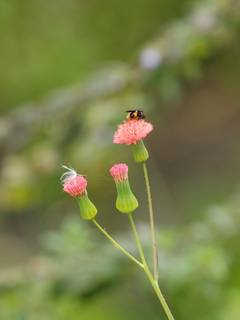
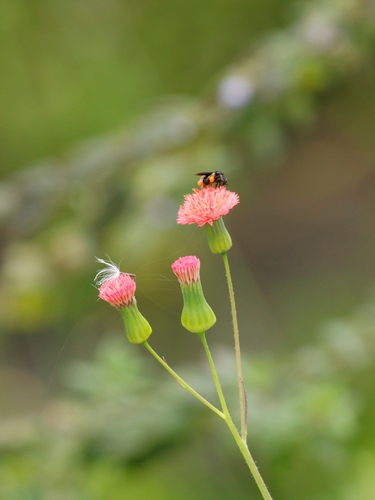
Emilia is a genus of about 100 species of annual and short-lived perennial herbs in the aster family (Asteraceae), native to the Old World tropics and now naturalized through the warm regions of both hemispheres. Plants form slender, sparingly branched stems 8–36 inches (20–90 cm) tall, with a basal rosette and clasping, lobed or arrow-shaped leaves 1–6 inches (2.5–15 cm) long. The flower heads lack spreading ray florets and instead form upright, brush- or tassel-like clusters of disc florets, 0.3–0.6 inch (8–15 mm) wide, in red, orange, pink, or purple, held on long bare stalks above the foliage. Heads open over a long season and give way to small dry seeds tipped with white pappus hairs that carry on the wind. Plants grow rapidly, flower within a few weeks of germination, and self-seed freely in open ground. E. sonchifolia and E. fosbergii are common weeds of fields and lawns, while E. coccinea is grown as a bedding plant.
Native Range
Native to tropical Africa and Asia, and widely naturalized across the American tropics, the Pacific, and warm parts of both hemispheres. Grows in fields, roadsides, lawns, and other open, disturbed ground from sea level to about 6,000 feet (1,800 m).Suggested Uses
Grown as a bedding and container annual and in cottage and pollinator plantings, spaced 8–12 inches (20–30 cm) apart, with E. coccinea the usual ornamental species. The tassel-like stems are cut for small fresh arrangements. In most warm regions the weedy species appear as self-sown volunteers rather than chosen plants.How to Identify
Appearance
Size & Dimensions
Height8" - 3'
Width/Spread6" - 1'
Bloom Information
Flowering begins a few weeks after germination and continues over many months, nearly year-round in frost-free climates. Each head stays open about 1 week, and plants carry a long succession of heads through the warm season. Frost ends flowering and kills the annual species.
Detailed Descriptions
Flower Description
red, orange, pink, to purpleFoliage Description
greenGrowing Conditions
Sun Requirements
Requires 6-10 hours of direct sunlight daily
• Full Sun: 6+ hours of direct sunlight
• Partial Shade: 3-6 hours of direct sunlight
• Full Shade: Less than 3 hours of direct sunlight
Water & Climate
Water Needs
Care & Maintenance
Care Guide
Grows in full sun and average, well-drained soil with low to moderate water, tolerating poor and sandy ground. Plants are short-lived and replace themselves by heavy self-seeding, so a planting persists from year to year through seedlings. Rich soil produces tall, floppy stems that need support. Aphids gather on the flower stalks, and damping-off affects seedlings in wet soil. Removing spent heads before seed sets limits unwanted spread. Frost kills the annual species, which are resown each spring in cold climates.Pruning
No structural pruning is required. Cutting or deadheading spent flower stalks prolongs bloom and reduces self-seeding. Pulling whole plants after flowering clears self-sown weeds before seed disperses.Container Growing
Suitable for container growing
Minimum container size: 2 gallons
Toxicity Warning
Toxic to pets and humansPlanting Guide
Planting Methods & Timing
Planting Method
both
Indoor Start
6 weeks before last frost
Direct Sow Timing
after the last spring frost
Days to Maturity
50–70 days
Plant Spacing
10 inches