Image 1 of 10
1 / 10
© María Eugenia Mendiola González, some rights reserved (CC-BY-NC-SA) · iNaturalist
Eleusine, Genus, indica, Species,
- Genus & species
goose grass
Overview
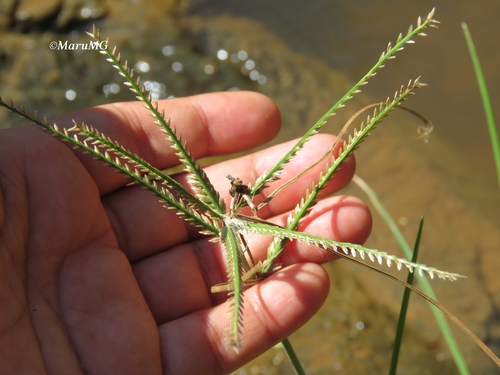
Eleusine indica is a tough, tufted summer annual grass that grows as a low, spreading rosette in lawns, fields, paths, and pavement cracks. The stems radiate outward and curve up at the tips, reaching 6-24 inches (15-60 cm), and are flattened and pale silvery-white toward the base, the feature behind the name silver crabgrass. Folded green leaf blades 2-12 inches (5-30 cm) long arise from the crowded basal crown. From summer into fall, seed heads form 2-13 spikelet-bearing spikes that radiate like the spokes of a wheel or the teeth of a zipper from the top of each stem, ripening from green to tan. A single plant can produce thousands of seeds. The deep, branching root system anchors the plant firmly, letting it survive in compacted, trampled soils such as sports fields and driveways where many grasses fail, and making mature plants hard to pull. It tolerates heat, drought, and low fertility, germinating later in spring than crabgrass and persisting until frost. Its weedy vigor and seed output make it more often controlled than cultivated, though it serves as forage and a famine grain in parts of its native range.
Native Range
Eleusine indica is native to the tropics of Africa and Asia. It has spread as a weed through warm and temperate regions worldwide, including across North America, growing in disturbed, compacted, and cultivated ground.Suggested Uses
In its native range it is grown locally as forage and as a minor famine grain. Elsewhere it is rarely planted and is treated as a turf and crop weed. The coarse, spreading habit and heavy seeding leave it unsuited to managed lawns and ornamental beds.How to Identify
Appearance
Size & Dimensions
Height6" - 2'
Width/Spread6" - 1'6"
Bloom Information
Detailed Descriptions
Flower Description
green to tanFoliage Description
green, pale silvery-white at the baseGrowing Conditions
Sun Requirements
Requires 6-12 hours of direct sunlight daily
• Full Sun: 6+ hours of direct sunlight
• Partial Shade: 3-6 hours of direct sunlight
• Full Shade: Less than 3 hours of direct sunlight
Water & Climate
Water Needs
Drought Tolerance
Drought tolerant when established
Care & Maintenance
Care Guide
Grows in full sun on almost any soil, from sand to heavy compacted clay, and at pH from 5.0 to 7.5. Tolerates drought, heat, and foot traffic, though it grows larger in moist, fertile ground. As a warm-season annual it dies with the first hard frost and returns from seed. It needs no care to persist and is usually managed as a weed in turf and crops. Seedlings pull more readily before the deep roots develop.Pruning
No pruning applies to this annual grass. Mowing does not eliminate it because the low crown sits below the blade, but cutting before seed heads ripen reduces reseeding. Whole plants are removed by digging out the crown and root.Toxicity
Non-toxicPlanting Guide
Planting Methods & Timing
Planting Method
direct sow
Plant Spacing
6 inches