Elephantopus, Genus, carolinianus, Species,
- Genus & species
leafy elephant's-foot
Overview
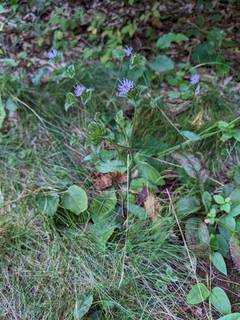
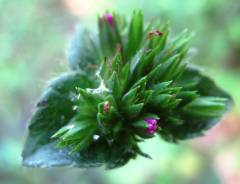
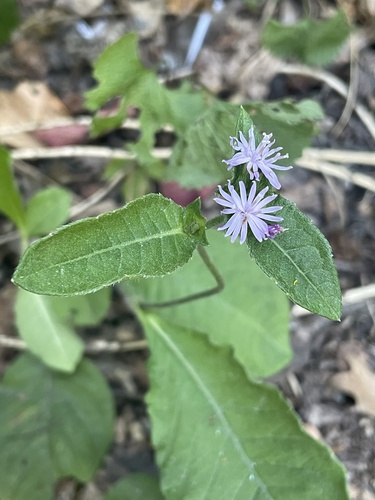
Elephantopus carolinianus is an upright herbaceous perennial of the aster family, growing 1-4 feet (30-120 cm) tall from a basal cluster of leaves. Unlike most species in its genus, it carries leaves along the flowering stem rather than only at the base; these oval to elliptic leaves are 4-8 inches (10-20 cm) long, coarsely toothed, and rough-hairy. From late summer into fall the branched stems bear small flower heads, each a cluster of three to five tubular lavender to pale purple florets seated within a fan of leafy bracts. After bloom the heads form dry, ribbed, bristle-tipped seeds spread by wind and animal fur. Native to moist woodlands and stream banks of the southeastern and south-central United States, it grows in part shade on rich, damp soil. Plants spread slowly by seed and form loose colonies in shaded ground. It tolerates heavy clay and seasonal flooding but declines in dry, exposed sites. Hardy in USDA zones 5-9, the foliage dies back to the ground each winter and resprouts in spring. The flowers draw small bees and other pollinators. Growth is modest, and the plant rarely needs staking or division.
Native Range
Native to the southeastern and south-central United States, from Virginia and Florida west to Texas and north into the Ohio and Mississippi valleys. It grows in moist deciduous woodlands, floodplains, and along shaded stream banks.Suggested Uses
Used in shade and woodland gardens, native plant borders, and rain gardens or moist swales, spaced 18-24 inches (45-60 cm) apart. Suited to naturalizing in damp, shaded ground beneath deciduous trees.How to Identify
Appearance
Size & Dimensions
Height1' - 4'
Width/Spread1' - 2'
Bloom Information
Detailed Descriptions
Flower Description
lavender to pale purpleFoliage Description
greenGrowing Conditions
Sun Requirements
Requires 2-5 hours of direct sunlight daily
• Full Sun: 6+ hours of direct sunlight
• Partial Shade: 3-6 hours of direct sunlight
• Full Shade: Less than 3 hours of direct sunlight
Care & Maintenance
Care Guide
Grow in part shade to filtered light on rich, consistently moist soil. The plant tolerates clay, loam, and brief flooding but needs steady moisture and fades in dry, sunny spots. No feeding is required in woodland soil. Cut spent stems to the ground in late fall or leave them for self-seeding. Established clumps need little care and resist deer browsing. Hardy in USDA zones 5-9, it returns from the root each spring.Pruning
Cut faded flowering stems back to the basal foliage after seed set to limit self-sowing, or leave them standing for winter interest. Remove dead growth in early spring before new shoots emerge. No other pruning is needed.Pruning Schedule
Prune: March & November
fallearly spring