Eclipta, Genus, spp., Multiple species,
- Genus
- Multiple species
false daisy
SunFull Sun – Part Shade
WaterHigh
Overview
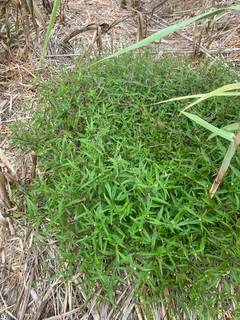
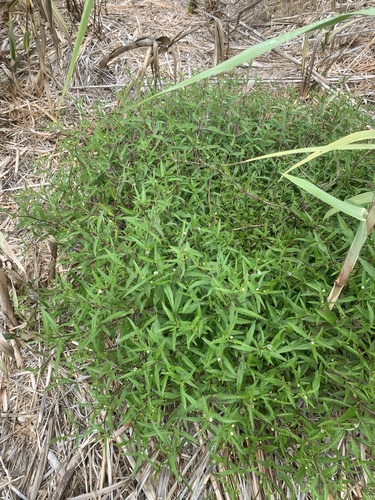
Eclipta is a small genus of annual to short-lived perennial herbs in the daisy family, Asteraceae, represented mainly by E. prostrata (false daisy or bhringraj), a widespread plant of warm, moist regions worldwide. Plants are low and often sprawling, 10-60 cm (4-24 in) tall, with rough-hairy, branching stems that root where they touch moist ground. The opposite, lance-shaped leaves are 2-10 cm (0.8-4 in) long with shallowly toothed margins. Small, button-like flower heads 6-10 mm (0.2-0.4 in) across are carried on slender stalks from the leaf axils; each head has many tiny white ray florets around a greenish-white centre. Flowering continues over a long warm season, and the heads ripen numerous small, wedge-shaped seeds. The genus grows in rice fields, ditches, pond edges, and other wet, disturbed ground, where E. prostrata is a common weed of cultivation. The same species is widely used in traditional Indian and Chinese medicine. In gardens it appears mostly as a self-sown plant of damp soil and is grown chiefly for its medicinal leaves.
Native Range
Of uncertain exact origin but now pantropical, E. prostrata occurs through the warmer parts of the Americas, Africa, Asia, and Australia. Plants grow in rice paddies, ditches, marsh edges, streambanks, and damp disturbed ground.Suggested Uses
Grown in damp and bog gardens, at pond margins, and in containers of moist soil. Cultivated chiefly as a medicinal and leaf herb in warm regions, and used as a low groundcover in consistently wet ground.How to Identify
Appearance
Size & Dimensions
Height4" - 2'
Width/Spread8" - 2'
Bloom Information
Small white daisy-like heads open over a long warm season, often from late spring through autumn in mild climates and year-round in the tropics. The flowers draw small bees and flies. Each head ripens many small wedge-shaped seeds that spread in water and mud.
Detailed Descriptions
Foliage Description
greenGrowing Conditions
Sun Requirements
Requires 4-9 hours of direct sunlight daily
• Full Sun: 6+ hours of direct sunlight
• Partial Shade: 3-6 hours of direct sunlight
• Full Shade: Less than 3 hours of direct sunlight
Water & Climate
Water Needs
Care & Maintenance
Care Guide
Grows in full sun to part shade in consistently moist to wet, fertile soil, and grows strongly at pond and ditch margins. It tolerates waterlogging but not prolonged drought, fading quickly in dry soil. As an annual or short-lived perennial it is raised from seed sown in spring and often self-sows freely. Plants are frost-tender and die back with cold. Regular moisture sustains continuous flowering and leaf growth.Pruning
Trimming back leggy stems brings on bushier growth and fresh leaves. Spent flowering stems are sheared to limit self-sowing. Plants are pulled and composted once frost ends the season.Container Growing
Suitable for container growing
Minimum container size: 2 gallons
Toxicity
Non-toxicPlanting Guide
Planting Methods & Timing
Planting Method
direct sow
Direct Sow Timing
spring, after the last frost
Days to Maturity
50–80 days
Plant Spacing
12 inches