Dudleya, Genus, cymosa, Species,
- Genus & species
canyon liveforever
Overview
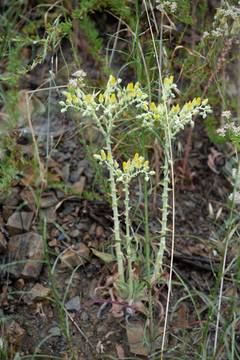
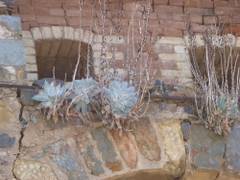
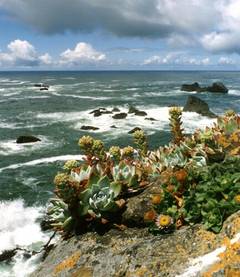
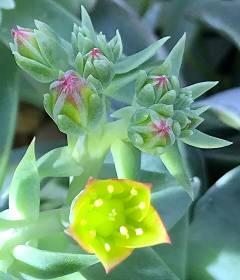
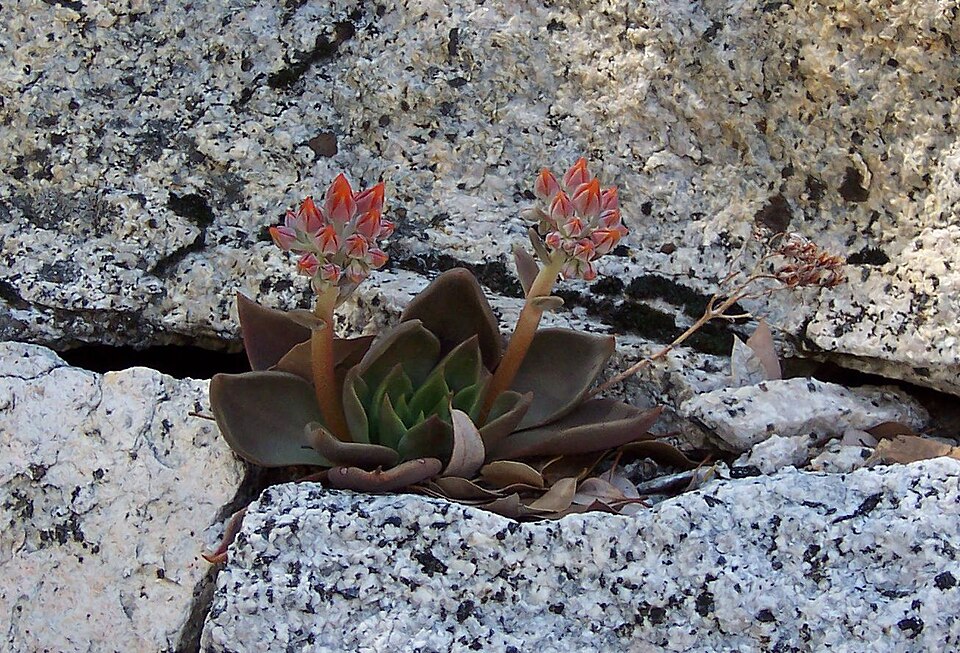
Dudleya cymosa is an evergreen succulent forming basal rosettes 1.5-6 inches (4-15 cm) across, native to rocky slopes and cliff faces of California and southwestern Oregon. Each rosette holds 8-25 fleshy, spoon-shaped to triangular leaves that range from green to chalky gray-white, often flushed red along the margins in dry or bright conditions. Established plants branch at the base into small clusters of rosettes. From spring into early summer, reddish flowering stems 4-16 inches (10-40 cm) tall rise from the rosette edge and carry clusters of five-petaled flowers in yellow, orange, or red. The species is highly variable across its range, and more than a dozen subspecies have been described on the basis of leaf shape, color, and flower hue. Plants grow on near-vertical rock in chaparral, oak woodland, and canyon walls from sea level to about 9,000 feet (2,700 m). Roots require sharp drainage; rosettes rot quickly if kept wet, particularly during their summer dormancy when growth pauses and outer leaves shrivel. The leaves carry a waxy coating that rubs off easily when handled.
Native Range
Native to California and southwestern Oregon, where it grows on rock outcrops, cliffs, and canyon walls in chaparral and foothill woodland from sea level to about 9,000 feet (2,700 m).Suggested Uses
Grown in rock gardens, crevice plantings, and stone walls where drainage is sharp. Suited to containers and green roofs in mild-winter regions, and used in California native and water-thrifty plantings. Heavy clay soil and summer water restrict its use in conventional borders.How to Identify
Appearance
Size & Dimensions
Height4" - 1'4"
Width/Spread2" - 8"
Bloom Information
Flowers open from spring into early summer, generally April through July depending on elevation and local climate. Five-petaled flowers in yellow, orange, or red are held on branched, often red-tinted stalks above the rosette. Hummingbirds and native bees visit the flowers.
Detailed Descriptions
Flower Description
Yellow, orange, or redFoliage Description
Gray-green to chalky white, often red-tingedGrowing Conditions
Sun Requirements
Requires 6-10 hours of direct sunlight daily
• Full Sun: 6+ hours of direct sunlight
• Partial Shade: 3-6 hours of direct sunlight
• Full Shade: Less than 3 hours of direct sunlight
Care & Maintenance
Care Guide
Sharp drainage and full sun to light afternoon shade suit this succulent, which grows naturally in rock crevices and gritty mineral soil. It tolerates a soil pH from about 6.0 to 7.5 and stores water in its leaves, withstanding long dry periods once established. Water is needed mainly in autumn and winter during active growth; summer irrigation in heavy soil causes crown and root rot. The species is summer-dormant, pausing growth and shedding outer leaves during heat. Overhead watering that lodges in the rosette removes the waxy bloom and invites fungal spotting. Mealybugs and aphids gather on the flower stalks.Pruning
Spent flowering stalks can be removed at the base once seed has shed, since each stem flowers only once. Dried outer leaves drop on their own and need no removal. No other pruning is required.Container Growing
Suitable for container growing
Minimum container size: 1 gallons