Disanthus, Genus, spp., Multiple species,
- Genus
- Multiple species
redbud hazel
Overview
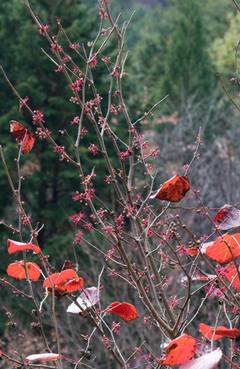
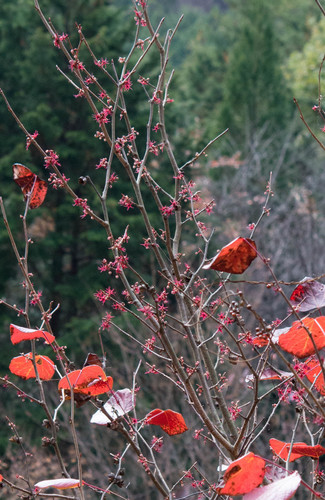
Disanthus is a genus in the witch-hazel family (Hamamelidaceae) represented mainly by Disanthus cercidifolius, a deciduous shrub native to mountain woodland in Japan and China. Plants form an open, rounded, spreading shrub 6-10 feet (1.8-3 m) tall and wide, with slender arching branches. The alternate leaves are rounded to heart-shaped, 2-4.5 inches (5-11 cm) long, on slim stalks, resembling the foliage of redbud (Cercis), blue-green through summer and turning deep red, purple, and orange in autumn. In autumn, as the leaves colour, small star-shaped flowers with five narrow dark purple-red petals open in back-to-back pairs along the stems. The flowers carry a faint scent. D. cercidifolius grows in cool, moist, acidic woodland and needs shelter from drying wind and hot sun. Slow to establish, it grows into a long-lived shrub where soil stays cool and moist.
Native Range
Disanthus is native to montane deciduous woodland in Japan and parts of central and eastern China. It grows on cool, moist, acidic slopes among other understory shrubs.Suggested Uses
Grown as a specimen for autumn colour in woodland gardens, shaded shrub borders, and acidic moist sites under high tree canopy. It combines with rhododendrons, acers, and other acid-loving shade shrubs.How to Identify
Appearance
Size & Dimensions
Height6' - 10'
Width/Spread6' - 10'
Bloom Information
Flowering occurs in autumn, usually October to November, at the same time as the leaves take on their red and purple colour. The small dark purple-red flowers are faintly scented and open in paired clusters along the stems. Bloom is modest and set against the autumn foliage rather than seen on its own.
Detailed Descriptions
Foliage Description
blue-green, turning red, purple, and orange in autumnGrowing Conditions
Sun Requirements
Requires 2-5 hours of direct sunlight daily
• Full Sun: 6+ hours of direct sunlight
• Partial Shade: 3-6 hours of direct sunlight
• Full Shade: Less than 3 hours of direct sunlight
Care & Maintenance
Care Guide
Disanthus cercidifolius grows in part shade in cool, moist, humus-rich, acidic, well-drained soil, sheltered from strong wind and afternoon sun. Plants need steady moisture and grow poorly on dry, alkaline, or exposed sites, where leaves scorch and autumn colour fades. A mulch of leaf litter and a cool root run support healthy growth. The shrub is cold-hardy through about USDA zones 5 to 8 but benefits from shelter in cold, windy gardens. Growth is slow, especially while young, and plants recover slowly from hard pruning or transplanting. Little feeding is needed in soils rich in organic matter.Pruning
Little pruning is needed beyond removing dead, damaged, or crossing branches to keep an open framework. Light shaping is done after flowering or in late winter. The shrub recovers slowly, so hard cutting is generally avoided.Pruning Schedule
Prune: February & November
fallwinter