Disa, Genus, bracteata, Species,
- Genus & species
bract disa
Overview
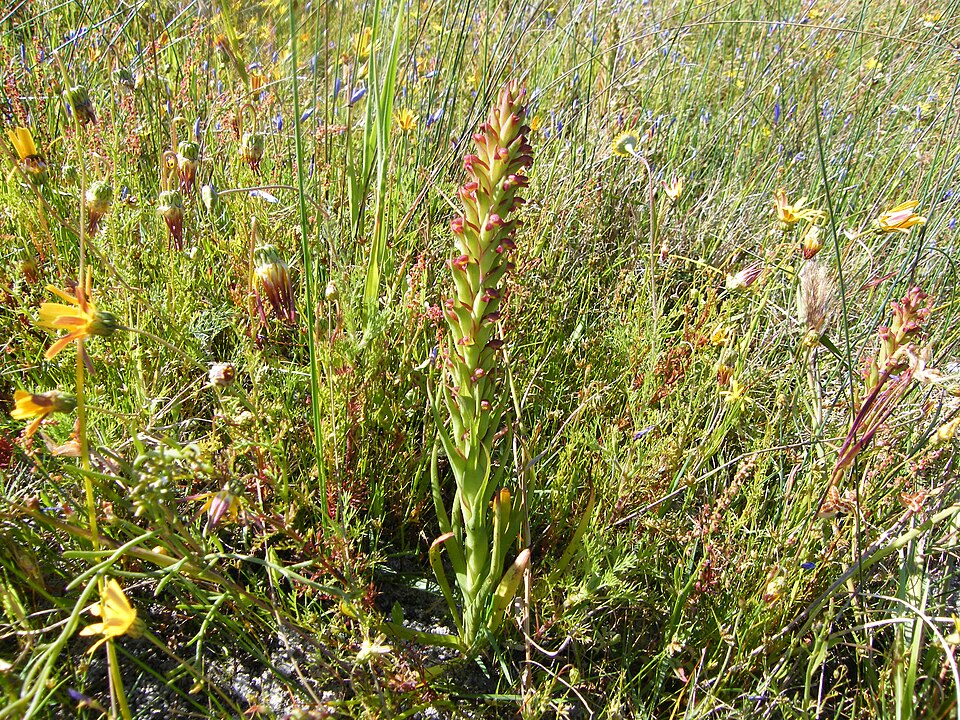
Disa bracteata is a deciduous terrestrial orchid 6-24 inches (15-60 cm) tall, growing from an underground tuber. A basal rosette of broad green leaves forms first, and a stout flowering stem then rises bearing a dense spike of many small hooded flowers, each backed by a leafy bract longer than the bloom. The flowers are dull green, often flushed maroon to reddish-brown, and 0.2-0.4 inch (5-10 mm) long. The plant is self-pollinating and sets seed prolifically without insect visits, after which it dies back to its tuber for summer dormancy. Native to South Africa, it has naturalised as an environmental weed across southern and southwestern Australia, including parts of Western Australia, South Australia, Victoria, and Tasmania, where it spreads quickly through bushland, pasture, and roadsides on sandy and loamy soils. It tolerates disturbance, drought during dormancy, and poor soils, and its heavy seed output lets it form dense local stands that crowd out native ground flora.
Native Range
Native to South Africa. It has naturalised as an environmental weed across southern and southwestern Australia, including Western Australia, South Australia, Victoria, and Tasmania.Suggested Uses
This orchid is not grown ornamentally and is treated as an environmental weed. Control programs target it before seed set to protect native ground flora in bushland and reserves.How to Identify
Appearance
Size & Dimensions
Height6" - 2'
Width/Spread3" - 6"
Bloom Information
The dense flower spike opens in spring, mainly September to November in the southern hemisphere. The small hooded flowers self-pollinate and set seed heavily over a few weeks before the plant dies back to its tuber.
Detailed Descriptions
Flower Description
dull green to maroonFoliage Description
greenGrowing Conditions
Sun Requirements
Requires 4-8 hours of direct sunlight daily
• Full Sun: 6+ hours of direct sunlight
• Partial Shade: 3-6 hours of direct sunlight
• Full Shade: Less than 3 hours of direct sunlight