Disa, Genus, spp., Multiple species,
- Genus
- Multiple species
disa
Overview
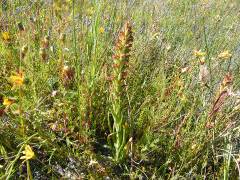
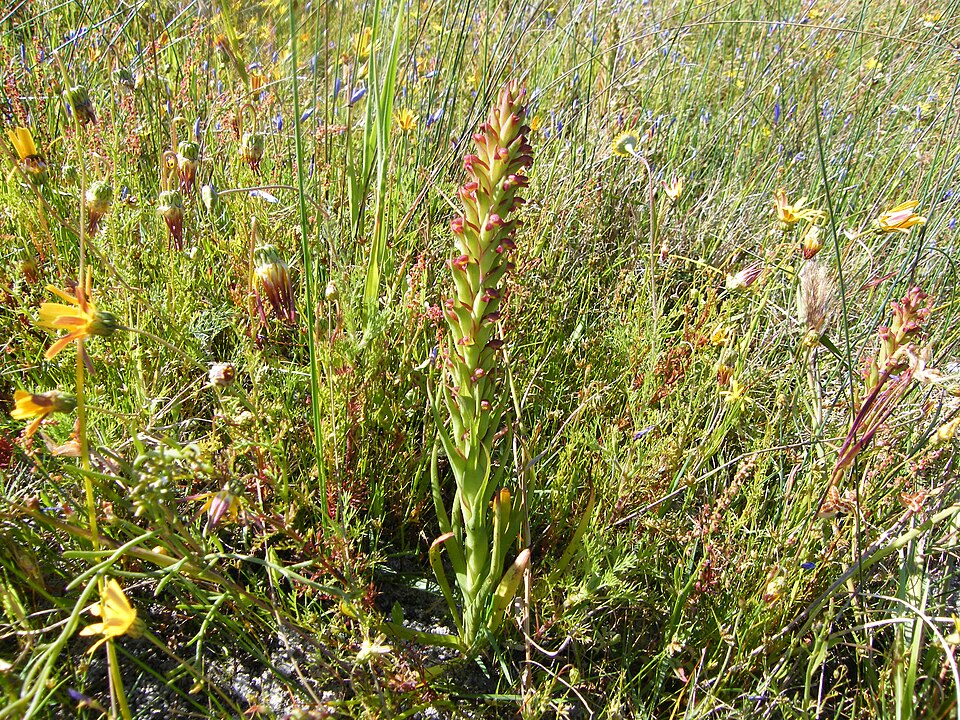
Disa is a genus of about 180 terrestrial orchid species, centred on sub-Saharan Africa and Madagascar with the greatest diversity in South Africa. Plants grow from underground tubers, sending up leafy stems 4-36 inches (10-90 cm) tall depending on species, topped with one to many flowers. The flower is marked by a hooded or helmet-shaped dorsal sepal, often drawn back into a spur, while the two lateral sepals are the broadest parts and carry most of the colour. Colours span scarlet, orange, pink, yellow, purple, and white across the genus, with D. uniflora, the red disa of the Cape mountains, carrying large red and orange blooms beside streams. Most species grow in marshes, seeps, streambanks, and damp grassland, rooted in acidic, low-nutrient, constantly moist ground. A minority occur in seasonally dry habitats and rest as dormant tubers. The thin, moisture-dependent roots make many species demanding in cultivation.
Native Range
Disa is native to sub-Saharan Africa and Madagascar, with most species in South Africa, especially the Cape mountains. A few species extend into the Arabian Peninsula and the Mascarene Islands.Suggested Uses
Grown by orchid specialists in pots, bog benches, and cool greenhouses, with the wet-growing species displayed in water trays. D. uniflora and its hybrids are grown for their large red and orange summer flowers.How to Identify
Appearance
Size & Dimensions
Height4" - 3'
Width/Spread4" - 1'
Bloom Information
Bloom time varies by species and habitat, with many summer-rainfall species flowering in summer and winter-rainfall Cape species flowering in late spring to summer. D. uniflora flowers in the southern summer, December to March, along mountain streams. Each stem holds its flowers for several weeks.
Detailed Descriptions
Flower Description
scarlet, orange, pink, yellow, purple, or whiteFoliage Description
greenGrowing Conditions
Sun Requirements
Requires 3-6 hours of direct sunlight daily
• Full Sun: 6+ hours of direct sunlight
• Partial Shade: 3-6 hours of direct sunlight
• Full Shade: Less than 3 hours of direct sunlight
Care & Maintenance
Care Guide
Disa species from wet habitats grow in constantly moist, acidic, low-nutrient media, with pure water of low mineral content run through the roots and bright, cool, airy conditions. Stagnant warmth, hard water, and fertiliser salts damage the sensitive roots and invite rot. Wet-growing species are kept in trays of soft water in growth, then drier while resting. Seasonally dry species are watered in growth and kept dry as dormant tubers. Most species need frost-free to cool conditions and steady ventilation. Cultivation is exacting, and many species are grown only by orchid specialists.Pruning
No structural pruning applies to these tuberous orchids. Spent flower stems can be cut once flowering ends, and dead foliage removed as plants enter dormancy. Old or rotted tuber material is cleared during repotting.Container Growing
Suitable for container growing
Minimum container size: 1 gallons