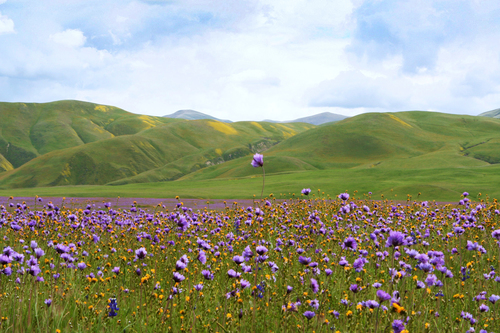
Dipterostemon, Genus, capitatus, Species,
- Genus & species
blue dicks
Overview
Dipterostemon capitatus is a cormous perennial in the asparagus family, sending up a slender, leafless flowering stalk 1-2 feet (30-60 cm) tall from an underground corm. A few narrow, grass-like basal leaves 4-16 inches (10-40 cm) long appear in late winter and usually wither by the time the plant flowers. In spring the stalk is topped by a tight, head-like cluster of 6 to 15 blue-purple flowers, each a small six-lobed bell about 0.5 inch (1.2 cm) long, occasionally pink or white. The cluster sits among papery purplish bracts. After flowering the plant sets capsules of black seeds and dies back to the corm for the long dry season. The starchy corm, known as a grass nut, was an important food gathered by Indigenous peoples of western North America. Dipterostemon capitatus grows in grassland, chaparral, open woodland, and desert margins, often appearing in numbers after fire or winter rains. It needs full sun, sharp drainage, and a dry summer rest, and rots in soil kept moist through summer.
Native Range
Dipterostemon capitatus is native to western North America, from Oregon south through California and the Southwest into northern Mexico. It grows in open grassland, chaparral, woodland, and desert flats.Suggested Uses
Grown in dry meadows, rock gardens, native-plant and pollinator plantings, and gravel beds that bake in summer. The spring flowers draw bees, butterflies, and other insects. It suits naturalized grassland and dryland gardens that go without summer water, rather than regularly irrigated borders.How to Identify
Appearance
Size & Dimensions
Height1' - 2'
Width/Spread4" - 8"
Bloom Information
Flowering runs from late winter into spring, mainly March through May, earlier in low desert and later at higher elevations. Each dense head opens over two to three weeks. Bloom is heaviest in the season after fire or good winter rains.
Detailed Descriptions
Foliage Description
greenGrowing Conditions
Sun Requirements
Requires 6-12 hours of direct sunlight daily
• Full Sun: 6+ hours of direct sunlight
• Partial Shade: 3-6 hours of direct sunlight
• Full Shade: Less than 3 hours of direct sunlight
Care & Maintenance
Care Guide
Grow in full sun on well-drained, sandy, or rocky soil that dries out in summer. The corm needs a warm, dry summer dormancy and rots if watered while resting. Water comes naturally from winter and spring rains, with no irrigation needed once growth dies back. Plants tolerate poor soil and drought and return each year from the corm, slowly forming small colonies from offsets and seed. Rich, constantly moist ground causes rot and poor flowering. Corms are left undisturbed once settled, since frequent lifting sets them back.Pruning
No pruning is needed for this bulb-like plant. The withered leaves and spent flower stalks are removed once dry, or left to scatter seed. The corm is left in place to rest through summer.Container Growing
Suitable for container growing