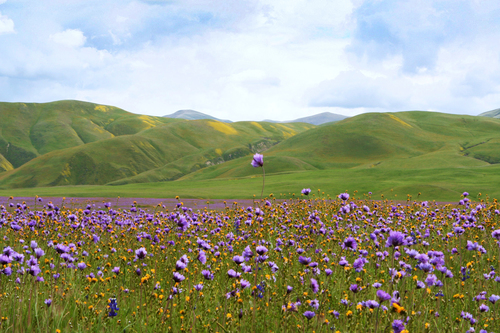
Dipterostemon, Genus, spp., Multiple species,
- Genus
- Multiple species
blue dicks
Western North America and northern Mexico
Overview
Dipterostemon is a genus in the family Asparagaceae represented by the single species Dipterostemon capitatus, a cormous perennial of western North America known as blue dicks. Plants grow from a deep corm and produce one to a few narrow, grass-like basal leaves 4-16 inches (10-40 cm) long that often wither by flowering time. A slender leafless flowering stem rises 8-24 inches (20-60 cm) and ends in a tight head of six-petalled flowers, usually blue-purple but ranging to violet, pink, and white. Bloom comes in late winter to spring, after which the plant dies back to the corm and stays dormant through dry summer and autumn. New cormlets form around the parent corm, building colonies over time. The corm has long been gathered and eaten by Indigenous peoples of the region. Plants grow in open woodland, grassland, scrub, and disturbed ground across the western states and northern Mexico.
Native Range
Dipterostemon capitatus is native to western North America, from Oregon and California east to Utah and Arizona and south into northern Mexico. It grows in grassland, open woodland, chaparral, and disturbed ground, often appearing after fire or rain.Suggested Uses
Grown in rock gardens, gravel gardens, meadow and native plantings, and among drought-tolerant perennials that share its summer-dry rhythm. The spring flower heads suit pollinator and wildflower plantings in mild-winter regions.How to Identify
Appearance
Size & Dimensions
Height8" - 2'
Width/Spread4" - 8"
Bloom Information
Flowering runs from late winter into spring, roughly February to May depending on elevation and rainfall, with heads of blue-purple flowers on leafless stems. Bloom is heavier in seasons with good winter and spring moisture. After flowering the foliage and stem die back and the plant rests as a dormant corm.
Detailed Descriptions
Flower Description
blue-purple to violet, pink, or whiteFoliage Description
greenGrowing Conditions
Sun Requirements
Requires 6-10 hours of direct sunlight daily
• Full Sun: 6+ hours of direct sunlight
• Partial Shade: 3-6 hours of direct sunlight
• Full Shade: Less than 3 hours of direct sunlight
Care & Maintenance
Care Guide
Dipterostemon capitatus grows in full sun to light shade in well-drained sandy, loamy, or rocky soils, drawing on winter and spring rains while in growth. Plants are summer-dormant and need dry conditions during their rest, rotting in soils kept wet through summer. Corms are drought-resistant and cold-tolerant in the mild-winter climates of their range. Plants establish from corms or seed, with seedlings taking two to three years to flower. Little feeding or watering is needed beyond seasonal rain in suitable climates. In gardens the species suits raised beds, gravel, and rock gardens that dry out in summer.Pruning
No pruning is required. Withered leaves and spent flower stems can be removed once they yellow, and seed heads left in place where self-sowing is wanted. Crowded corms are lifted and divided during summer dormancy.Container Growing
Suitable for container growing
Minimum container size: 1 gallons