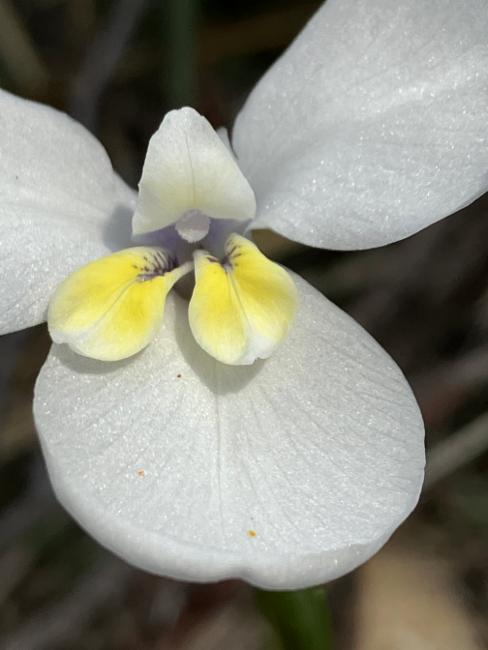
Diplarrena, Genus, spp., Multiple species,
- Genus
- Multiple species
white flag iris
Overview
Diplarrena is a small genus of two species of evergreen, rhizomatous perennials in the iris family, native to southeastern Australia and Tasmania. Plants form dense, grassy clumps of narrow, dark green, sword-shaped leaves 18-30 inches (45-75 cm) tall, from which slender flowering stems rise to carry a succession of iris-like flowers. The blooms are white, with three larger outer segments and smaller inner ones marked with yellow and violet, and they are fragrant. D. moraea is the more widely grown, with D. latifolia a larger mountain species. Flowering comes in late spring and summer, each flower short-lived but followed by others over several weeks. The genus grows in open forest, heath, and damp ground on moisture-retentive but free-draining, acidic to neutral soil in full sun or part shade. Plants tolerate coastal exposure and short dry spells once established but are damaged by hard frost, suiting mild-winter and maritime climates. Clumps spread slowly by rhizome into broad tufts. The narrow evergreen foliage holds through winter where temperatures stay mild. Plants reach flowering size in two to three years from division.
Native Range
Native to southeastern Australia and Tasmania, growing in open eucalypt forest, heath, and damp, grassy ground.Suggested Uses
Grown in mild-climate borders, coastal gardens, and among grasses and shrubs for the white summer flowers and evergreen, grassy foliage. Suited to damp, sunny banks and naturalistic plantings. Plants are not reliable in cold-winter regions or on dry, impoverished soils.How to Identify
Appearance
Size & Dimensions
Height1'6" - 2'6"
Width/Spread1'6" - 2'
Bloom Information
Detailed Descriptions
Flower Description
white with yellow and violet markingsFoliage Description
dark greenGrowing Conditions
Sun Requirements
Requires 4-10 hours of direct sunlight daily
• Full Sun: 6+ hours of direct sunlight
• Partial Shade: 3-6 hours of direct sunlight
• Full Shade: Less than 3 hours of direct sunlight
Care & Maintenance
Care Guide
Plants grow in full sun or part shade on moist but free-draining, acidic to neutral soil with added organic matter. They establish from division or pot-grown plants set out in spring, spaced 12-18 inches (30-45 cm) apart. Steady moisture in the growing season supports the foliage, while sharp winter drainage prevents rot. Established clumps tolerate coastal wind and brief drought. Frost below about 20 F (-7 C) damages the evergreen leaves, so the genus suits mild and maritime climates. Clumps are lifted and divided every few years to keep them vigorous.Pruning
Spent flowering stems are cut back to the base after bloom. Tatty or frost-burned outer leaves are removed in spring as new growth begins. Congested clumps are divided in spring to renew them.Container Growing
Suitable for container growing
Minimum container size: 3 gallons
